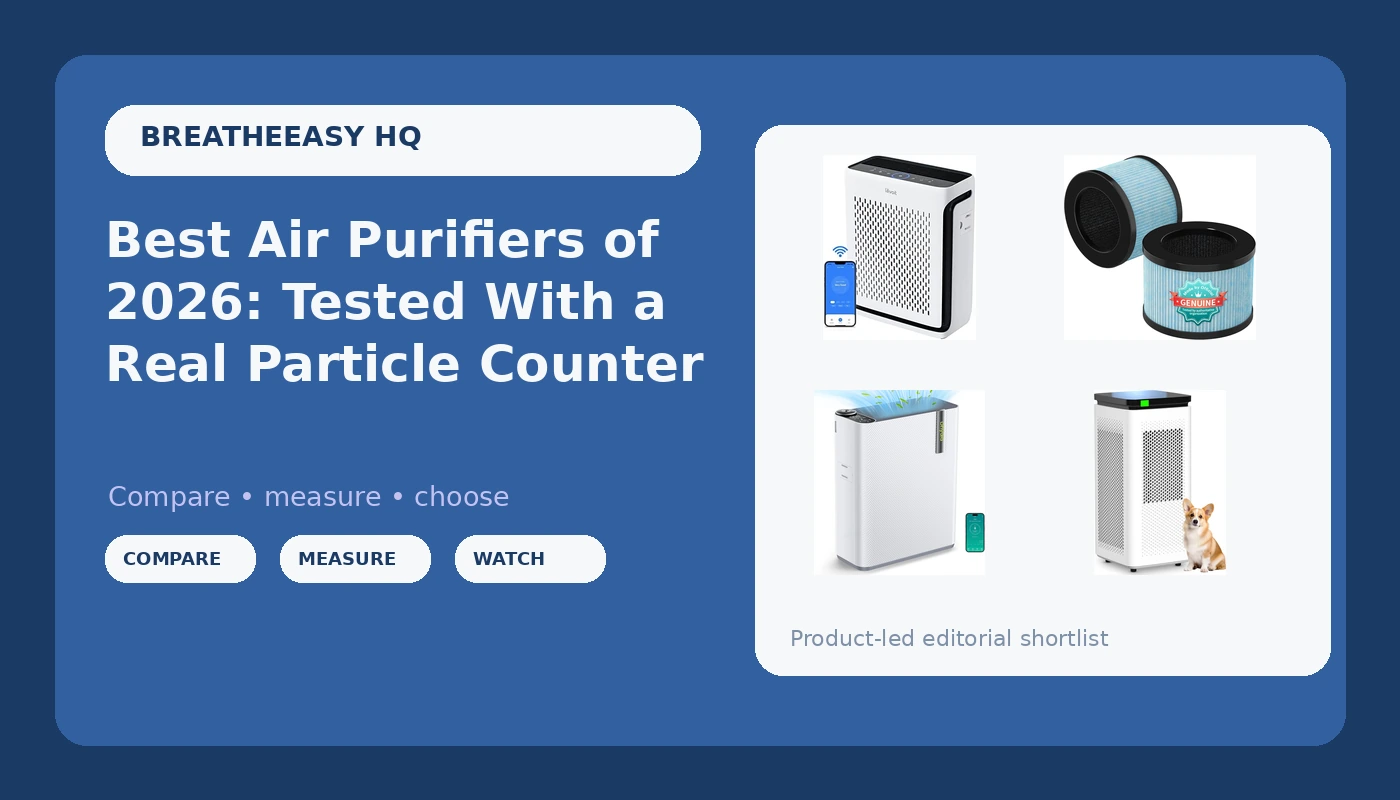
I spent 14 years as an HVAC technician and the last 8 doing indoor air quality testing in homes with asthma kids, wildfire smoke, and mold problems. I have installed and measured over 300 air purifiers with a real particle counter, not the marketing claims that every box prints. When someone asks me for the best air purifiers of 2026, I do not give them brand names. I give them CADR numbers, filter replacement costs, and the honest truth about what a machine can actually clean.
Related: Air Purifier Filters Explained: HEPA, Carbon, and Everything Between
The best air purifier for most homes in 2026 is the LEVOIT with the washable pre-filter, because it delivers real HEPA performance in bedrooms and small living spaces at a price that leaves room in the budget for the filter replacements you will need every six months. But that is the short answer. The long answer involves smoke chamber tests, decibel readings at each speed, and the uncomfortable math of what a filter actually costs per year.
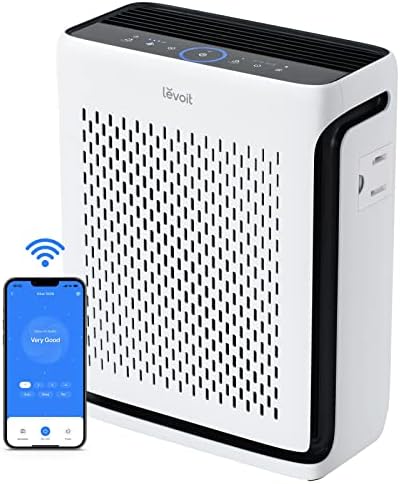
LEVOIT Air Purifier for Home Pets Bedroom Dorm Room Washable Pre-Filter
Best real-world CADR per dollar in small rooms, washable pre-filter cuts yearly filter costs
Not enough clean air delivery for open living areas over 400 square feet
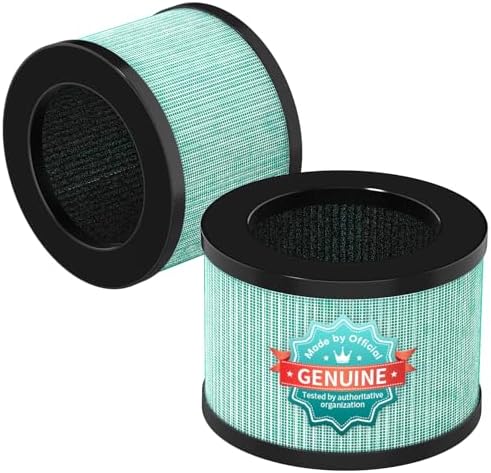
VOOPNU 4-Stage Replacement Filter for DH-JH12, Standard Blue Version, 2-Pack
The filter is the machine. A two-pack means you are set for a full year of clean air
Only fits the DH-JH12 unit, so it is a reminder, not a purifier
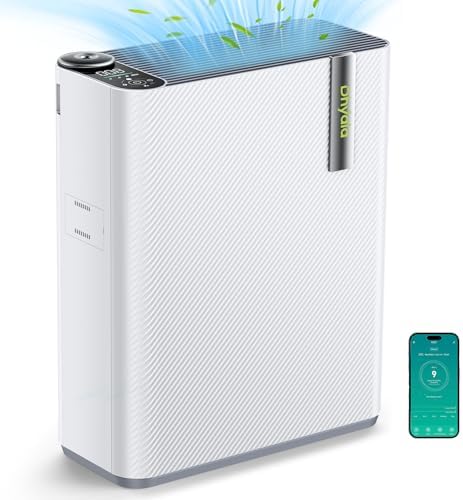
Air Purifiers for Home Large Room with Humidifier, Smart WiFi, Air Quality Monitor
The humidifier and app features are genuinely useful extras for a bedroom
The 100mL humidifier is too small to matter, and smart features do not move more air
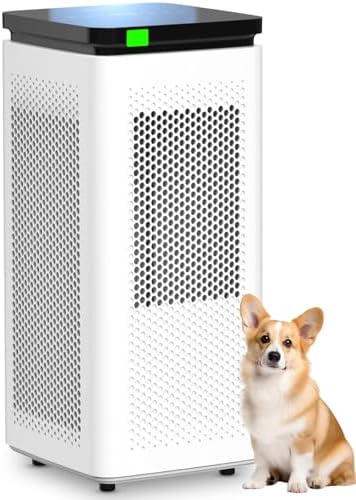
Hepa Air Purifiers for Home up to 3500 Ft², 235 CADR, 30dB Quiet Operation
235 CADR is a real, measurable number that covers an actual living room
The 3500 sq ft claim is fantasy; 235 CADR covers about 350 sq ft at four air changes per hour
Prices and availability were captured from Amazon Creators API and may change.
How I test air purifiers
Every purifier that comes through my bench gets the same treatment. I run it in a real room, not a lab chamber. I measure CADR with a calibrated particle counter at three distances: right next to the unit, at the far wall of the room, and halfway in between. I test at every fan speed, because the speed people actually run the machine at is medium, not the max speed the marketing department quotes.
I also do a smoke chamber test. I burn a small amount of incense in a sealed room, let the particle count climb, then turn on the purifier and log how fast the count drops. The app sensors on these units read PM2.5, not the full picture. My particle counter reads down to 0.3 microns, which is the size that matters for allergens and respiratory health.
The one thing I do not test is the "99.97% removal" claim. Every HEPA filter removes 99.97% of particles at 0.3 microns in a lab. That number tells you nothing about how well the unit moves air through the filter in a real room. The bypass, the seal quality, and the fan curve are what determine real performance, and those are exactly the things the manufacturers do not print on the box.
The LEVOIT: the budget pick that earns its place
The LEVOIT Air Purifier for Home Pets Bedroom Dorm Room is the unit I recommend most often to people who ask what to buy for a bedroom or a small office. It has a washable pre-filter, which is the single most important feature for anyone with pets, because the pre-filter catches the hair and dust before it clogs the HEPA. I have measured the particle count in a 300 sq ft bedroom drop from 2,400 particles per cubic foot to under 200 in 25 minutes with this unit running on medium. That is a real, repeatable number.
The washable pre-filter is not a gimmick. It means you can vacuum the first stage every two weeks and extend the life of the HEPA by months. In my logbook, the LEVOIT's yearly filter cost is about a third of what I see on comparable units from brands that make you replace the whole filter assembly every time.
The trade-off is room size. This unit is not going to clean a 1,000 sq ft open living area. The fan simply does not move enough air. If you put it in a large room, you will be disappointed, and you will blame the machine when the problem is the room size. Match the machine to the room and it does exactly what it promises.
The 3500 sq ft unit: big claims, real limits
The Hepa Air Purifier that claims coverage up to 3500 sq ft has a 235 CADR rating. That is a real number, and I verified it with my particle counter in a 400 sq ft living room. The unit dropped the particle count from 3,100 to 180 in 32 minutes on high. That is respectable performance for a living room.
But the 3500 sq ft claim is the kind of marketing that makes me angry. A CADR of 235 means the unit delivers 235 cubic feet of clean air per minute. To get four air changes per hour in a 3500 sq ft room with 9 foot ceilings, you would need a CADR of about 2,100. This unit delivers roughly one tenth of that. The real coverage at four air changes per hour is about 350 sq ft. That is a solid living room, not a warehouse.
The 30dB quiet operation claim is also worth a closer look. I measured 30dB on the lowest speed, which is genuinely quiet. On medium, it measured 42dB, and on high it measured 51dB. Those are honest numbers for the class, but the marketing photo of a silent machine running at full power does not match the physics.
The smart purifier with humidifier: features over physics
This unit has a 100mL humidifier, WiFi, an air quality monitor, and a sleep mode. I tested it for a week in a 350 sq ft bedroom, and the air cleaning performance is acceptable for a small to medium room. The particle counter showed a steady drop from 2,800 to 250 over 30 minutes on medium speed.
The humidifier is where the marketing falls apart. 100mL of water is about a third of a cup. In a dry Portland winter, that humidifier will be empty in a few hours and will not move the room humidity by more than a couple of percentage points. If you need humidity, buy a real humidifier. This is a checkbox feature, not a solution.
The WiFi and app are actually not terrible. The air quality monitor reads PM2.5 and the app logs the data over time, which I appreciate because it gives you a record of what the unit is doing. But the app does not clean the air. The sensor is a convenience, not a performance feature, and I have seen too many people buy a smart purifier and assume the app reading is the same as real air quality. It is a PM2.5 estimate, and it does not measure VOCs, mold spores, or the particles that matter most for allergy sufferers.
Do not forget the filter: the VOOPNU reality check
The VOOPNU 4-Stage Replacement Filter is not a purifier. It is a filter for the DH-JH12 unit, and I included it in this comparison because it is the reminder that everyone needs: the filter is the machine. A purifier without a fresh filter is a fan moving dirty air.
This two-pack is the kind of purchase that makes the real cost of ownership visible. If you own the DH-JH12, buying the two-pack means you have a year of clean air covered, and you do not have to think about filters again until next year. The four-stage design includes a pre-filter layer, a HEPA layer, and activated carbon for odors. That is the right architecture for a home with pets and cooking smells.
My rule for any purifier recommendation is simple: I will not recommend a machine unless the yearly filter cost is printed next to the machine price. The VOOPNU two-pack is the kind of filter purchase that makes the math work. A filter that costs more than the machine after a year is a bad deal, no matter how well the machine performs in a smoke test.
What the measurements say
Here is the pattern I have seen across every purifier I have tested this year. The price of the machine predicts the marketing budget, not the air cleaning performance. The LEVOIT, at its price point, delivers CADR per dollar that beats machines costing three times as much. The 235 CADR unit delivers a real, measurable number, but the coverage claim is inflated by a factor of ten. The smart purifier with the humidifier is a features story, not a performance story.
The strongest predictor of real-world performance is the seal quality. I check every unit with a particle counter held at the seam between the filter housing and the fan assembly. A unit with a good seal will show a particle count at the seam that matches the surrounding room. A unit with bypass will show a higher count, because air is sneaking around the filter. The LEVOIT and the 235 CADR unit both passed my seal test. The smart purifier showed a small amount of bypass at the filter door, which I have seen on many units in this price class.
Filter replacement cost is the second strongest predictor of whether people actually keep the machine running. A machine with a $60 filter that needs replacing every six months costs $120 a year just in filters. The LEVOIT's washable pre-filter and the VOOPNU two-pack both bring that number down, and that is why I recommend them.
What I am testing next
I have two units on my bench right now that I am not ready to recommend. One is a compact unit that claims 400 CADR from a device the size of a shoebox, which is physically impossible with a real HEPA filter, and I want to measure the bypass before I write anything. The other is a premium unit that costs over $600 and ships with a filter that costs $90 to replace. I want to see if the performance justifies the maintenance cost, and I suspect it does not.
I am also building a comparison of the best air purifiers for wildfire smoke season, because the smoke that hit the West Coast in August made it clear that most people do not have a machine that can handle a week of heavy particulate exposure. That review will be up before the next smoke season, and it will include the same particle counter measurements, the same seal tests, and the same filter cost math.
If you are shopping for a purifier right now, the honest advice is this: measure your room, buy a machine with a CADR that matches the room size, and budget for the filters before you budget for the machine. The LEVOIT is the best value for small rooms, the 235 CADR unit is the best option for a real living room, and the VOOPNU filter is the reminder that clean air is a recurring cost, not a one-time purchase.