Related: Where to Put an Air Purifier So It Actually Works
Most air purifiers for home are sold on one number: 99.97% of particles captured down to 0.3 microns. That statement is true and it also tells you almost nothing, because a HEPA filter that catches 99.97% of what passes through it will still leave a room dirty if the machine only moves a trickle of air. The number that predicts whether your room actually gets cleaner is CADR, the clean air delivery rate. Everything else on the box is marketing wearing a lab coat.
I have spent 14 years in HVAC, eight of them doing indoor air quality testing in homes with asthmatic kids, wildfire smoke, and mold. When someone asks me which purifier to buy, I ask three questions back: how big is the room, where does the air short-circuit, and what does the filter cost per year. This guide runs the four units below through those questions.
The short version. The Winix 5300-2 is the one I would buy with my own money for a normal bedroom or living room. The KNKA APH4000 is the budget option with big coverage claims, and you should read that claim the way I do. The Dyson Big+Quiet Formaldehyde is the airflow and sensor pick, and it is a renewed unit, which changes the math. The two-pack of generic purifiers is for two small rooms, not one big one.
Best Overall: Winix 5300-2 Air Purifier with True HEPA, PlasmaWave and Odor Reducing Carbon Filter
This is the machine I would hand to a friend without a long explanation. True HEPA is True HEPA, and the brand name on the filter housing matters far less than the seal around it, but the Winix is a unit where the basics are done properly and the filter supply is not a scavenger hunt two years from now.
Three things earn it the top spot. First, it is a True HEPA machine, not a "HEPA-type" or "HEPA-like" filter, and that distinction is the difference between a purifier and a fan with a felt pad. Second, it carries a carbon stage aimed at odors, which matters more than people expect in a house with cats, a kitchen nearby, or a litter box in the next room. Third, it is the unit in this group with the least drama attached to owning it. No app requirement, no account, no firmware update standing between you and clean air.
PlasmaWave is the part of this unit people argue about. It is a documented feature of the model, and if that technology is not something you want in your house, that is a legitimate reason to look at a plain HEPA unit instead. I am not going to pretend it is neutral.
What I would check before buying: the cost of the replacement HEPA and carbon filters, printed next to the machine price. Filter replacement cost is the real price of the machine. Nobody budgets for it, and it is where a cheap purifier becomes an expensive one.
Placement matters as much as the unit. Three feet off the wall, out of the corner, not tucked behind a couch. A purifier in a corner is a purifier working against itself.
Best for Large Rooms on a Budget: KNKA Air Purifiers for Home Bedroom Up to 1,695 Ft² in 1 Hr, APH4000, Black
The coverage number on this one is the headline, and it deserves an honest translation. A claim of up to 1,695 square feet in one hour is not a promise that the air in a 1,695 square foot house is clean. It is a math exercise: one air change per hour, at maximum fan speed, in a room with no furniture and no doors. Real rooms have a sofa, a bed, a closed door, and corners where air stalls out. My rule of thumb is to cut a coverage claim like that by two thirds and treat the result as the room size where the machine is genuinely useful. That lands the APH4000 in large bedroom and open living area territory, which is a perfectly good place to be for the money.
At that price point, what you are buying is airflow and a filter. You are not buying a laboratory-grade sensor array, and you should not expect one. If the display gives you a number, remember that most onboard sensors read particulate matter, not smells, and they do not read carbon monoxide or formaldehyde at all.
Two things to verify. Noise at the speed you will actually run it, because a purifier that is only tolerable on low is a purifier that is not cleaning much. And filter availability, because a budget machine with discontinued filters becomes a paperweight with a nice grille.
If you have a big open plan room and a small budget, this is the reasonable answer. If you have a 200 square foot bedroom, it is more machine than you need, and you are paying for fan speed you will never use.
Best Airflow and Sensor Pick: Dyson Big+Quiet Formaldehyde Air Purifier, Blue/Gold (Renewed)
I will say the unpopular thing first: Dyson purifiers are fans first and purifiers second. The airflow is excellent, the engineering is genuinely interesting, and the cleaning per dollar is not where this unit wins. If your only metric is CADR per dollar, this is not your machine.
Where it does win is sensing and room coverage of a different kind. Formaldehyde monitoring is the interesting part here, because it is one of the few things a cheap onboard sensor will not tell you about, and it is a real concern in newer homes, new furniture, and freshly painted rooms. The machine is also built to move a serious volume of air quietly, and quiet airflow is the hard engineering problem in this category.
Now the renewed part, which is the whole conversation. A renewed unit is not a new unit. Before you buy, check who did the refurbishment, what warranty comes with it, and what condition the filter is in, because a purifier that arrives with a spent filter is a purifier that needs another purchase on day one. Ask whether the filter is new. If the listing will not say, assume it is not.
And run the filter math anyway. On any premium purifier, the annual filter cost is the number that decides whether you keep using it or quietly stop replacing the filter and start running a very expensive fan. Check replacement filter pricing before you commit, not after.
Best for Two Rooms at Once: Air Purifiers for Home, 2 Pack Air Purifiers with 2 Filters Replacement
Two small purifiers beat one big purifier more often than people want to hear, and this set is built around that idea. Clean air does not travel down a hallway. A single unit in the living room does very little for a closed bedroom door, and it does almost nothing for the far end of a house. Two units, one in each room, solve a problem that one unit cannot solve no matter how large its coverage claim is.
The two-pack also ships with two replacement filters, which addresses the cost question I care most about right up front. That is a real advantage. Most people buy a purifier, run the original filter into the ground, and then discover what a replacement costs at the worst possible moment.
The honest caveat: this listing leads with a generic name and does not put a CADR number in front of you, and that is exactly the thing I would press on before buying. Ask what the clean air delivery rate is, and treat the answer as the spec that matters. Two of these in two 150 to 250 square foot bedrooms is a sensible setup. Two of these trying to cover a whole open floor plan is not.
How I evaluate a purifier before I recommend it
Five checks, every time, in this order.
One, the real CADR at medium speed, because that is where people actually run a purifier. Maximum fan speed is a number for the spec sheet, not for a bedroom at 11 p.m.
Two, the seal. Air that sneaks around the filter instead of through it is the number one failure on cheap units, and it is invisible from the outside. HEPA is HEPA. The seal quality is what separates a good machine from a bad one with the same filter material inside.
Three, filter cost per year. Not the sale price. The yearly number. A purifier is a subscription with a fan attached.
Four, decibel readings at each speed. "Whisper quiet" on maximum is a marketing phrase, not a measurement. If it is quiet on high, it is not moving enough air. Physics does not negotiate.
Five, would I install it in a kid's bedroom. That is the test that collapses every argument about features.
The four units side by side
| Purifier | Best fit | Coverage claim to treat as a ceiling | Verify before you buy | Price |
|---|---|---|---|---|
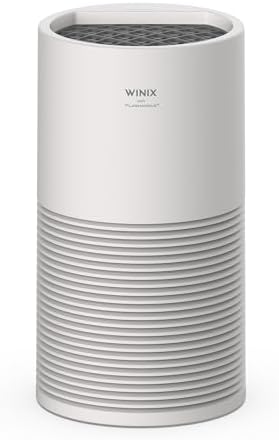 Visit on Amazon → Visit on Amazon →Winix 5300-2 Air Purifier with True HEPA, PlasmaWave and Odor Reducing Carbon Filter |
Bedrooms and living rooms, the safe all-around pick | Not published the way I want it | Replacement HEPA and carbon filter pricing | Check current Amazon price |
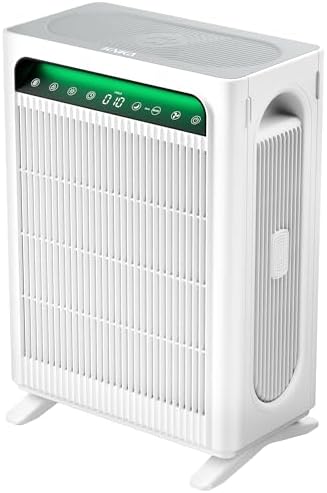 Visit on Amazon → Visit on Amazon →KNKA Air Purifiers for Home Bedroom Up to 1,695 Ft² in 1 Hr, APH4000, Black |
Large bedroom or open living area on a budget | 1,695 sq ft in 1 hr means one air change at max speed | Noise at the speed you will actually use | $129.99 |
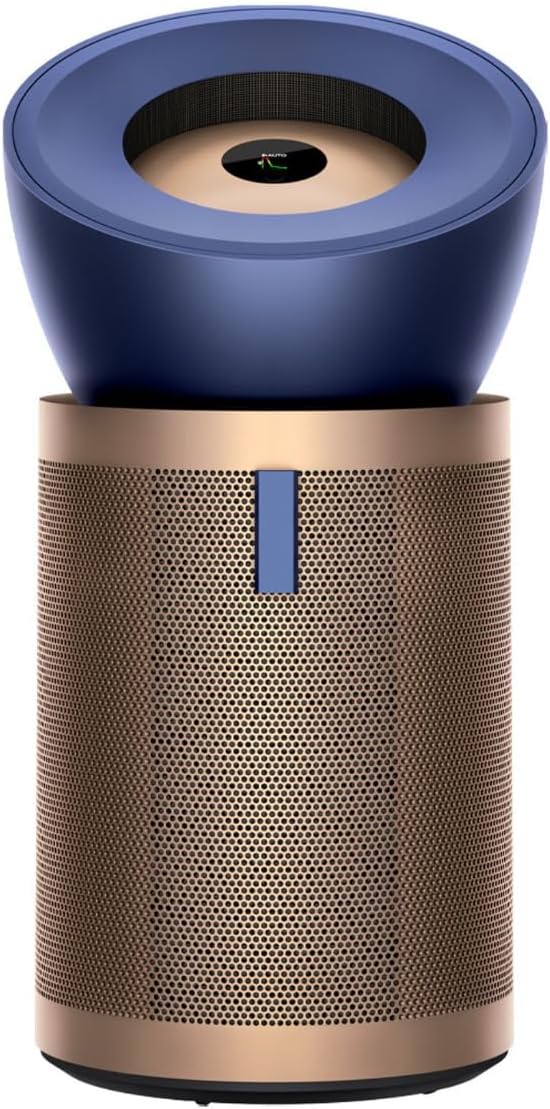 Visit on Amazon → Visit on Amazon →Dyson Big+Quiet Formaldehyde Air Purifier, Blue/Gold (Renewed) |
Airflow, quiet operation, formaldehyde sensing | Built for large rooms, priced accordingly | Who renewed it, the warranty, and whether the filter is new | Check current Amazon price |
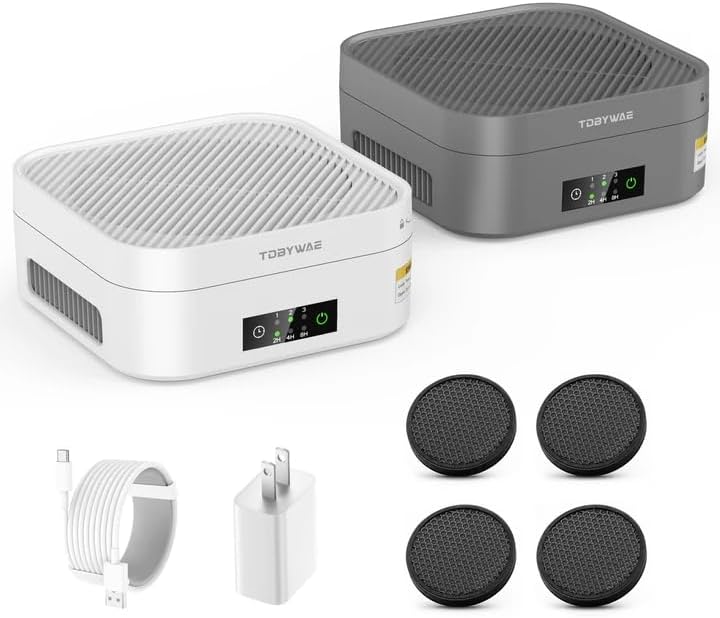 Visit on Amazon → Visit on Amazon →Air Purifiers for Home, 2 Pack Air Purifiers with 2 Filters Replacement |
Two separate small rooms, not one big one | No CADR published, which is the thing to ask about | Filter availability once the included pair runs out | Check current Amazon price |
What the numbers actually mean
Coverage claims and CADR are two different languages, and the industry mixes them on purpose. CADR is cubic feet per minute of clean air delivered, measured under test conditions. Coverage is a room size derived from CADR by assuming a certain number of air changes per hour, usually one. One air change per hour is a low bar. If you want a room to feel noticeably different, especially during wildfire season, you want more like four to five air changes per hour, which means a smaller room than the box suggests or a bigger machine than you planned on.
This is why I do not shop by square footage. I shop by CADR, then I check the seal, then I check what the filters cost. A machine with a great CADR and a bad seal is a machine that pulls dusty air past the filter and back into the room. You cannot see it. You can measure it with a particle counter at the seams, and that is what I do.
The other thing the numbers will not tell you is where the air goes. A purifier three feet off the wall in the middle of the traffic path cleans the room. A purifier wedged behind the sofa cleans the sofa.
For smoke season specifically, the setup matters more than the brand. Close the windows, run the purifier on a speed you can tolerate for hours, and change the carbon stage on schedule, because carbon is what handles the smell. HEPA handles the particles. You need both.
Should you buy the Winix 5300-2?
Yes, for most homes. It is True HEPA, it has a carbon stage for odors, it does not require an app to turn on, and the filter supply is not a mystery. If I were buying one purifier for a bedroom or a living room and I wanted the least risk, this is the one. Just price the replacement filters first, because that is the number you will still be paying in year three.
Should you buy the KNKA APH4000?
It depends on the room, and it depends on your tolerance for fan noise. The 1,695 square foot claim is a ceiling, not a target. Treat it as a large-bedroom or open-living-room machine and it is a lot of purifier for the money. Put it in a small bedroom and you are paying for airflow you will never run. Buy it for the room it fits, not for the number on the listing.
The bottom line
The purifier business sells percentages and square footage because those numbers are easy to print. What actually cleans your air is airflow, a sealed filter path, and a filter you can afford to replace on schedule. Pick the unit that fits the room you have, put it where the air moves, and budget for the filters before you budget for the machine. That is the whole trick.