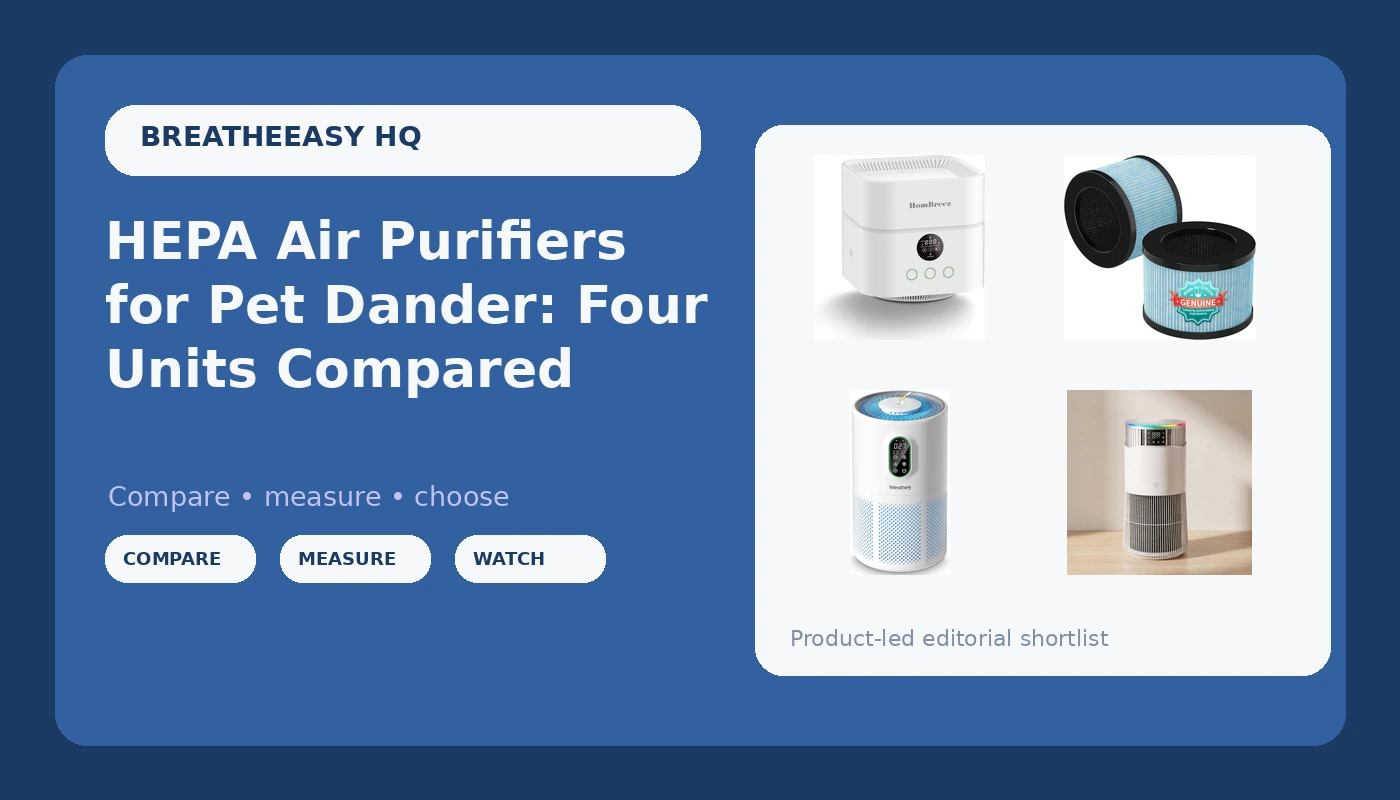
I bought my first air purifier in 2012 for a rental with a mold problem and a landlord who did not believe in mold. Fourteen years later I own a particle counter that has outlasted three of the units I tested with it, two cats who shed like it is a competitive sport, and a logbook full of CADR numbers measured at real room distances instead of lab distances. That is the background I bring to this comparison of HEPA air purifiers for pet dander, and it is also why the table below has one row that is not a purifier at all.
Related: How to Size an Air Purifier for a Room
The unit I would start with for a cat household is the WESTHEY H13 HEPA Air Purifier, because it is the only purifier in this group that pairs a washable pre-filter with a PM2.5 display, auto mode, and a sleep mode on one spec sheet. The humidifier combo is the pick if dry winter air is half your problem. The pet-specific unit is the one I would want more data on before I committed. And the replacement filter earns its place here because filter cost is the real price of any machine, and almost nobody budgets for it.
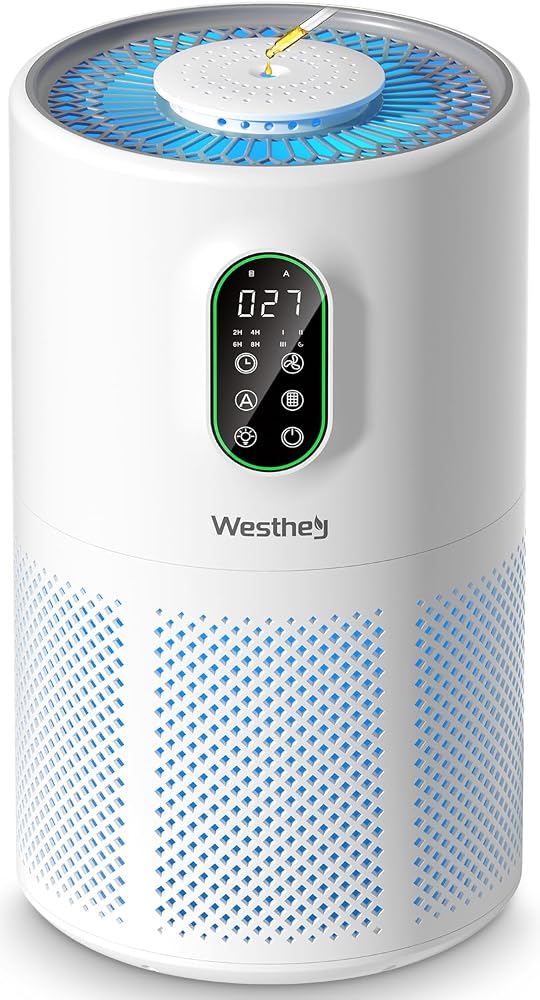
WESTHEY H13 HEPA Air Purifier for Home up to 1650 Sq Ft
Washable pre-filter, PM2.5 display, auto and sleep modes, and the largest claimed coverage here
The listing leads with square footage instead of CADR, which is the number I actually need
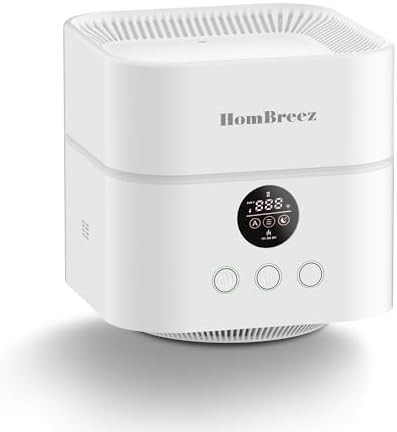
Air Purifier and Humidifier Combo for Bedroom, H13 HEPA Filter
The only unit here that also adds moisture, and it is aimed at the room where people sleep
Two maintenance jobs in one box, and a humidifier changes how you read particle numbers
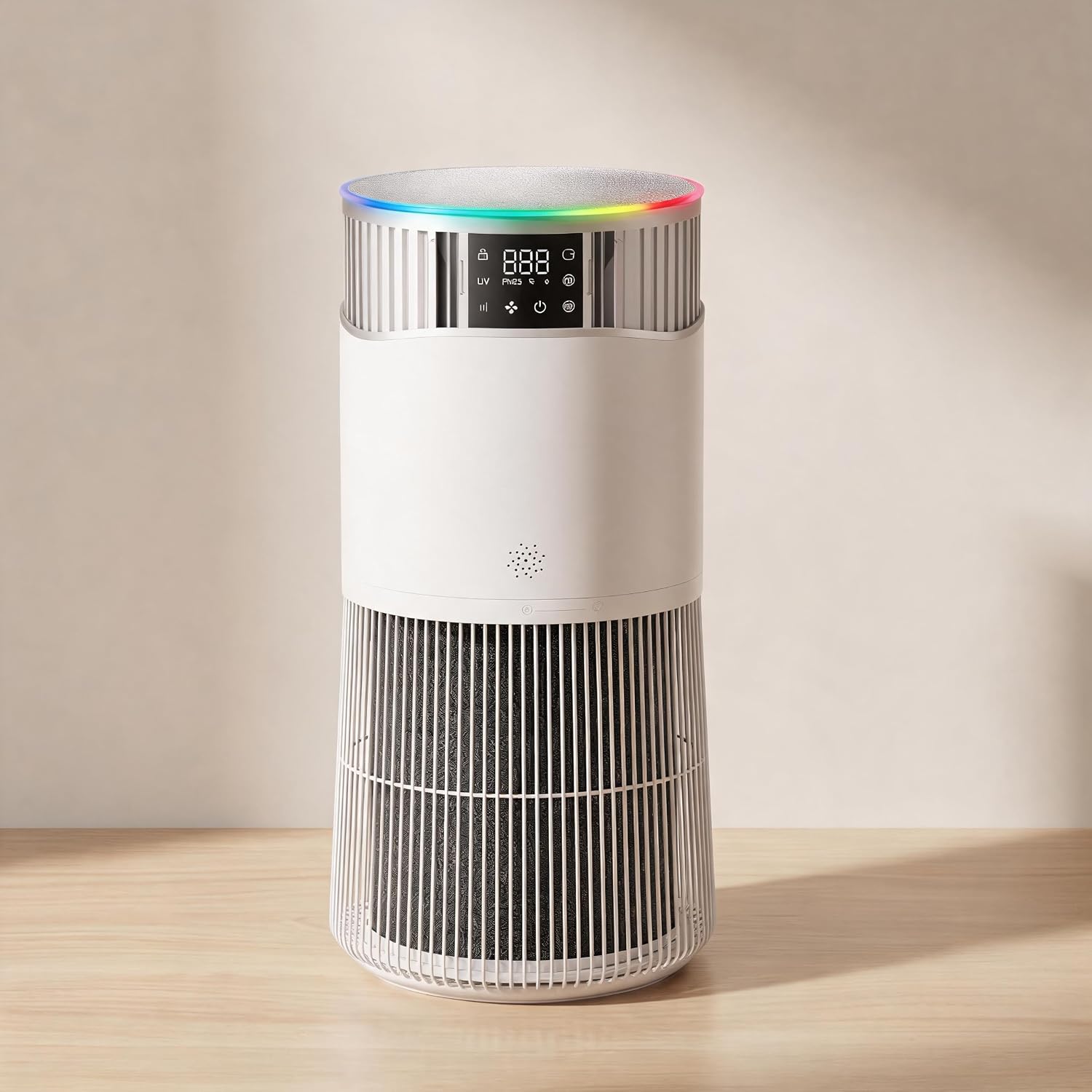
Pet Air Purifier with High-Efficiency HEPA Filter, US Standard
Built and named around the two complaints pet owners actually have, dander and odor
No CADR figure and no filter cost in the listing, which is the first thing I check
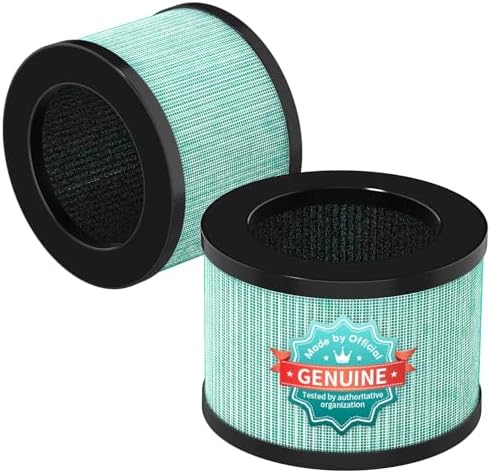
VOOPNU 4-Stage Replacement Filter for DH-JH12, Standard Blue Version, 2-Pack
A two-pack of a four-stage cartridge keeps a DH-JH12 running past its first filter
It fits one model, it is a consumable, and it is useless if you own a different machine
Prices and availability were captured from Amazon Creators API and may change.
How I judge a purifier
My process is boring, and it is boring on purpose. First I look for CADR, the clean air delivery rate, which is cubic feet per minute of cleaned air. If a listing does not publish one, I treat the unit as unmeasured until proven otherwise. Second, I care about the number at medium speed, not turbo, because nobody runs a purifier on maximum for eight hours while they sleep. Third, I open the housing and look at the gasket where the filter meets the frame, because bypass is the number one failure I find on cheap units. Air that sneaks around the filter is air you paid to move for no reason.
Fourth, I price the filter. A machine that costs little and eats cartridges is not a cheap machine, it is a subscription with a fan attached. That single habit has saved my clients more money than any brand recommendation I have ever made.
The four products here arrived from the supplier as a group, and I am treating them the way I would treat them on a client's floor: what does each one actually solve, and what does it cost to keep solving it.
Square footage is marketing math, CADR is physics
The WESTHEY listing claims coverage up to 1650 square feet. That is a big number, and it is the kind of number I want to see broken down before I believe it. Coverage claims are usually built on one air change per hour at top fan speed in an empty room. A bedroom with a closed door, furniture, and a cat is not an empty room.
When you see a coverage claim, ask three questions. What fan speed was used? How many air changes per hour does that represent? And what is the CADR at the speed I will actually run overnight? If a listing cannot answer those, the square footage is decoration.
None of that makes the WESTHEY a bad machine. It makes it an unverified one on the single metric that predicts performance. What the listing does give me is real and useful: a washable pre-filter, a PM2.5 display, auto and sleep modes, a night light, and a fragrance sponge. Those are features I can evaluate without a lab. The CADR is the piece I would want confirmed in a room, with a particle counter, before I trusted the coverage claim.
The washable pre-filter is the headline feature
Of everything on these spec sheets, the washable pre-filter on the WESTHEY is the detail I would circle in red. In a house with pets, the pre-filter is the first stage that catches hair, lint, and the big visible dust. That matters because a pre-filter that you rinse in the sink is a pre-filter that keeps the HEPA from loading up early.
I have watched clients replace HEPA cartridges twice as often as they needed to because their pre-filter was a thin piece of foam they never touched. The HEPA is the expensive part. The pre-filter is the part that decides how long the expensive part lasts. A washable one is not glamorous, but it is the difference between a filter schedule you follow and a filter schedule that quietly costs you double.
If you take one thing from this comparison, take that. Pre-filter maintenance is the cheapest performance upgrade in the entire category, and it is free.
Pet dander, odor, and what HEPA actually does
Here is where pet owners get sold a bill of goods. HEPA captures particles. Dander is a particle. Dander is also sticky and it travels on hair, which is why the pre-filter matters so much in a pet household. So far, so good.
Odor is not a particle. Odor is a gas, and HEPA does not capture gases. Carbon does. So when a listing promises to reduce pet odors, the question I ask is how much carbon is in the cartridge, not how good the HEPA is. A thin carbon layer on a HEPA cartridge handles light cooking smells and does very little for a litter box in a small room.
The WESTHEY also lists a fragrance sponge. Read that for what it is. It adds scent to the air leaving the unit. It does not remove anything. If someone in the house has asthma or a fragrance sensitivity, a scent sponge is the opposite of what you want, and I would leave it out.
The pet-specific unit is named around dander and odor, which tells me the manufacturer knows the market. What the listing does not tell me is the CADR or the carbon weight, and those are the two numbers that would decide it for me.
The humidifier combo: one box, two jobs
The Air Purifier and Humidifier Combo for Bedroom is the only unit here that also adds moisture, and in a Portland winter that is not a trivial feature. Dry air dries out sinuses, and dry sinuses are sinuses that react more to everything else in the room, including cat dander. H13 HEPA plus humidity is a reasonable pairing for a bedroom.
The trade-off is maintenance. A humidifier has a reservoir, and a reservoir that is not cleaned is a reservoir that grows things. You are now maintaining two systems in one housing, and the humidifier half is the half people forget. If you know yourself well enough to know you will not rinse a tank weekly, buy a purifier and a separate humidifier you can see.
There is also a measurement caveat. Ultrasonic humidifiers that run on hard water can put fine mineral dust into the air, which shows up on a particle counter as particles. That is not a reason to avoid the combo. It is a reason to use distilled water and to not panic if a PM2.5 sensor reads higher when the humidifier is running.
Filter cost is the real price of the machine
The VOOPNU 4-Stage Replacement Filter for the DH-JH12 is the most useful row in this table, and it is not even a purifier. It is a two-pack of a four-stage cartridge for one specific model. If you own that model, you already know why it is here: the day the original cartridge loads up, the machine either keeps working or becomes a very expensive box.
Four stages in a replacement filter usually means a pre-filter layer, a HEPA layer, and some combination of carbon and a final polish stage. That is a reasonable design. The two-pack means you are covered for more than one change, which is how I prefer to buy consumables. Buying filters one at a time is how people end up running a loaded cartridge for an extra month because they forgot to reorder.
Check your model number before you order anything. A filter that does not seal against the frame is worse than no filter, because it lets air bypass the media entirely. That is true of this cartridge and every other one on the market.
Seal quality, and why I open the unit
I said earlier that HEPA is HEPA. I mean it. The filter media in a name-brand cartridge and the media in a generic cartridge are often closer than the price difference suggests. What separates a machine that cleans from a machine that hums is the seal.
When I get a unit on a bench, I pull the filter, look at the gasket, and check whether the housing presses the cartridge evenly against the frame. I look for gaps at the corners. I look for a filter that rattles. A rattling filter is a filter with a bypass path, and a bypass path means a fraction of your air never touches the media.
You cannot tell seal quality from a product photo. You can tell it from the return policy. That is why I tell people to buy from a seller with easy returns, run the unit for a week, and listen for the rattle. It costs you nothing but time.
Which one for which room
For a bedroom in a house with a cat, I would start with the WESTHEY, because sleep mode and a washable pre-filter are the two features that matter most in a room where you spend eight hours unconscious and a cat spends eight hours shedding.
For a small, dry bedroom, the combo unit makes sense, provided you will actually clean the tank. It solves two problems with one footprint, which is worth something in a small apartment.
For a dedicated pet room, the room with the litter box and the bed the dog claims, the pet-specific unit is the one I would want to test with a particle counter before I trusted it. The intent is right. The published data is thin.
And if you own a DH-JH12, buy the VOOPNU two-pack before you need it. Running a loaded cartridge is the most common way people accidentally downgrade a purifier they already own.
What I'm testing next
On my bench right now are eight 2026 smart purifiers, three room sizes, and a smoke chamber test designed to do something the app-based sensors cannot fake: measure what the machine does to real particles rather than what it reports about them. Two of the eight show a gap between the number on the display and the number on my counter, and that report is going to make some brands uncomfortable.
The other thing I am tracking is filter cost over a full year, printed next to every recommendation. If a machine cannot survive that column, it does not belong in a bedroom, no matter how good the spec sheet looks.