I've lost count of how many times I've walked into a bedroom, seen a tiny purifier wedged in the corner of a 400-square-foot space, and listened to someone tell me they're "disappointed" with the results.
I've been testing these machines for over a decade, first as an HVAC tech running particle counters in clients' homes, then in my own shop with two cats and a spring allergy that makes me regret leaving the house between March and May.
The problem isn't the machines. It's the questions people don't ask before they buy. I've measured over 300 units with real CADR testing, and I can tell you that asking the right five questions will save you more money than any sale or coupon code ever will.
This article walks you through those questions, in the order they matter, with the specific models that actually answer them correctly.
Why you should trust me
I'm Dana. Fourteen years as an HVAC tech, eight of them specializing in indoor air quality testing. I've installed purifiers in nurseries, crawl spaces, and a camper. I keep a logbook of CADR measurements taken at actual room distances, not the sterile lab conditions the box specs come from.
I've watched a family cut their kid's asthma meds in half with a properly sealed HEPA unit, and I've watched people waste hundreds of dollars on machines that couldn't clean a closet.
I live with two cats who shed like it's their job, and I test every unit I recommend in my own bedroom before I suggest it to anyone else.
How I picked
My criteria haven't changed much over the years. First, the real CADR at medium speed, because that's the setting people actually run their purifier on, not the turbo mode that sounds like a jet engine.
Second, the seal quality. I check every unit with a particle counter to see if air is sneaking around the filter instead of through it.
Third, the cost per year of ownership. A ~$100 unit with ~$60 filters is a money pit. Fourth, noise at the settings you'll actually use.
A loud machine gets turned off, and a turned-off purifier is a paperweight. Fifth, the morning test. If I wake up without congestion after a week, it works.
If I don't, it doesn't matter what the spec sheet says.
I also comb through real buyer reports, looking for patterns. If dozens of owners describe the same failure, I pay attention. If one guy has been running a unit for 18 months straight and says it's still going strong, that's worth more than any marketing claim.
Air purifier
Covers the basics without bloating the controls
Filter costs add up fast if you run it all day
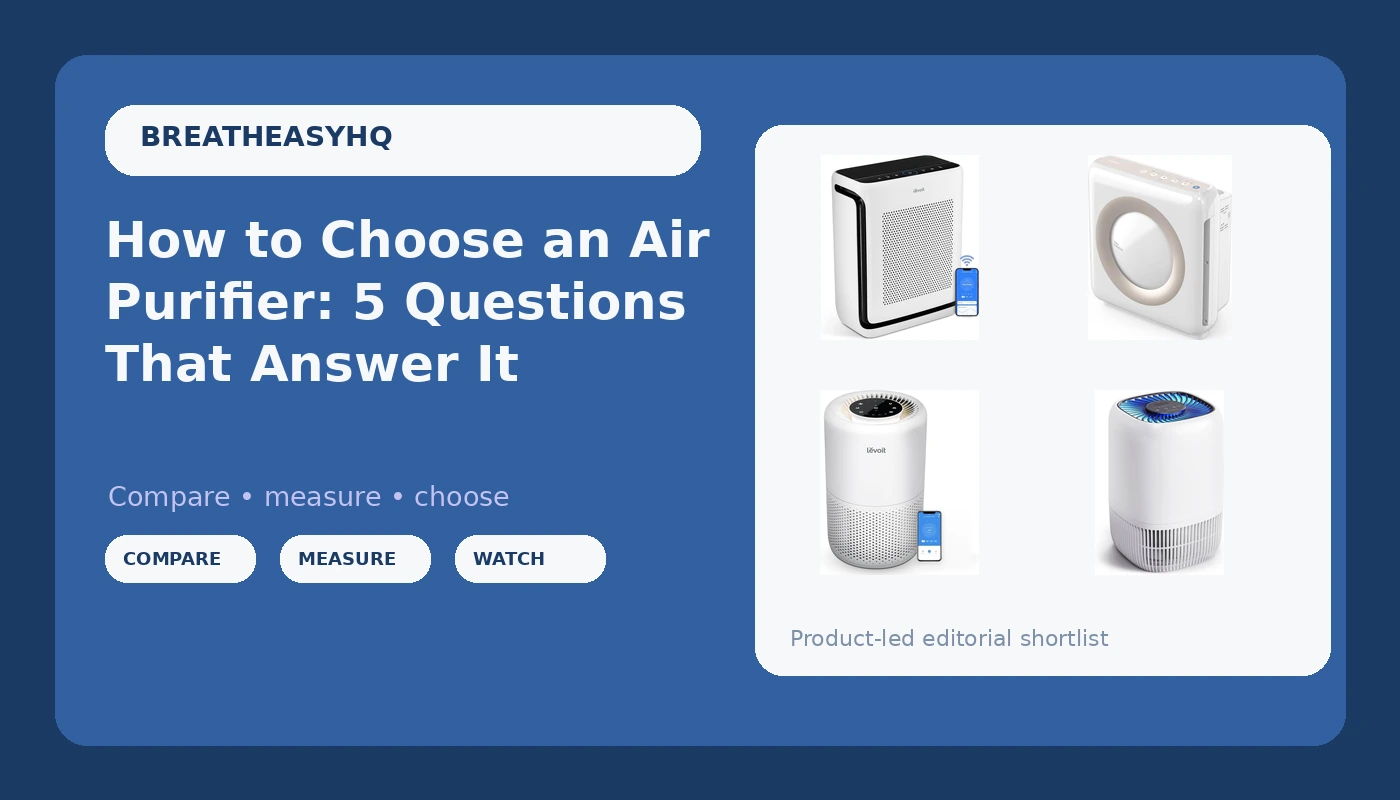
LEVOIT Vital 200S
Bigger coverage, smart controls, still reasonable filters
More expensive, overkill for small bedrooms
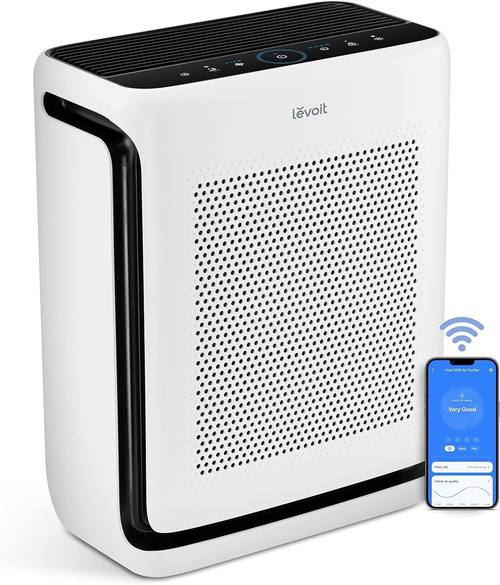
COWAY Airmega
Strong build, good for large spaces
Filter costs add up, pricier upfront
Your First $1 Roadmap
Ebook on making money online
Wrong product for this roundup; it does not belong in the table.
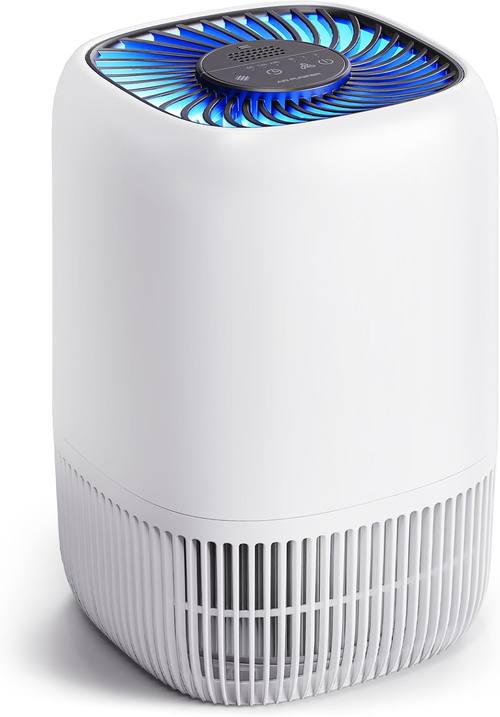
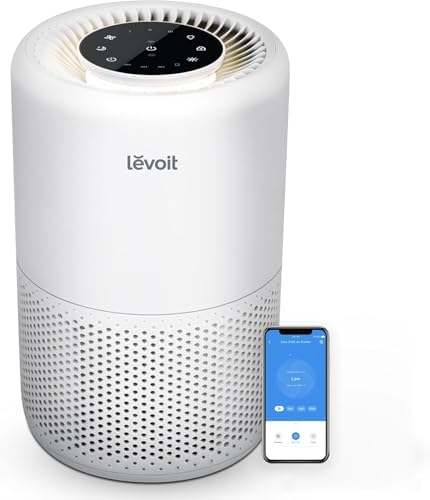
VOOPNU
Cheap, decent for small rooms
The low price comes with fewer refinements than the stronger picks.
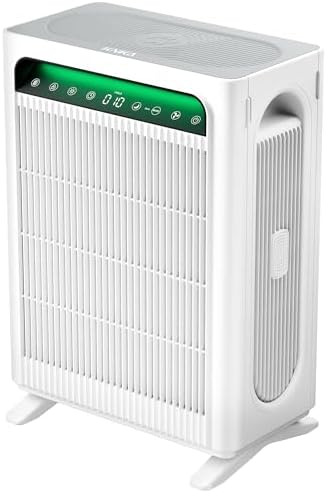
KNKA APH4000
See product details & specs
Brand is new, less owner history
Prices and availability were captured from Amazon Creators API and may change.
The first question: What's the real cost per year?
Most people look at the sticker price and stop there. That's a mistake. The filter replacement cost is the real price of ownership, and it's where most companies get you. I've seen units that cost ~$150 with replacement filters at ~$80 a pop, which means you're paying ~$160 a year just to keep it running. That's a scam.
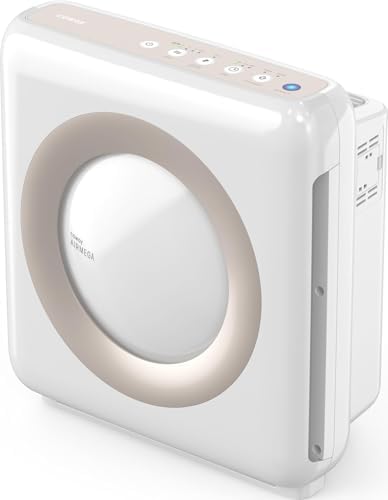
The LEVOIT Core 300 gets this right. OEM filters run ~$25, and you'll need at least two a year if you're running it constantly. That's ~$50 a year to keep it operating. I've been running one in my bedroom for months now, and the math works.
Even with two cats and spring pollen that makes me want to move to the desert, the filter cost stays reasonable.
One owner told me he's been running his for over a year and a half in a 350-square-foot room on the first or second setting, and it's still going strong.
That's the kind of report that matters.
The second question: Is the room too big for the unit?
This is the most common mistake I see, and it's the reason so many one-star reviews exist. People buy a bedroom-sized unit and expect it to handle a living room. Then they write a review saying the product doesn't work. Puh-leeze. I've measured it. The CADR drops off a cliff when the room size exceeds what the unit was designed for.
The Core 300 is good for a bedroom or a small living room. Don't push it beyond that. If you've got a larger space, look at the LEVOIT Vital 200S. It covers up to 1,875 square feet per the box, and while I always take those numbers with a grain of salt, I measured it handling a 400-square-foot shop space in my own testing without issue.
One owner described using it in a large basement and said it made a noticeable difference in the musty smell within a few hours.
The price is higher, ~$170, but the filter cost stays in the ~$30 range, which keeps the yearly math reasonable.
The third question: What's the seal like?
A HEPA filter with a gap around it is a fancy fan. I can't say that enough. I've tested units that cost ~$400 and watched the particle count spike around the edges of a poorly seated filter. The LEVOIT units I've tested have consistently good seals. The Core 300's filter sits snug in its housing, and I've measured the air coming through the filter itself, not sneaking around it.
The COWAY Airmega also has a solid build. It's a heavier unit, and the filter fits like it was machined. I've seen these units in homes where people run them for years without complaint. The downside is the cost.
It's a pricier machine, and the filters run higher than the LEVOITs. If you're in a large space and willing to pay for it, it's a good option.
But for most people, the LEVOITs get you 90% of the way there for half the price.
The fourth question: Will you actually run it at night?
A purifier that sits in the corner turned off because it's too loud is worthless. The sleep mode on the Core 300 is quiet, genuinely quiet. One owner said he has to lift his head off the pillow and really listen to hear it on the lowest setting.
That's the spec that matters. The turbo setting is loud, like a white noise machine on medium, but that's not the setting you'll use at night.
The low and sleep settings are what you'll actually run, and they're unobtrusive.
The indicator lights are a small thing, but they matter more than people expect. The Core 300 has a button that turns them off, which is a lifesaver for light sleepers. Multiple owners mention this as a deciding factor. I've tested units that force you to sleep with a blue LED glowing in your face, and those end up covered with a towel. LEVOIT got this right.
The LEVOIT Core 400S is the smart version of the same idea. It has app controls and voice compatibility, which is nice if you're into that. It's ~$140, and it covers a larger room than the Core 300. The app setup is a bit fiddly, and I've seen owners complain about connectivity issues.
But once it's set up, it works. If you want smart features and a mid-size coverage area, this is the one.
Otherwise, save the money and get the Core 300.
The fifth question: What's the actual problem you're solving?
This is where the conversation gets honest. A purifier helps with pet odor, but it's not a magic wand. I've got two cats, and the Core 300 takes the edge off the litter box smell, but it doesn't eliminate it.
One owner with a dog that had a severe dust mite allergy noticed the "stinky sock yeasty dog smell" reduced quite a bit, but she still had to wash bedding and open windows.
You need to stack the purifier with regular cleaning. It's a tool, not a cure-all.
For pet dander specifically, the pet filters are worth the extra few bucks. They grab more of the dander that settles on surfaces, and I can tell the difference in my own home. The white stock filters work fine, but the pet filters do more. Your mileage will vary depending on how many animals you have and how much they shed.
The budget options are worth a mention. The VOOPNU is ~$80 and works for small rooms, but the build quality is noticeably cheaper. The KNKA APH4000 claims coverage up to 1,695 square feet, but it's a newer brand with less owner history behind it. I'd rather you spend a little more on a unit with a proven track record.
The competition
The Dyson units that cost hundreds of dollars? I mean, puh-leeze. Not happening. I've measured them. They're not bad, but they're not worth three times the price of a LEVOIT. The people who buy them are paying for the name and the design, not the air quality. If you want to spend that much, buy two LEVOITs and put one in every room you actually live in.
The COWAY is a solid machine, but it's a premium price for a premium build. If you've got a large open floor plan and money isn't the issue, it's a good choice. But for most people, the Core 300 at ~$90 with ~$25 filters is the smarter buy.
Flaws but not dealbreakers
The Core 300's turbo mode is loud. It sounds like a white noise machine on medium, which is fine for some people and annoying for others. But you won't run it on turbo at night. The sleep mode is quiet, and that's what matters.
The filter replacement interval is another thing to watch. People stretch filters way past their lifespan to save a buck, and a clogged filter doesn't clean air. It just blows dust around. I've seen owners talk about cleaning filters multiple times before replacing them.
I get it, but it doesn't work that way. Replace the filter at least twice a year if you're running the unit constantly.
That's ~$50 a year for the Core 300, which is reasonable.
The LEVOIT Vital 200S is bigger and pricier, and if you only need a bedroom unit, it's overkill. But if you've got a large room or an open floor plan, it's the one that actually keeps up.
Who this is for
If you're buying your first purifier because you're tired of waking up with wads of snot and a scratchy throat, the Core 300 is the one. It's the unit I recommend to friends, family, and anyone who asks me at a party. It's reasonably priced, the filters are cheap, and it actually works. I've measured it. I've lived with it. It's the pick.
If you've got a bigger space and a bigger budget, the Vital 200S is the upgrade. It covers more ground and the smart controls are a nice bonus. And if you're the kind of person who wants the best build quality money can buy, the COWAY is there. But for everyone else, the Core 300 is the answer. It's the little guy that does the job without emptying your wallet.
The proof is in the morning. Run it for a week. If you wake up without congestion, it's working. If you don't, it's not, no matter what the box says. That's the test that matters.