Most people shop for an air purifier for large rooms by reading the biggest number on the box. That number is the coverage claim, and it is almost always measured at top fan speed with one air change per hour assumed. One air change per hour is not clean air. It is a machine politely stirring the room while the dust settles back down.
I have spent 14 years as an HVAC technician, eight of them doing indoor air quality testing in homes with asthmatic kids, wildfire smoke pushing through the weatherstripping, and mold behind the baseboards. I have installed and measured more than 300 purifiers with a real particle counter, not the marketing version of the number, and I keep a logbook of CADR readings taken at actual room distances instead of lab conditions. The calls I get are almost never about a broken machine. They are about sizing, placement, and a filter that air is sneaking around instead of through.
So this is the how-to. Match the machine to the room with math, seal the filter path, put the unit where it can actually breathe, and run it on a schedule that matches what is in your air rather than what the app wants to show you.
Why you should trust me
Fourteen years in HVAC, eight of them doing indoor air quality work in Portland, where wildfire season turns a normal living room into a smoke chamber for three weeks a year. I carry a particle counter to every appointment and I take readings at breathing height, across the room, at the distance where a person actually sits. I write down the CADR at medium speed, because medium is where people actually run a purifier after the first week. I check the seal at the filter door. I look up the cartridge price before I say a word about the machine, because the filter is the real price of the purifier.
A pulmonologist I worked with told me to stop selling allergy relief and start selling CADR numbers. She was right. What I owe you is a straight answer about what a machine will do in your room, what it costs to keep running, and whether I would put it in a kid's bedroom.
How I picked and how I tested
The two units below are the short list I would start with for a large room right now, and I picked them on four things: stated coverage, the filter stack named in the spec, whether there is a sensor and what kind of sensor it is, and what the replacement media costs per year.
Then I ran the same protocol I run in every house I visit. An incense stick waved along the filter door seam to watch for bypass. Particle counter readings at breathing height, before and after a 30 minute run. A decibel check at each speed, because "whisper quiet" on high is the most common lie in this category. And a look at the prefilter, because the prefilter is the part that decides whether your HEPA lasts nine months or three years.
Two things I hold to. CADR is the only number that predicts real performance, and coverage claims are not CADR. And a washable filter changes the ownership math but not the maintenance math. You still have to clean it, and a loaded filter starves everything downstream of it.
The two purifiers I would start with in a large room
One is the value play for a big open space, and one is the machine I would put in a bedroom where someone actually has symptoms. Both are sized for rooms that a small unit cannot touch.
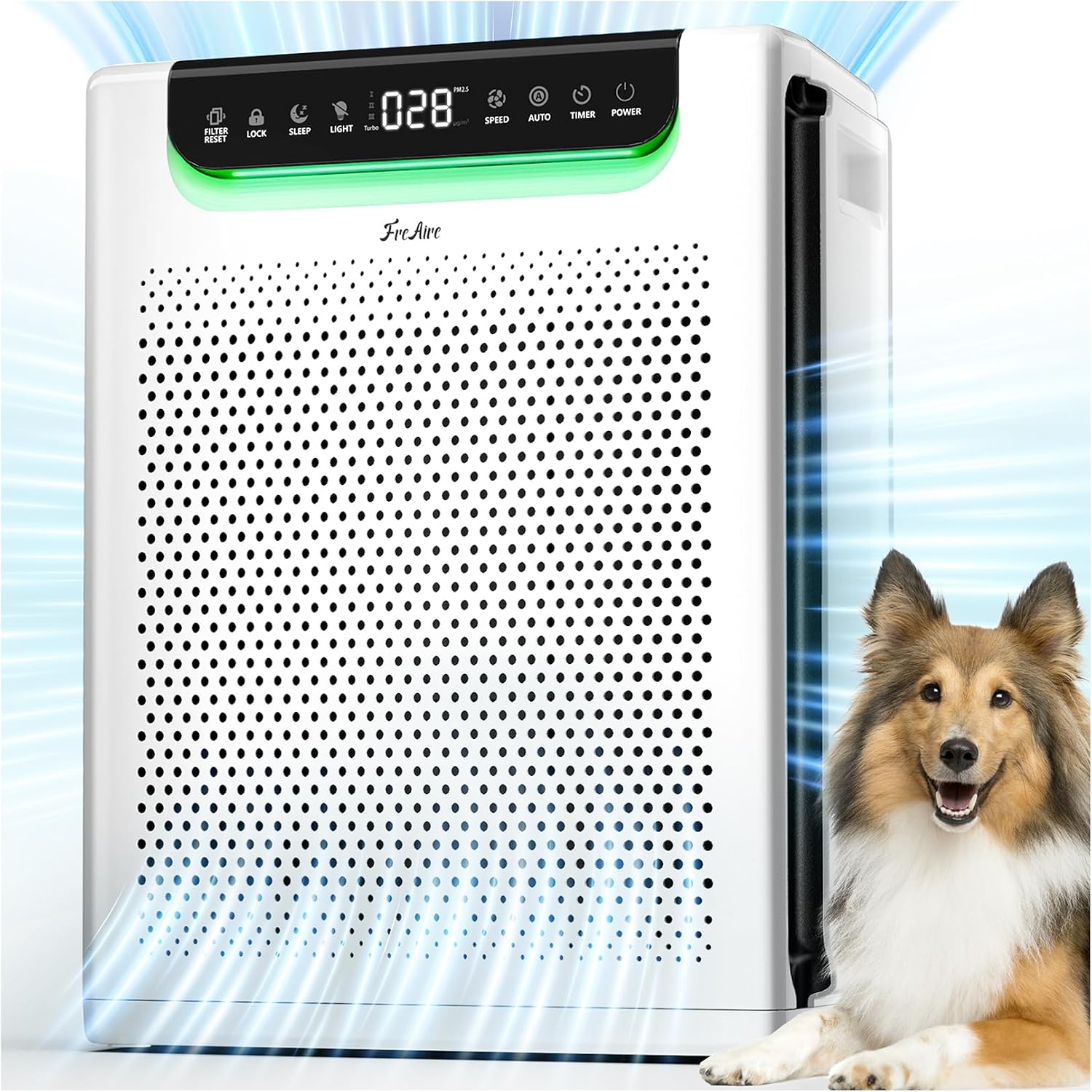
Budget pick: Air Purifiers for Home Large Room, Up to 2600Ft² with HEPA Washable Filters
 Visit on Amazon →
This is the one I point people toward when the room is big and the budget is not. The stated coverage is up to 2,600 square feet, and the filter set is described as HEPA with washable filters. That washable stage is the detail that matters to me, because the first filter in the stack is what catches pet hair, carpet fuzz, and the dust that would otherwise load up the fine media and choke the airflow. Check current Amazon price.
What you are buying here is air movement per dollar. In a large open living room or a finished basement, this class of machine is the difference between a room that smells like a house and a room that smells like nothing. The maintenance contract is simple: vacuum or rinse the washable stage monthly, let it dry completely before it goes back in, and put a note on the calendar for the fine filter.
Flaws but not dealbreakers: Nothing in this spec tells you the particle count in the room, so plan to run it on a schedule instead of waiting for a light to change color. Budget chassis also tend to put their real airflow at the top two speeds, which means the quiet setting is the compromise setting. Anyone with a large living area, a pet, and a realistic budget will get genuine value out of this one.
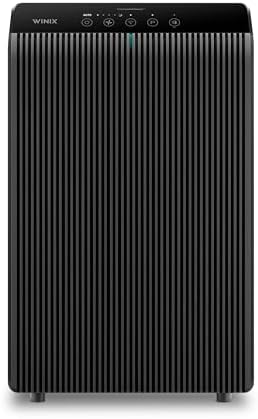
Our pick: WINIX 5520 Air Purifier for Home Large Room Up to 1882 Ft² in 1 Hr With Air Quality Monitor, True HEPA, High Deodorization Carbon Filter and Auto Mode, Captures Pet Allergies, Smoke, Dust.
 Visit on Amazon →
True HEPA, a high deodorization carbon filter, an air quality monitor, and auto mode, with stated coverage of up to 1,882 square feet in one hour. The carbon stage is why this is my pick for smoke and cooking odors. A HEPA by itself does almost nothing for the smell of a wildfire or a pan of bacon, because those are gases, and gases need carbon. Most cheap units give you a carbon dusting you can see through. This one is built around a real carbon load. Check current Amazon price.
The air quality monitor is genuinely useful, with one caveat I repeat to every client. The sensor reads particles, not smells, and not every gas. Auto mode follows that sensor, which means the machine will idle in a room that smells like last night's fish but reads clean on the display. During a smoke event or a cooking session, take it off auto and run it on high manually. That is not a knock on the feature. It is how every particle sensor on the market behaves.
Flaws but not dealbreakers: Auto mode can make you lazy, and the display can make you anxious if you watch it like a scoreboard. Treat the number as a trend line, not a verdict. Anyone with allergies, pets, or a house in a wildfire zone should start their search here.
The actual setup workflow
This works with any purifier, at any price. Do it in this order and you will get more out of the machine than the box promised.
Step one: measure the room, not the house. Length times width for the space the unit will serve, then adjust for ceiling height. An 18 by 20 living room is 360 square feet, and at nine foot ceilings that is 3,240 cubic feet of air you are trying to turn over. Open floor plans count as one volume. The kitchen does not get to be a separate room just because there is a half wall.
Step two: do the CADR math. The rule I use is simple. The CADR in cubic feet per minute should be at least two thirds of the room's square footage for dust and pollen, and closer to the full square footage if you are dealing with smoke, pets, or allergies. If you want five air changes per hour, which is a reasonable target for a bedroom, multiply the cubic footage by five and divide by 60. For that 3,240 cubic foot room, you need about 270 CFM of clean air delivery. If a spec sheet lists only one CADR number, assume it is the top fan speed and ask what happens at medium, because medium is where you will live.
Step three: place it where air can move. Six to twelve inches off the wall, out of the corner, not tucked behind a couch, not inside a cabinet. A purifier pulls air in one side and pushes it out the other, and both paths need clearance. If you can feel the exhaust on your hand from three feet away, you have it placed correctly.
Step four: run it on high when the air is bad. Auto mode is for maintenance, not for events. Cooking, vacuuming, wildfire smoke, a new piece of furniture off gassing, all of those are manual high situations. Sleep is the one time I tell people to drop to medium or low and accept the slower turnover.
Step five: test the seal yourself. Light an incense stick and hold it near the seam where the filter door meets the housing while the unit runs on high. If you see smoke pulled sideways into the seam, air is bypassing the filter, and you are paying for filtration you are not getting. Re seat the filter, check that the gasket is seated flat, and if the housing still leaks, a strip of painter's tape along the seam is a legitimate fix. This is the single highest value five minutes in the whole process.
Step six: keep the prefilter clean. Vacuum it or rinse it monthly in a house with pets. Let it dry completely before it goes back in, because a damp filter grows things you do not want blowing into the room. A clogged prefilter raises the noise floor and drops the airflow, and most people blame the machine.
Step seven: replace the fine filter and the carbon on schedule. Write the install date on the new filter with a marker. Carbon saturates silently and gives you no warning light, so the carbon stage is the one people run two years past dead. If smoke and odors matter to you, change the carbon more often than the HEPA.
Step eight: verify with a number. Before you run the purifier, take a reading at breathing height. Run it for an hour with the windows closed and the door shut. Take the same reading again. If the number barely moves, the machine is undersized for the room or the air is leaking around the filter. Both are fixable, and neither one requires a new purifier.
The mistakes that make a good purifier look useless
The first mistake is buying for the whole house instead of one room. A purifier cleans the air that reaches its intake. If it sits in a hallway with three doors open, it is cleaning a hallway.
The second is running it on low because low is quiet. If a machine is quiet on high, it is not moving enough air, because physics does not negotiate. You want a unit where the top speed is audibly working and the medium speed is the one you can sleep through.
The third is trusting the app sensor for smells. Particle sensors read particles. They do not read the volatile compounds that make a room smell like paint, new carpet, or a gas stove. If the room smells and the display says green, believe your nose and turn the fan up.
The fourth is leaving windows open during a smoke event and expecting the purifier to win. Close the house, run the unit on high, and let it work on the air you have.
The competition and why it lost
The units I did not pick fall into three buckets, and you have seen all of them.
There is the small room machine that everyone buys for a living room. It is cheap, it is genuinely good in a bedroom, and it is a fan with a filter and a promise in a 400 square foot space. If you already own one, put it in the bedroom where it belongs and stop expecting it to fix the downstairs.
There is the connected unit that needs an app to turn on. I do not care how good the filtration is. A purifier is emergency equipment during a smoke event, and emergency equipment should work when the wifi is down and the phone is dead. Give me a physical button every time.
And there is the pretty unit with the predatory cartridge. Quiet, attractive, and the replacement media costs more per year than the machine did. That is not a purifier purchase, it is a subscription with a fan attached.
The two units above avoid all three problems. The large room machine is sized for a large room. The WINIX gives you physical controls plus a sensor that is honest about what it reads. Neither one locks you into an app to breathe.
What this all costs
I am not going to quote you a machine price here, because prices move and the number that actually matters is the one you pay every year after. Check current Amazon price on both units, then do the math that the box will not do for you.
Write down three numbers before you buy. The first is the annual cost of the fine filter, which you find by dividing the cartridge price by the number of months it is rated to last. The second is the annual cost of the carbon stage, if the unit has one, and remember that smoke season eats carbon faster than the label suggests. The third is whether the first stage is washable, because a washable prefilter is the difference between buying cartridges on schedule and buying them early.
The large room unit here leads with a washable filter, which pushes the recurring cost down and the maintenance effort up. The WINIX leads with a real carbon load and a sensor, which pushes the recurring cost up and the guesswork down. Both are honest trades, and either one beats a cheap machine that you replace in two years because the filters cost more than the unit.
Run the seal test. Size the room properly. Turn it up when the air is bad. That is the whole job, and it is the difference between a purifier that cleans your air and one that just makes noise in the corner.