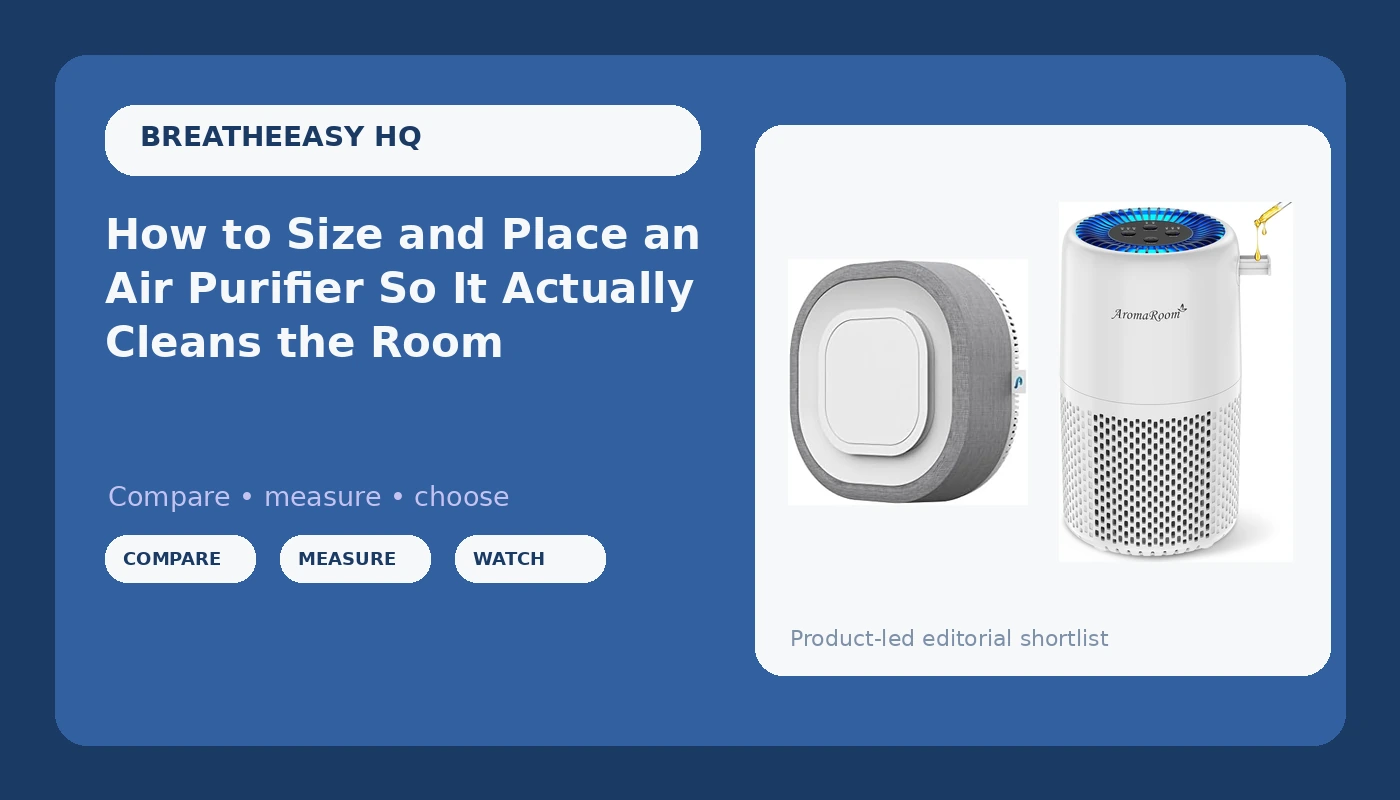
Most people buy an air purifier the way they buy a fan. They see a box, they see a room, they assume it fits. Then the allergies do not improve and the machine gets blamed. Sizing an air purifier is the step almost nobody does, and it is the reason a large unit can underperform in a living room while a small one fixes a bedroom.
I have worked indoor air quality for 14 years, eight of those testing homes with asthmatic kids, wildfire smoke pushing through window gaskets, and mold behind the drywall. A purifier is not a scent machine and it is not a gadget. It is a fan, a filter, and a seal, and the number that predicts what it will do in your house is CADR, clean air delivery rate, in cubic feet per minute.
Get the size and the placement right and a modest unit will out-clean an oversized one sitting in a corner. Get them wrong and you have bought a noise machine with a filter in it. Here is the whole process, start to finish.
Why you should trust me
I am Dana. Fourteen years as an HVAC technician, eight of them doing indoor air quality work in Portland homes, and a logbook full of CADR numbers measured at actual room distances instead of lab conditions. I own a particle counter that cost more than most of the purifiers I test, and I use it before I believe any coverage number printed on a box. I also live with two cats and an allergy to everything that blooms in spring, which means the unit in my own bedroom gets held to the same standard as a client's.
What that buys you here is a bias. I care about CADR, seal quality, and what the filter costs you every year. Everything else is marketing dressed up as science.
How I picked and how I tested
Straight answer: I did not put these two units through a smoke chamber for this article. What I did is apply the four checks I run on every purifier that crosses my bench, and match each unit to the room it is actually built for.
- Real CADR at the speed people run it. Almost every manufacturer quotes max speed, which is the setting nobody leaves on while watching television.
- The seal. Air that sneaks around the filter instead of through it is the number one failure on inexpensive units, and it is invisible from the outside.
- Filter cost per year. The box price is the down payment. The HEPA filter is the mortgage.
- Noise at medium. If it is quiet on high, it is not moving enough air. Physics does not negotiate.
Apply those four and the field narrows fast. The two units below are the ones I would start with for the two most common room sizes in a house.
The two units that fit this workflow
Sizing decides what you buy. These two cover the two ends of a typical house: a bedroom or nursery, and an open living area.
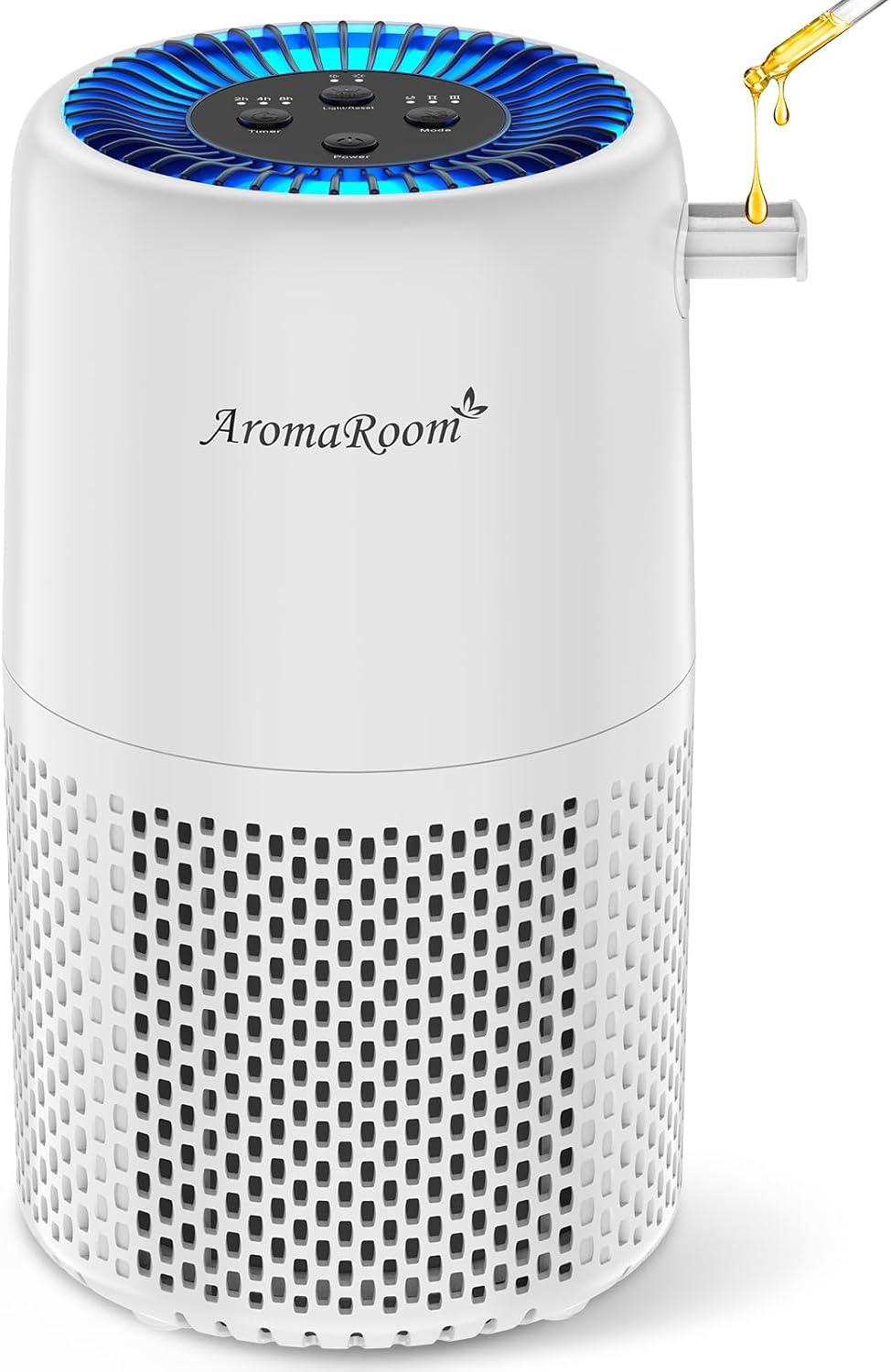
Budget pick: AromaRoom True HEPA Air Purifier for Bedroom, Baby Room
 Visit on Amazon →
Check current Amazon price. This is the one I point at for a bedroom, a nursery, or an office where you sit in one spot all day. True HEPA is the filter standard that matters, and a small unit with a real HEPA filter and a tight cabinet will clean a 120 to 150 square foot bedroom better than a large machine that never gets above its lowest speed.
The catch is the one people ignore. This class of unit only works in the room it was sized for. Put it in an open living room and the CADR gets diluted by volume and by every doorway the air drifts through.
Flaws but not dealbreakers: Small machines have to run at their higher speeds to hit their numbers, and higher speeds are audible. In a nursery that is usually a fine trade, because white noise and clean air arrive together.
Buy this if you have a single room with a problem: pet dander on the pillow, a baby with a stuffy nose, smoke drifting in from outside.
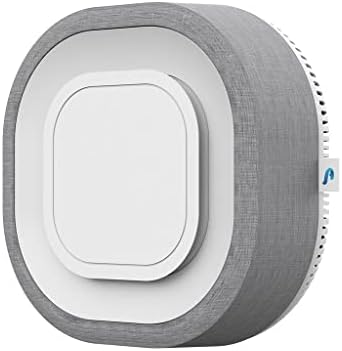
Our pick: Purifier | Smart Air Purifiers for Home, Office | Cover 600 ft2/55 m2 | 4 Stage UVC LED + Sterionizer + Ray HEPA Filter Air Purifier | Air Purifier for Viruses and Bacteria
 Visit on Amazon →
Check current Amazon price. This is the large-room machine: a rated 600 square foot coverage, four stages of filtration including UVC LED and a HEPA stage, and app-connected controls. When a client has an open plan living and kitchen area and wants one unit instead of three, this is the shape of machine that makes sense.
Two things to know before you buy anything in this class. First, coverage ratings are quoted at the highest speed, and the highest speed is loud. Plan on the medium setting for daily running and treat the top speed as a tool for cooking smoke and wildfire days. Second, the extra stages are supporting actors. The HEPA filter is doing the particle removal, and the prefilter is protecting the HEPA.
Flaws but not dealbreakers: Smart features are convenient and completely unnecessary. If the app goes down, the unit still needs a physical button, and this one has one. The bigger consideration is filter cost over time, which I get into below.
Buy this if your problem is a whole floor rather than a single bedroom, and you want the machine tucked into the corner of a large room.
The actual sizing and placement workflow
Now the part you came for. This takes about 15 minutes and a tape measure, and it is the difference between a purifier that works and one that hums.
Step one: measure the room, not the house. Length times width in feet gives you floor area. A 12 by 15 bedroom is 180 square feet. If you have vaulted ceilings or the room opens into a stairwell, add a fudge factor, because you are cleaning volume, not carpet.
Step two: set a CADR target. The rule I use is simple. The CADR at the speed you will actually run the unit should be at least two-thirds of the room's floor area in square feet. A 180 square foot bedroom wants about 120 CFM of CADR. A 600 square foot living area wants around 400. That target gives you roughly five air changes per hour at an 8 foot ceiling, which is the range where allergy symptoms and smoke particles start to drop.
Step three: shop for medium speed, not max. A unit rated at 400 CFM on high might do 220 on medium. If your target is 400, buy the machine whose medium setting clears it. This is why two purifiers that look identical on a spec sheet behave completely differently in a bedroom.
Step four: check the seal before you trust the filter. This is my hill to die on. With the unit running on high, run your hand along the filter door, the seams, and the edges of the housing. If you feel air escaping, that air is not being filtered. On a unit where the filter drops into a plastic cradle, check that the gasket actually contacts the housing all the way around. Bypass is the number one failure on cheap machines, and no filter rating fixes it.
Step five: place it two feet off the wall, out of the corner. Purifiers need to draw from the room, not from a six inch gap behind the couch. Corners trap air and the unit ends up recirculating its own exhaust. Put it where you breathe: bedside, next to the desk, near the crib. If it is in the room, it belongs in the breathing zone, not across the room by the door.
Step six: run it on medium or high, not auto. Auto mode is driven by a PM2.5 sensor, which reads particles. It does not read the cat dander settling on your duvet, and it does not read last night's cooking. Sensors ramp up late and drop back early. Set a speed and leave it.
Step seven: maintain the prefilter. Vacuum the washable prefilter every two to four weeks, or rinse it if the manual says it is washable. A clogged prefilter starves the HEPA and shortens its life. Never vacuum a HEPA filter itself, because you will tear the media and turn a filter into a sieve.
Step eight: replace the HEPA on schedule, not on smell. Most HEPA filters in a bedroom running 12 hours a day last 6 to 12 months. In a smoky season or a house with two shedding pets, lean toward the shorter end. The filter will not announce itself. It just slowly stops working, and you blame the machine.
Step nine: verify. If you have a particle counter, take a reading in the middle of the room with the unit off, then another an hour after you turn it on. If the number does not move, either the unit is undersized for the room or air is bypassing the filter. If you do not have a counter, the honest test is your nose and your morning congestion after two weeks.
Where this goes wrong
Four mistakes show up in almost every house I visit. First, buying for the square footage on the box instead of CADR at the speed you will use. Second, putting the unit in the corner because that is where the outlet is. Third, treating a coverage rating as a promise, when it is a max-speed marketing number. Fourth, forgetting that the filter is a consumable and the machine is not.
One more: ozone. Some purifiers generate ozone on purpose and call it "activated oxygen" or "ionization." Ozone is a lung irritant, and in a house with an asthmatic kid it is the last thing you want. UVC lamps and HEPA filters are fine. Ozone generators are not.
The competition and why it lost
Not every purifier earns a spot here. A few categories lose by default.
App-only units with no physical control lose, because the machine has to work when your Wi-Fi does not. Units that publish a "99.97% removal" claim and no CADR lose, because that claim describes the filter's lab rating and says nothing about what the fan can push through it. UVC-only wands and mini gadgets lose, because a lamp in a plastic tube has no airflow path and no dwell time. And anything that generates ozone loses, full stop, no matter how good the copy reads.
The two units above won on boring criteria: a real HEPA stage, a housing that can be sealed, a size that matches a real room, and a filter you can buy again next year.
What this all costs
The purchase price is the small number. Budget the filter.
A HEPA filter for a bedroom-sized unit is a yearly expense, and a large-room unit's filter costs more because there is more media inside it. Over three years the filter can approach or pass the price of the machine itself, which is exactly why I check replacement cost before I check the sticker. Check current Amazon price. Then price the replacement filter in the same sitting. If that filter is out of stock everywhere, the machine is a paperweight in 10 months.
The rest is free. Fifteen minutes with a tape measure, a hand along the filter door, and a decision to run the unit on medium instead of auto. That is the whole job.
If you want the short version: measure the room, buy for the speed you will actually use, seal the filter, keep it two feet off the wall, and replace the HEPA on a calendar. Everything else is noise, and some of it is literally noise.