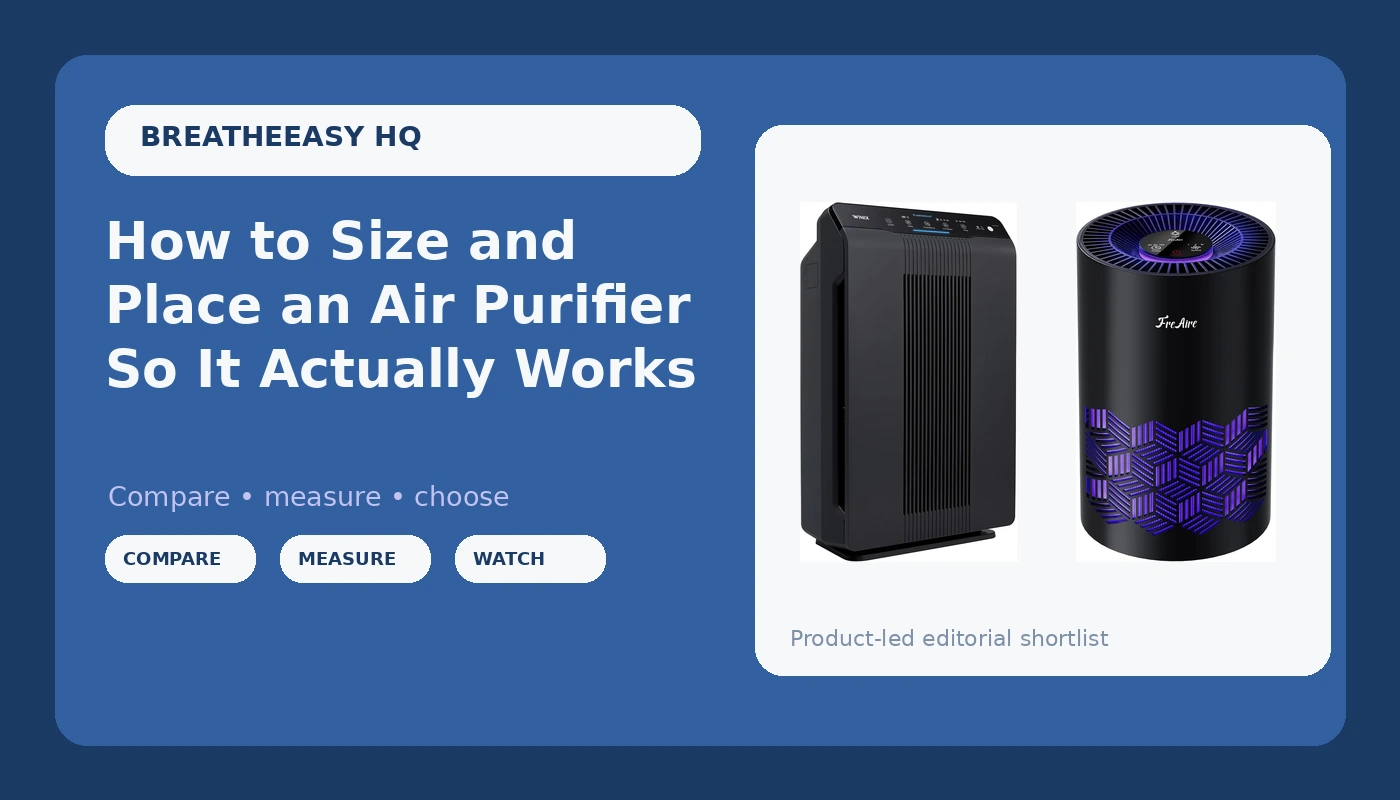
Most people buy an air purifier the way they buy a box fan. They match the box to the room, plug it in, park it in a corner behind the couch, and run it on low because high is loud. Then they wonder why their allergies did not change.
Air purifier sizing and placement is the actual job. The machine is maybe 40 percent of the result. The rest is whether it moves enough air through a sealed filter at the speed you will really leave it on, and whether it sits somewhere the room's air can actually reach it.
I have spent 14 years in HVAC, eight of them doing indoor air quality work in homes with asthmatic kids, wildfire smoke, and mold. This is the method I use before a purifier is allowed into a bedroom, plus the two units I keep coming back to at the price points people actually shop.
Why you should trust me
I install and measure purifiers with a real particle counter, not the marketing brochure. Over 300 units so far, in real rooms with real furniture, not a lab chamber with the door closed. I keep a logbook of CADR numbers taken at the distance a person actually sits from the machine, because the number on the box gets measured in conditions that do not exist in your house.
I live with two cats and a mild allergy to everything that blooms in spring, so I am not immune to the problem I am solving for. My rule is simple: no purifier gets a recommendation from me without a CADR number, a look at the filter seal, and a filter replacement cost. Show me the CADR curve and we can talk. Everything else is marketing dressed up as science.
How I size a purifier before I recommend one
Four questions, in this order.
What is the CADR at medium speed? CADR is Clean Air Delivery Rate, the cubic feet per minute of clean air the unit produces. It is the one number that predicts real performance. Medium matters because almost nobody leaves a purifier on high in a bedroom. If the manufacturer only publishes a CADR at max, assume you lose a meaningful chunk of it at the speed you will actually use.
Does the number match the room? The old AHAM guidance still holds: for smoke and allergy work, you want a smoke CADR at least two thirds of the room's floor area in square feet. A 300 square foot bedroom wants a smoke CADR around 200, not 80. The "up to 1,086 square feet" style claim on a box is a ceiling, not a promise. Those figures get calculated at the highest speed with a low ceiling, and they describe the point where the unit barely keeps up.
What does the filter cost per year? This is the real price of the machine. A washable prefilter is worth real money because it catches pet hair and dust before the HEPA sees it, which stretches the expensive filter's life. A unit with a cheap machine price and an expensive filter every six months is not cheap.
Can I see the seal? Take the filter out. Look at the gasket and the frame. If there is a visible gap where air can slip past the filter instead of going through it, the HEPA rating is decoration. Bypass is the number one failure I find on budget units.
Two purifiers that survive this method
I am not going to hand you a list of twenty. These are the two I keep coming back to, at two different budgets.
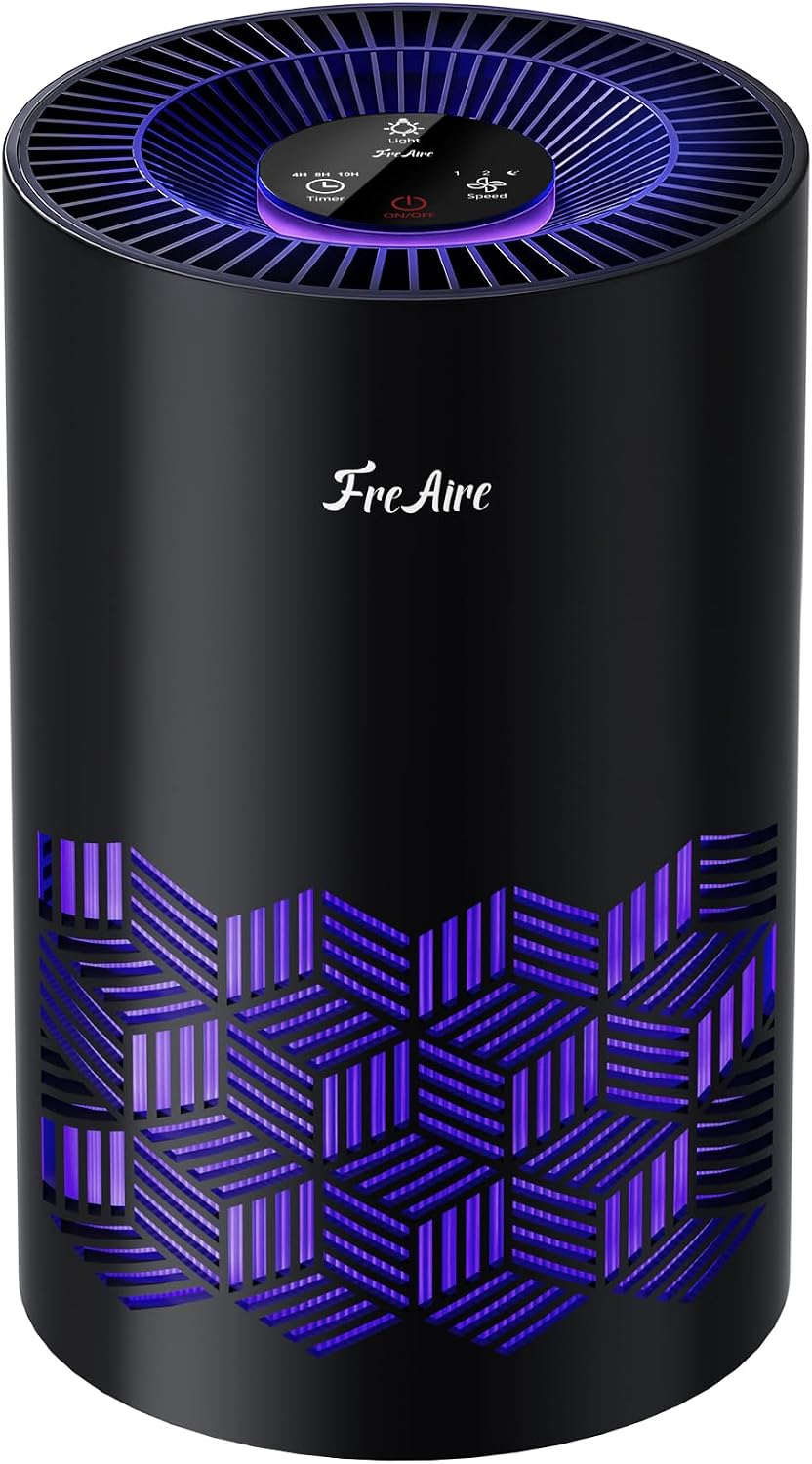
Budget pick: FreAire Air Purifiers for Bedroom Up to 1086 Ft², KN6391RGB, Black
 Visit on Amazon →
Check current Amazon price before you read the rest, because the math changes everything about how you should use this one.
This is a bedroom machine. The name says up to 1,086 square feet, and that is the kind of number I want you to read the way I do: as the outer edge of a claim, not the size of room it cleans well. Put it in a bedroom, run it where you sleep, and it can do real work. Put it in an open living room and you have bought a fan with a filter and a nice light.
The RGB lighting and the black finish are aimed at a kid's room or a dorm, and that is fine. What I care about is the filter stack and the seal. On any unit at this price, open the housing, pull the filter, and check the gasket before you trust it. If the filter sits loose in the frame, run a strip of foam weatherstripping around the edge. It costs a few dollars and it is the single best upgrade you can make to a cheap purifier.
Flaws but not dealbreakers: Small machines have to run fast to move air, and fast means noise. Do not expect a whisper at the speed that actually cleans the room. Expect it to be audible, and accept that as the trade for the price.
Anyone with a small bedroom, a dorm room, or a home office who wants a first purifier without spending real money should look here.
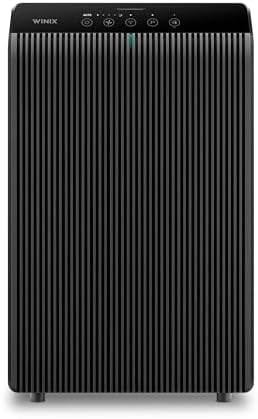
Our pick: Winix 5500-2 Air Purifier with True HEPA, PlasmaWave and Odor Reducing Washable AOC Carbon Filter Medium
 Visit on Amazon →
Check current Amazon price, then price a replacement HEPA and carbon set. That second number is why this is the unit I recommend most often to people who are not made of money.
The 5500-2 is the best value in purifiers in my book, and the reason is the washable AOC carbon filter. That washable first stage is the thing that keeps the True HEPA filter from loading up with cat hair and dust in six weeks. You rinse the prefilter, you put it back, and the expensive filter gets to live out its rated life. The difference between one HEPA a year and two is the difference between a machine that pays for itself and a machine that quietly bills you.
PlasmaWave is on this unit, and it is a feature you can leave off if you would rather run it as a straight HEPA and carbon machine. I am agnostic on it. The filtration that matters is the sealed HEPA stage and the carbon behind it.
Flaws but not dealbreakers: It is a bigger box than a bedroom unit, and on high it is not quiet. The display light can be dimmed or switched off, which matters more than people admit when the thing sits three feet from a pillow.
Anyone who wants one machine to handle a main bedroom or a living room, and who would rather wash a prefilter than buy a new HEPA every other month, should start here.
The actual sizing and placement workflow
Now the part you came for. This works with any purifier that publishes a CADR.
Step one: Measure the room in cubic feet. Length times width times ceiling height. Most people measure floor area and stop, then wonder why a vaulted ceiling room underperforms. Volume is what the machine has to clean.
Step two: Find the CADR on the box. Not the square footage, not the "99.97% removal" badge. If there is no CADR number anywhere, put the box down.
Step three: Run the two thirds rule. For allergy and smoke, the smoke CADR should be at least two thirds of your floor area in square feet. A 250 square foot bedroom wants roughly 165 or better. Buy above that number, not at it, because you will run the machine below max.
Step four: Calculate air changes per hour. Multiply the CADR by 60, then divide by the room volume in cubic feet. That gives you ACH, the number of times per hour the room's air gets cleaned. For asthma and allergies, aim for four to five. For general dust and pet dander, two to three is a reasonable floor. If your number comes out under two, the unit is the wrong size for the room, and no placement trick will fix it.
Step five: Place it where the air moves, not where the outlet is. Six inches off the wall minimum, clear of curtains and furniture, and not jammed in a corner where the intake starves. The best spot puts the machine between the dirty air and where you breathe, with the exhaust pointed into the room and not at a wall. In a bedroom, that usually means a few feet from the bed on the side away from the door, so the unit pulls air across the sleeping area.
Step six: Check the seal before you trust the filter. Open the housing, pull the filter, and look for gaps. Then run the unit on high and hold a tissue near the seam between the filter frame and the housing. If it flutters, air is going around the filter instead of through it. Seal it with foam tape. I have watched a properly sealed budget unit outperform a loose premium one.
Step seven: Set the speed honestly. Leave it on the highest setting you can tolerate while you are awake. Drop it to medium or sleep mode at night. If high is unbearable, that is not a flaw in the machine. That is a sign the machine is too small for the room and it is running at the edge of its capacity.
Step eight: Schedule the filters by date, not by light. Write the install date on the filter with a marker. Rinse the washable prefilter every two to four weeks in a pet home, monthly otherwise. Replace the HEPA on schedule or when it visibly darkens. Most "filter" indicator lights are just timers, and a timer does not know you have two cats.
Where cheap units fail
Three failures show up over and over when I open a purifier that is not doing its job.
The first is bypass. The filter is fine, the seal is not, and the machine is recirculating dirty air around the edge of the media instead of through it.
The second is the carbon stage. A thin carbon sheet handles odors for a few weeks and then does nothing. If smoke or cooking smells are your problem, carbon is the stage that has to be thick, and it is usually the stage that gets cut first.
The third is control design. A purifier that needs an app and a Wi-Fi network to turn on is a purifier that will be off when the power blinks or the router reboots. Physical buttons and a physical speed dial matter more than the graph on your phone.
And the claim I want you to ignore entirely is "99.97% removal" with no CADR printed next to it. The percentage describes the filter media under ideal conditions. It says nothing about how much air gets through that media, or whether the air goes around it.
What this all costs
Check current Amazon price on both machines above, then do the math I actually care about.
The purchase price is the down payment. The filter is the mortgage. Add up what a year of HEPA and carbon replacements costs for the unit you are considering, then divide by twelve to get the real monthly cost of ownership. A cheaper machine with pricey filters can pass an expensive machine in year two.
The washable prefilter is the single biggest lever on that number. It is also the reason I keep pointing people at the Winix for a main room and a small budget unit for a bedroom, instead of one big machine trying to do both jobs badly.
The sizing and placement work in this guide costs nothing. It is the difference between a purifier that changes the number on a particle counter and a purifier that hums in the corner while you keep sneezing. Measure the room, check the CADR, seal the filter, and place it where the air actually goes. That is the whole job.