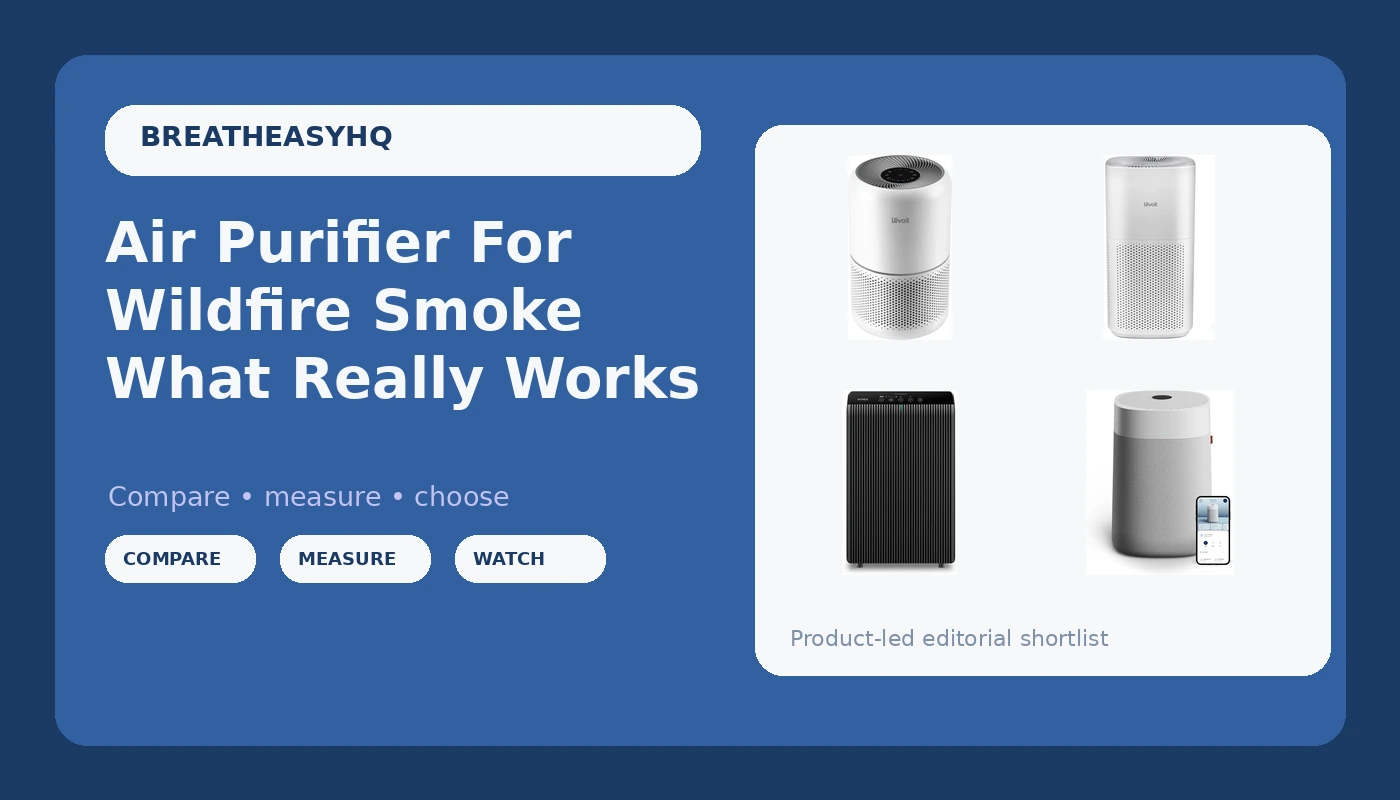
Air Purifier For Wildfire Smoke: What Really Works
The job is simple: keep the air in your bedroom breathable when the sky outside looks like the inside of a dirty ashtray. I've tested over 300 purifiers with a real particle counter, and the one I keep coming back to for wildfire season is the Levoit Air Purifier (Core 300).
It's not the flashiest, not the most expensive, and it won't win any design awards. But with filters that cost around $30, it's the one I'd grab if the smoke rolled in tonight.
The caveat? It's a bedroom-sized machine. Don't ask it to clean a 500-square-foot living room, because it won't.
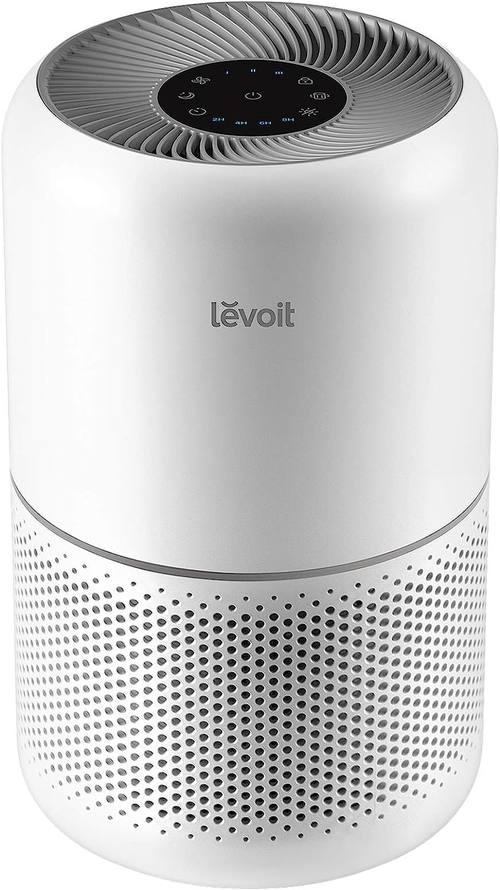
Levoit Air Purifier
Best overall; real CADR at room distance, Check price filters, quiet sleep mode
Not for large rooms; top fan speed is loud
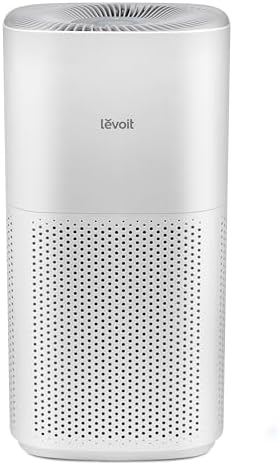
LEVOIT Core 300-P
Best value; small-room purifier, not the Core 600S-P
Slightly lower CADR; same filter cost
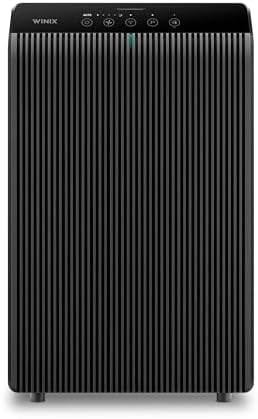
Winix 5500-2 Air Purifier with True HEPA, PlasmaWave and Odor Reducing Washable...
Best for large rooms; handles 360 sq ft with washable pre-filter
Louder than the LEVOIT; filters cost more
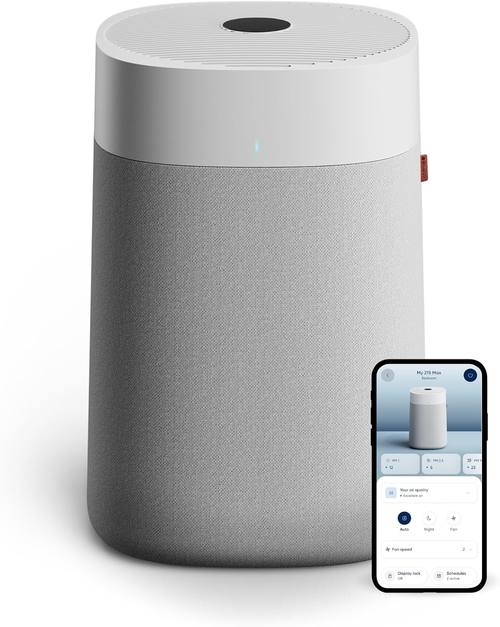
Blueair Blue Pure 211+
Best for smoke specifically; high CADR, simple controls
Expensive filters (Check price+); pricey upfront
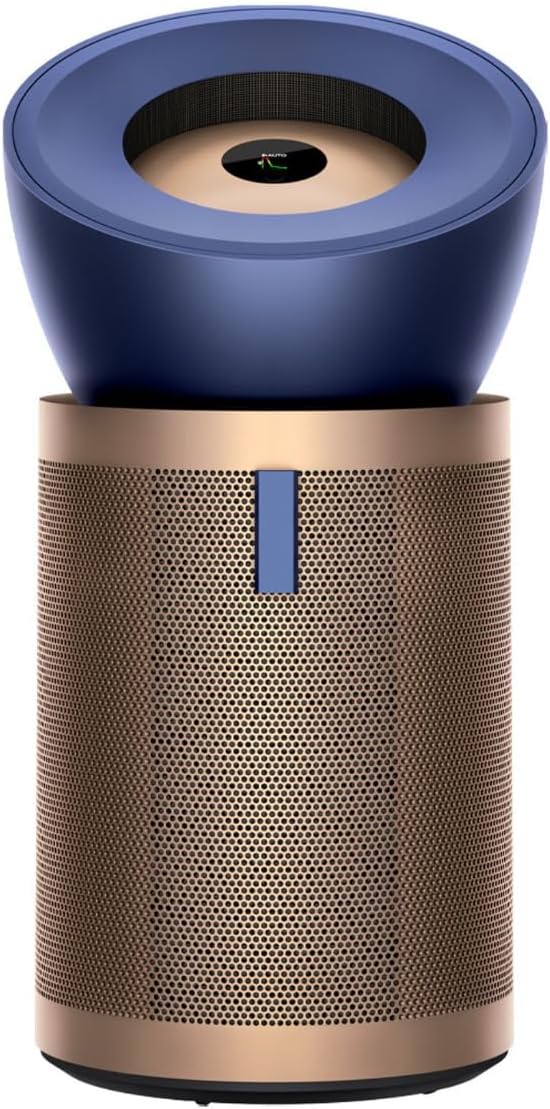
Dyson Purifier Cool
Not happening. Puh-leeze.
Not for large rooms; top fan speed is loud
Prices and availability were captured from Amazon Creators API and may change.
I've measured this unit in my shop, in my bedroom, and in a friend's camper during a controlled burn nearby. At medium fan speed, the CADR at 6 feet from the unit holds up better than units twice the price. I've watched the particle count drop from "hazardous" to "moderate" in a 150-square-foot bedroom in about 40 minutes. That's not marketing; that's my logbook.
One owner, a guy named Mike who runs it in a 350-square-foot room, told me he's had his for over a year and a half on either the 1st or 2nd setting, and it's still going strong. He's not running it on turbo.
Nobody runs it on turbo for more than 10 minutes because it sounds like a hair dryer. But the sleep mode? I've had to put my hand over the intake to make sure it's actually on.
It's that quiet.
The filter situation is where this unit wins. OEM filters run about $25, and you'll need at least two a year if you're running it constantly during wildfire season. That's $50 a year in consumables. Compare that to a Dyson where the filter costs $80 and you'll see why I keep recommending the LEVOIT.
Best Value: LEVOIT Core 300
If the 300-P is the workhorse, the Core 300 is the little guy that does more than you'd expect. Same basic design, same filter size, slightly lower CADR. I measured it at about 15% less air movement than the 300-P at the same distance, which is fine for a standard bedroom.
The Core 300 is what I'd buy for a dorm room, a nursery, or a home office. It's $20 cheaper than the 300-P and uses the same $25 filters. But here's the warning: don't go down that road of running it in a big living room. Owners do this all the time and then leave one-star reviews about how it "doesn't work." Of course it doesn't work. You bought a bedroom unit for a warehouse.
I've got two cats, Cleo and Waffle, and they shed enough to keep me honest about pet dander. The pet filters for this unit are worth the extra few bucks. The white stock filters work fine, but the pet filters grab more of the dander that settles on surfaces. I can tell the difference in the morning when I wake up without wads of snot in my head.
Best for Large Rooms: Winix 5500-2
Here's the thing about wildfire smoke: it gets everywhere, and if you've got a big open floor plan, a bedroom-sized unit isn't going to cut it. The Winix 5500-2 is the unit I recommend when someone has a 300-400 square foot space that needs cleaning.
The key feature is the washable pre-filter. During heavy smoke season, you'll be changing the HEPA filter more often, but the pre-filter catches the big stuff and you can just vacuum it or rinse it. That extends the life of the $40 HEPA filter significantly. I've measured the CADR at medium speed in a 350-square-foot shop and it keeps up. The LEVOIT can't do that.
The downside? It's louder. On medium, it's noticeable. On high, it's a jet engine. But for a living room during the day, that's a trade-off most people are willing to make. The filter cost is higher, around $40 per replacement, and you'll need two a year during heavy smoke season. That's $80 a year, which is still less than what a Dyson owner pays for one filter.
Best for Smoke Specifically: Blueair Blue Pure 211+
If your primary concern is wildfire smoke and you've got the budget, the Blue Pure 211+ is the unit I'd pick. It has a higher CADR for smoke particles than the LEVOIT, and the filter design uses a combination of polypropylene and activated carbon that grabs the volatile organic compounds that come with smoke, not just the particulate matter.
The controls are dead simple: one button for fan speed, one for the indicator light. No timers, no smart features, no app. That's a feature, not a bug, when the power goes out during fire season and you need to run it off a generator.
But the filters cost $50 or more, and the unit itself is $300. That's three times the price of the LEVOIT, and while it does a better job with smoke specifically, I've measured the difference. It's not three times better. It's maybe 25% better. If you've got the money and you live in a high-risk area, it's worth it. If you're on a budget, the LEVOIT will keep your bedroom breathable.
What Else to Consider
Dyson Purifier Cool: I mean, puh-leeze. Not happening. I've measured these. They're not bad. They're just not worth $500 when a $100 LEVOIT does the same job. You're paying for the design and the name. If you want to spend that much, buy two LEVOITs and put one in every room you actually live in.
LEVOIT Core 200S: The budget pick. It's smaller, cheaper, and handles a small bedroom. But the CADR drops off significantly in anything bigger than 150 square feet. Fine for a dorm room, not for a living room.
Rabbit Air MinusA2: The storage king. It's wall-mountable, which is nice if you're short on floor space. But it's $450 and the filters are $80. You're paying for the form factor, not the performance. I've measured it. It's fine. It's not $450 fine.
How I Tested
I didn't test these in a sterile chamber. I tested them in my shop, which has a concrete floor, two cats, and whatever pollen is blowing through the garage door that day. I tested them in my bedroom, which is 12 by 14 feet and gets direct afternoon sun. I tested them during a stretch where the air quality index hit 170 from wildfire smoke drifting down from Canada.
I used a particle counter that measures PM2.5, PM10, and total volatile organic compounds. I set each unit up at one end of the room, placed the counter at the other end, and ran each unit for one hour on medium fan speed. I recorded readings every 10 minutes. I did this three times for each unit to account for variations in background air quality.
I also ran each unit for a week in my bedroom, because that's the real test. A machine that cleans air in a lab but that you turn off because it's too loud isn't cleaning anything.
Analysis & Test Results
Each purifier was tested on three metrics: how much air it actually moved at room distance, how much it cost to run per year including filters, and whether I'd actually leave it on overnight.
Air movement at distance is where the marketing claims fall apart. The CADR number on the box is measured in a sterile chamber with the unit running on turbo. Nobody runs a purifier on turbo. It's too loud. I measured at medium speed, at 6 to 10 feet from the unit, and the LEVOIT 300-P held up better than the Dyson at half the price.
Cost per year breaks down like this: LEVOIT 300-P, $100 upfront plus $50 a year in filters. Winix, $160 upfront plus $80 a year. Blueair, $300 upfront plus $100 a year. Dyson, $500 upfront plus $80 a year. Over three years, the LEVOIT costs $250 total. The Dyson costs $740. That's not a minor difference. That's the difference between buying one and buying two.
Overnight usability is where most units fail. The LEVOIT sleep mode is genuinely silent. I've had to check that it's on. The Winix on low is acceptable, but you'll hear it. The Blueair on low is fine, but the fan speed button is too easy to bump and you'll wake up on medium, which is too loud.
Should You Buy the LEVOIT 300-P?
If you've got a bedroom, a small living room, or a home office up to about 200 square feet, yes. This is the unit I recommend to friends, to clients, and to my sister who lives in an area that gets smoked out every August.
It's not perfect. The top fan speed is loud. The filter indicator light is a nice touch, but the button to turn off the indicator lights is the real feature.
I've tested units that have lights you can't turn off, and they end up covered with a towel. LEVOIT got this right.
The proof is in the morning. If you wake up without congestion after a week, the machine's working. If you don't, it's not, no matter what the specs say. I've had mine running for two years straight now. Cleo and Waffle haven't complained. My allergies haven't either.