Related: Best Air Purifier Placement for a Bedroom
Every October the calls start. Wildfire smoke settles over Portland, the windows go shut, and somebody with a coughing kid upstairs wants to know which machine to buy before the air quality index climbs past 150. After 14 years in HVAC, eight of them measuring indoor air in homes with asthma, mold, and smoke problems, I can tell you the answer is almost never the unit with the biggest coverage claim printed on the box. True HEPA air purifiers for bedrooms live or die on three things: CADR at the speed you actually run it, how well the filter seals inside the housing, and what replacement filters cost you in year two.
These four machines all advertise True HEPA filtration and all advertise bedroom coverage. They are not the same product, and the coverage numbers are not written the same way. One of them gives you a conservative figure I trust more than the giant one. One of them is built around pet hair. One is a set-and-forget bedroom unit with a particle sensor. One is the entry point that makes sense for a small room and nothing bigger.
Here is how I think about each one, and the checklist I run before any purifier gets a recommendation from me.
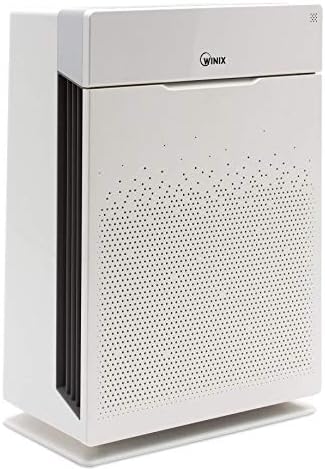
Best for Pet Hair: Winix HR900
The HR900 is the pet specialist of this group: five stages of filtration, a 300 square foot coverage claim, and a white cabinet that reads more like furniture than equipment. Five stages matters more than people think. Every stage in front of the HEPA is a stage that keeps hair, dander, and dust from loading the expensive filter, and a HEPA that is not clogged with cat hair is a HEPA that keeps moving air.
The number I like most here is the boring one. A 300 square foot claim is the smallest in this group, and small claims tend to be honest claims. When a manufacturer sizes a unit for a real room instead of a headline, the airflow math usually holds up at the speed you will actually run it overnight.
Pet hair is a mechanical load, not a chemical one, so the practical questions are whether the prefilter stages are easy to clean and whether the seal around the filter media is tight. Air that sneaks around the filter instead of through it is the number one failure I find on cheap units, and it is the failure nobody notices because the fan still sounds like it is working. If you have two cats and a dog, this is the one I would point you toward.
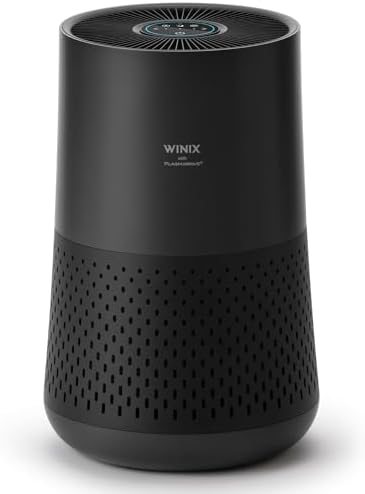
Best for Bedroom Auto Mode: WINIX A230
Read the coverage claim on this one slowly, because the wording is doing a lot of work: up to 1,110 square feet in one hour. That is a single air change per hour, which is the industry convention for those big numbers. It describes how fast the machine can turn a room over once, not how clean it keeps the air while you sleep. For allergy control I want four to five air changes per hour in a bedroom, so the honest working number is a fraction of the headline.
What I do like: the carbon filter stage, the air quality monitor, and auto mode. A carbon stage matters in a closed bedroom because a HEPA does nothing for odors, and a closed door concentrates everything. Auto mode is only as good as the sensor behind it, and most onboard sensors read particles, not smells, so do not expect the machine to ramp up because someone burned toast in the kitchen. It ramps up because particle counts rose.
For a bedroom, the combination of True HEPA, a carbon layer, and a monitor that lets the unit manage its own speed is the right feature set. You set it, you close the door, you stop thinking about it. That is the whole point of a bedroom purifier.
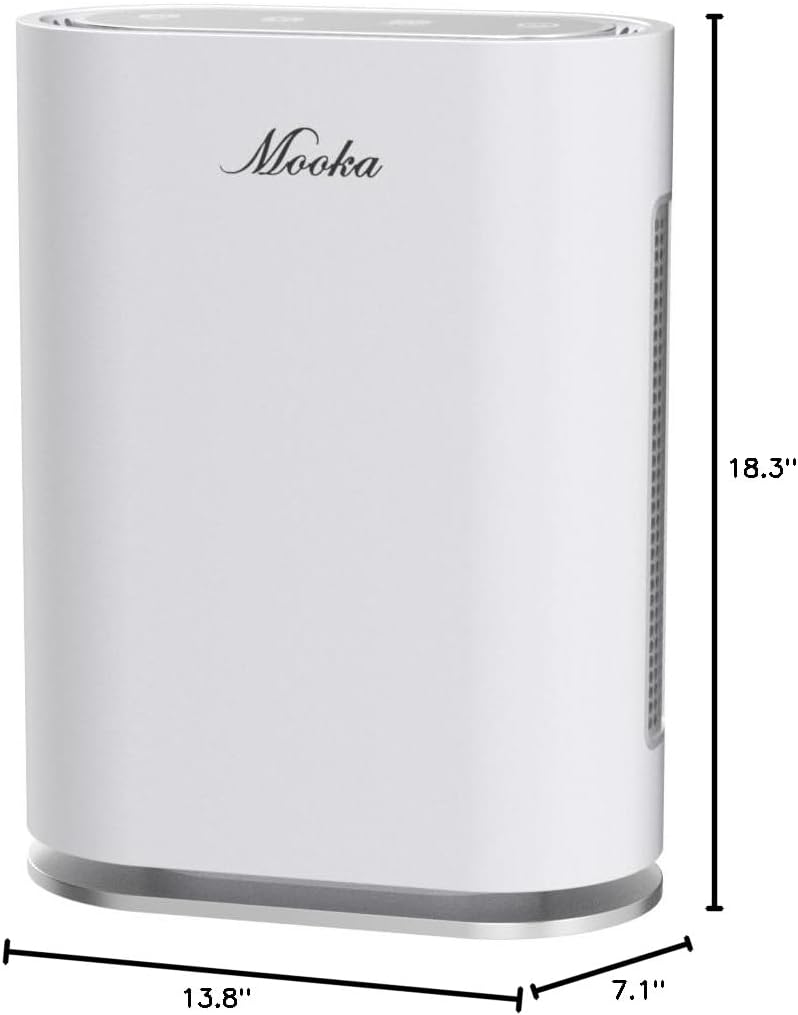
Best for Big Open Rooms: Mooka True HEPA Air Purifier
Two thousand square feet is the biggest claim in this group, and I want you to read it the same way I read the A230: as an open-floor-plan number with the unit running on high. In a wide living space with a kitchen at one end, that is a real capability. In a 120 square foot bedroom, it is a machine running at a speed you will not enjoy at 2 a.m.
Where this unit earns its place is the feature list aimed at households rather than single rooms: an air quality sensor, a timer, and a child lock. The timer is the underrated one. Overnight air quality matters most in the first hours after you close the door, and a timer lets you run high while you fall asleep and back off after. The child lock matters if the machine lives in a kid's room, because every purifier on the market has buttons a four-year-old will find fascinating.
Same caveat as always with sensors: they read particulate, not odor, so pet dander and smoke will move the number and last night's dinner will not. Use the sensor as a trend line, not a verdict.
Best Entry Point for a Small Bedroom: FreAire KN6391RGB
This is the lowest-cost machine of the four, and the black cabinet is the easiest of the group to hide in a dark bedroom. The claim is up to 1,086 square feet, which, again, is a one-air-change-per-hour number. Size it to the room you actually have.
Here is the thing I tell clients who want to spend as little as possible: a small purifier in a small room is a good purchase, and the same purifier in a large room is a fan with a filter in it. A 100 to 150 square foot bedroom with the door closed is a small volume of air. A unit like this, running on medium, can genuinely turn that volume over several times an hour. Move it to a 400 square foot open living area and you will run it on high forever and wonder why nothing changes.
If your budget is tight and your problem room is a bedroom, this is the sensible starting point. Just budget for the replacement filter from day one. That is the real price of any purifier, and I will get to that below.
How I evaluate a purifier
I do not care what the box says about removal percentages. Every True HEPA media on the market is rated to the same particle standard, so "99.97%" tells you nothing about whether the machine moves enough air through that media to matter in your room. HEPA is HEPA. The brand name on the filter housing matters far less than the seal around it.
The checklist I run on any unit:
- Real CADR, and specifically the CADR at the medium speed, because that is where people actually live with a machine. A high-speed number you never use is marketing.
- Seal quality. I want to see how the filter sits in the housing and whether air can bypass it. Bypass is the silent killer of cheap purifiers.
- Filter cost per year, printed next to the machine's cost, always. Nobody budgets for this and it is the number that decides whether you keep using the thing in year three.
- Noise at each speed. If it is quiet on high, it is not moving enough air. Physics does not negotiate on that one.
- Whether it turns on without an app. A purifier that needs a phone to run is a purifier that stops running when the Wi-Fi drops.
The comparison table
| Purifier | Claimed coverage | Filtration | Key features | Best for |
|---|---|---|---|---|
 Visit on Amazon → Winix HR900 |
300 sq ft | 5-stage True HEPA | Pet-focused design, white cabinet | Homes with heavy pet hair |
 Visit on Amazon → WINIX A230 |
Up to 1,110 sq ft in 1 hr | True HEPA plus carbon filter | Air quality monitor, auto mode | Bedrooms, overnight auto running |
 Visit on Amazon → Mooka True HEPA |
Up to 2,000 sq ft | True HEPA | Air quality sensor, timer, child lock | Large rooms and open floor plans |
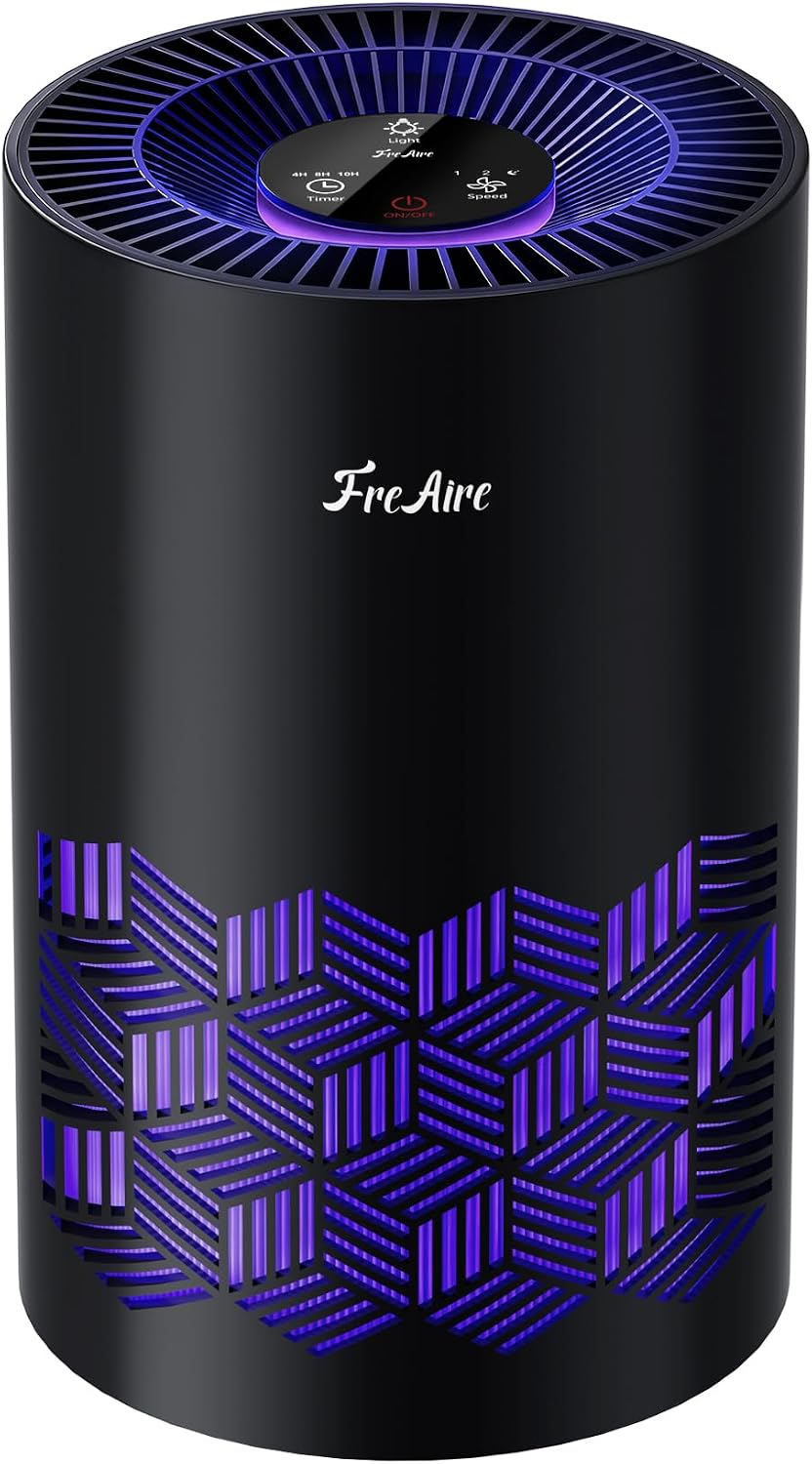 Visit on Amazon → FreAire KN6391RGB |
Up to 1,086 sq ft | True HEPA | Bedroom form factor, black finish | Small bedrooms, entry point |
What the coverage numbers actually mean
Almost every coverage figure on a purifier box is calculated at one air change per hour. That is a turnover rate, not a cleaning rate. If you want allergy-level performance, you want four to five air changes per hour in the room where the person with symptoms sleeps. Divide the claimed coverage by four or five and you have a realistic working number.
That single piece of math changes how you read this table. The Winix HR900's 300 square feet is a claim I can work with in a real bedroom. The 2,000 square foot claim on the Mooka is a genuine large-room capability if you run it on high and accept the noise that comes with it. Both are true. They are just true about different rooms.
The second number nobody prints is filter cost. A purifier is a subscription with a fan attached. Before you buy any of these, look up what the replacement HEPA costs and how often the manufacturer tells you to change it. If the filters cost more than the machine inside a year, you have found a machine designed to be replaced rather than maintained.
Should you buy the Winix HR900?
Yes, if pet hair and dander are your main problem. It is the only unit here built around that job, the five-stage stack protects the HEPA from the mechanical load that clogs cheap filters, and the conservative 300 square foot claim tells me the airflow numbers were written for a real room. In a house with two shedding animals, this is where I would start.
Should you buy the WINIX A230?
Yes, for a bedroom. True HEPA plus a carbon stage plus a monitor that manages speed on its own is the correct feature set for a room with the door closed. Just do the air change math on the coverage claim before you buy, and size it to the bedroom, not to the hallway outside it.
Should you buy the Mooka True HEPA purifier?
Yes, for a large or open space. The timer and child lock are the two features I would actually use, and a unit with this much claimed turnover belongs in the room where the whole family sits. Do not buy it expecting a whisper-quiet bedside machine. That is not what it is for.
Should you buy the FreAire KN6391RGB?
Yes, if you have a small bedroom and a tight budget. Size it to the room, run it on medium, and buy the replacement filter before you need it. A well-sealed small purifier in a small room beats an oversized claim every time.