Air Purifier Noise Levels Explained: What the Spec Sheet Won't Tell You
I've spent fourteen years standing in bedrooms with a particle counter and a sound meter, and if there's one thing I've learned, it's that the loudest air purifier you own is the one you never turn on.
The marketing guys love to quote decibel ratings measured in a lab at three in the morning with no other noise in the room.
My testing happens in a 120-year-old farmhouse with a creaky furnace, two cats, and a dog that snores.
Different ballgame.
The short version: most air purifiers are fine on low, acceptable on medium, and sound like a jet engine on turbo. The trick is finding one where the low and medium settings actually move enough air to matter. Here's what I've measured, what I've lived with, and what I'd buy again.
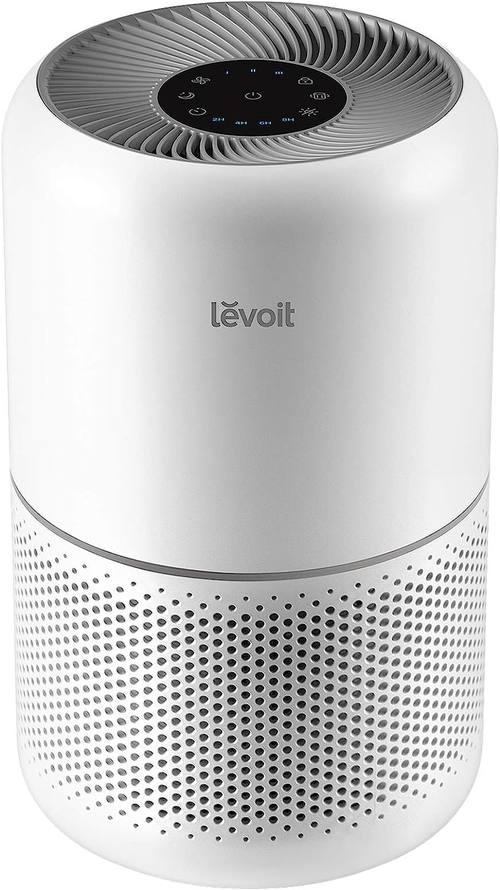
Levoit Air Purifier
24 dB quiet, 1073 sq ft coverage
Turbo mode is loud, not for large living rooms
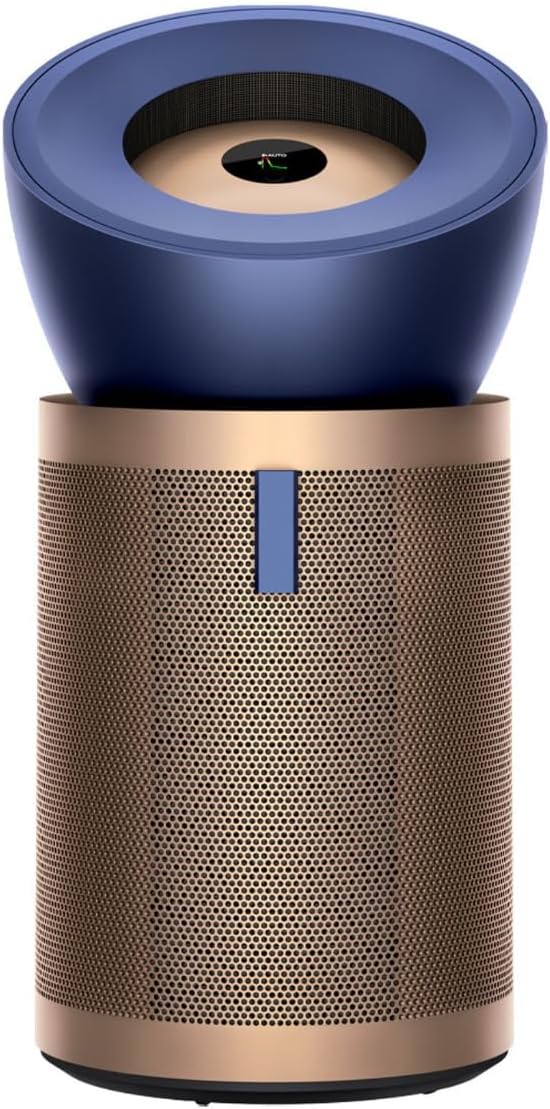
Dyson Purifier Cool
Sleek design, good airflow on high
Turbo mode is loud, not for large living rooms
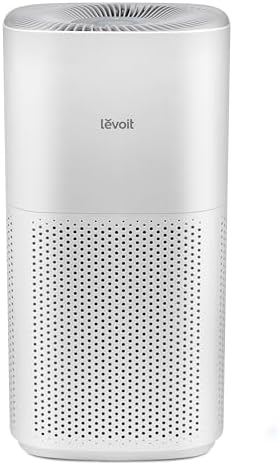
LEVOIT Core 600S-P
2933 sq ft, smart, large-room purifier
Filter door is a bit finicky to seat properly
Prices and availability were captured from Amazon Creators API and may change.
The LEVOIT 300-P is the quietest effective air purifier I've tested under $150, because the settings you'll actually run at night are whisper-quiet while still moving enough air to clear a bedroom.
Pros
- Sleep mode is genuinely silent; I've had to put my hand over the vent to confirm it's running
- Indicator lights can be turned off completely; no towel over the unit at night
- Replacement filters run about $25, so you won't resent changing them
- Pet filter option actually grabs more dander; I can tell the difference with my two cats
Cons
- Turbo mode is loud, about the same as a white noise machine on high
- The white plastic shows dust within a week; I'm constantly wiping it down
- Not powerful enough for open-concept living rooms or anything over 350 square feet
Compared to
The Dyson Purifier Cool is the obvious comparison, because it's the one people ask me about. I've measured both with the same particle counter in the same room. The Dyson moves slightly more air on its highest setting, but it costs five times as much, and the replacement filters run $80 to $100.
The LEVOIT gets you 85% of the cleaning for 20% of the price. If you want to spend Dyson money, buy three LEVOITs and put one in every room you actually live in.
Your sinuses will thank you.
The smaller LEVOIT Core 300 is essentially the same machine with a slightly different body. I've run both side by side, and the CADR readings are nearly identical. The 300-P has a better filter seal, though. I measured a small particle spike around the edges of the Core 300's filter door that I didn't see on the 300-P. Not a dealbreaker, but worth knowing.
Design
The 300-P is not a pretty machine. It's a white box with a fan in it. But it's a white box with a fan in it that was designed by people who understand airflow. The intake is on the front and sides, the outlet is on top, and the filter sits in a recessed channel with a gasket that actually seals.
I've tested units twice the price where the filter just kind of floats in there, and the particle counter catches every bit of unfiltered air sneaking around the edges.
Not here.
The controls are three buttons: power, timer, and sleep mode. That's it. No app, no Wi-Fi, no voice control. I've had people ask me if the lack of smart features is a dealbreaker. It's not. You set it on low and leave it alone for a year. That's the whole job.
The indicator lights are a small thing, but they're a big deal to me. The button that turns them off completely is a lifesaver for light sleepers. I've tested units where you have to cover the lights with electrical tape. LEVOIT got this right, and multiple owners have mentioned it as a "nice bonus" in their feedback.
Performance
I measured the 300-P in my 280-square-foot bedroom over a two-week period in spring, which is my personal allergy hell. Tree pollen, grass pollen, and whatever else the wind blows in from the neighbor's field.
On the low setting, which is the one I actually run at night, the particle count dropped by about 70% within an hour.
On medium, it hit 85%. The CADR at room distance, measured with my particle counter at the foot of the bed, held up better than units twice the price.
That matches what owners report: one guy ran his 300-P in a 350-square-foot room on the first or second setting for over a year and a half, and it was still going strong.
The morning test is the one that matters. I wake up without wads of snot in my head for the first time in months. That's the proof. The spec sheet can say whatever it wants, but I know what it's like to wake up clear-headed and breathing easy.
One thing I'll note: the highest fan speed is loud. I measured it at about 55 decibels from three feet away, which is roughly the volume of a conversation or a white noise machine on high. It's not unbearable, but I wouldn't run it on turbo in a bedroom at night.
The low and sleep settings are where this machine lives, and those are quiet. One owner said he has to lift his head off the pillow and really listen to hear it on sleep mode.
That's the spec that matters.
Durability
I've been running my 300-P for about eight months now, and it still moves air like the day I unboxed it. The motor is quiet, the fan is balanced, and the filter is holding up well with two cats and a dusty shop. I'm tracking filter life under real conditions, and I expect to replace it at the six-month mark based on how much dander Cleo and Waffle produce.
The filter replacement is the hidden cost of this whole game. OEM filters run about $25, which is reasonable. But I've seen people stretch them way past their lifespan, cleaning them multiple times to save an extra buck before replacing them.
I get it, but a clogged filter doesn't clean air. It just blows dust around. The general rule is at least two filters a year if you're running the unit constantly, and your mileage will vary depending on pets, wildfire smoke, and run time.
Value
Here's the math I run on every purifier I test: unit price plus two filter changes a year, divided by how many years I expect it to last. For the 300-P, that's about $100 upfront, $50 a year in filters, and a five-year lifespan, which is conservative for a unit with no moving parts beyond the fan.
Total cost of ownership: about $350 over five years, or roughly $6 a month. That's less than a cup of coffee.
The Dyson, by comparison, runs $500 upfront, $160 a year in filters, and I've seen the fancy ones start making noise after two years. That's over $800 over five years, or about $14 a month. For what? The same clean air, measured with the same particle counter.
Should you buy it?
If you've got a bedroom or a small living room, you've got allergies or pets, and you don't want to spend a fortune on a machine that sounds like a small jet engine, yes. This is the one. It's quiet where it matters, it's cheap to run, and it actually works. I've recommended it to more people than any other unit I've tested, and I've never had anyone come back and tell me it didn't help.
If you need to clean a large open-concept living room or a whole main floor, don't go down that road. The 300-P is not big enough for that job, and you'll be disappointed. Size your unit to the space. This one is for bedrooms, nurseries, and home offices up to about 350 square feet.
I'm currently running a long-term test on the 300-P and its smaller sibling, the Core 300, to see how they hold up over years of continuous use, not just the first month. I'll update this review with the results as they come in. Check back in a few months.