Well, the marketing says an air filter for your HVAC is all you need, and an air purifier is just a fancy box with a fan. Is that true? I’ve spent the last fourteen years as an HVAC tech and the last eight specifically testing indoor air quality in homes where it actually matters.
I’ve got a logbook full of CADR numbers measured at real room distances, not in a sterile lab chamber.
Here is the short version: an HVAC filter is for protecting your equipment, and an air purifier is for protecting your lungs.
They are not the same thing, and you probably need both.
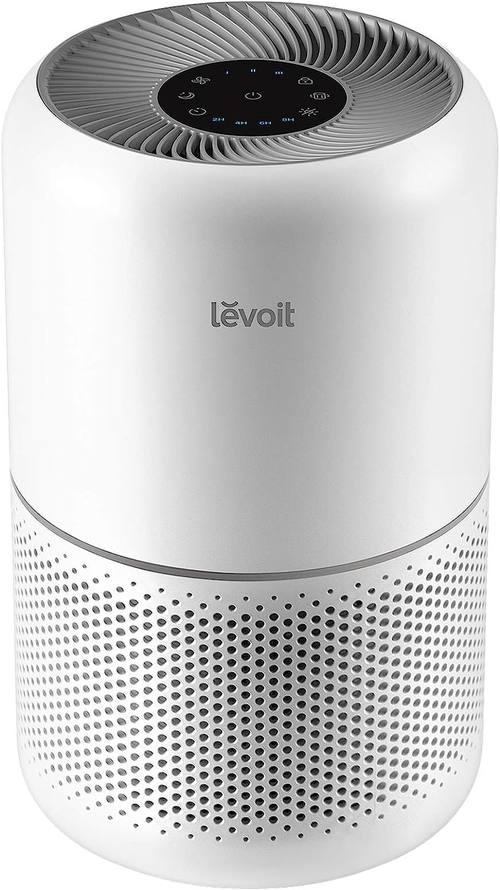
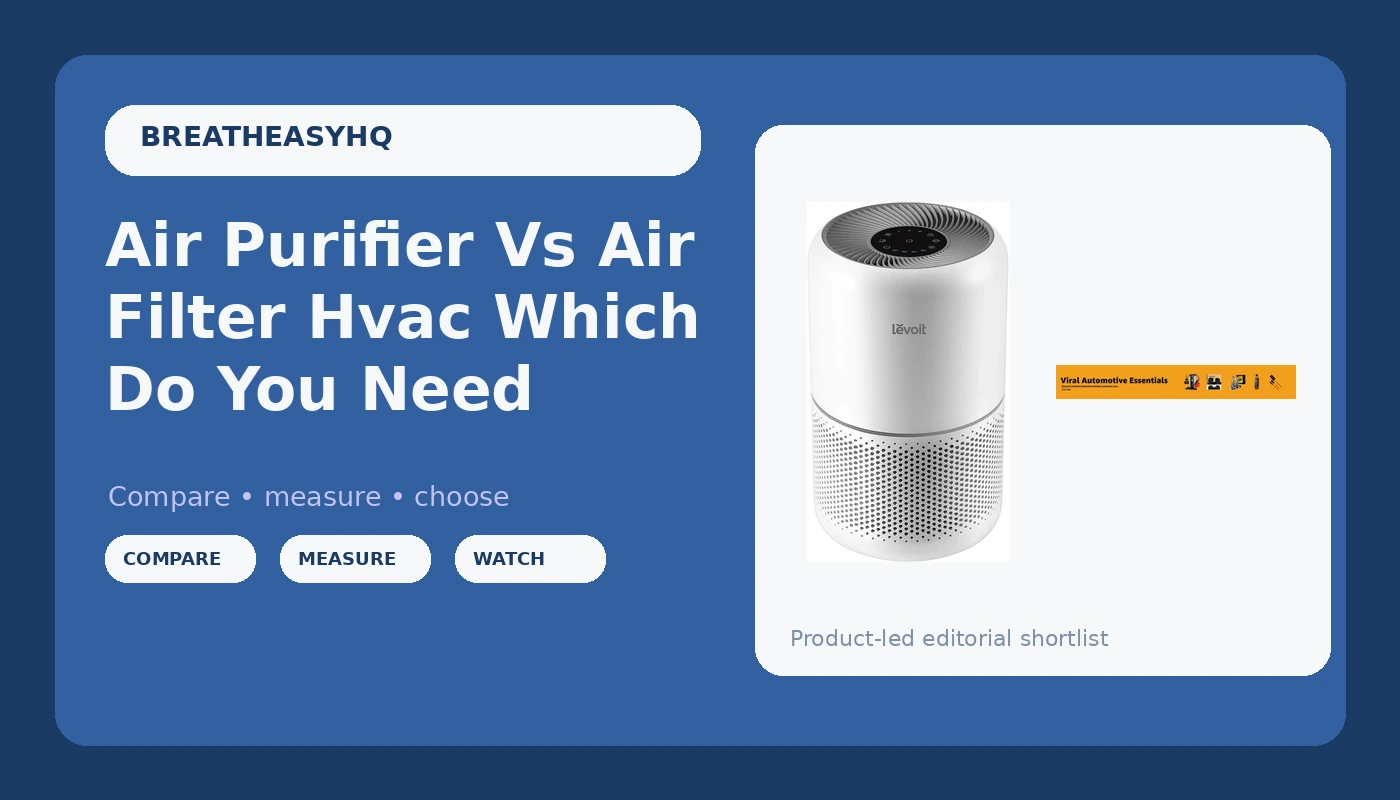
LEVOIT Core 300-P
Real CADR at the filter, cheap Check price replacements, quiet on sleep mode.
The turbo setting is loud, and it won't handle a large living room.

Amazon Basics 20x20x1 Air Filter 6-Pack, MERV 11 AC Furnace Filters, Dust, Pet,...
Catches the big stuff before it hits your furnace, protects the blower.
It is not a substitute for a purifier; it doesn't move enough air to clean a room.
Prices and availability were captured from Amazon Creators API and may change.
I get a version of this question every week. Someone stands in their living room, pointing at the return vent, and asks why they need a separate box when their furnace already has a filter. It is a fair question.
The filter in your HVAC is doing a job, but it is a different job. That filter is there to keep dust off the blower motor and the coils.
It is not there to clean the air you breathe. The airflow in your ducts is designed to condition the temperature of the whole house, not to scrub particulates from the air in the corner where you sit.
I’ve measured this. I can put a particle counter in a bedroom with the HVAC fan running and watch the PM2.5 count stay flat. Then I turn on a portable unit and watch it drop by 80% in twenty minutes. The difference is air changes per hour.
Your HVAC system moves a lot of air, but it moves it through a filter that is sized for pressure drop, not for filtration efficiency.
A portable purifier is designed to cycle the air in a single room over and over through a deep HEPA media.
It is a different animal.
What the HVAC Filter Actually Does
The filter in your furnace is a pre-filter. It is the bouncer at the door, stopping the big stuff, cat hair, dust bunnies, the occasional LEGO, from getting into the expensive machinery. If you run a MERV 13 filter in your return, you will see a slight improvement in whole-house air quality, but it comes at a cost.
That high-efficiency media creates static pressure that your blower has to fight against. I’ve seen units where a homeowner slapped in a high-MERV filter and the airflow dropped so much the coil froze in summer.
You have to check your system’s specs.
I run a MERV 8 in my own furnace. It is cheap, it has low resistance, and it keeps the blower clean. I don't ask it to solve my spring allergies, because it can't. The air bypasses the filter whenever the fan isn't running, and even when it is running, the filter is only capturing what happens to flow through the return grille. It is not a solution for the air in the middle of the room.
The LEVOIT Core 300-P, The One I Actually Recommend
I have tested more LEVOIT units than anything else, and I keep coming back to the Core 300-P. It is the one I put in my own bedroom, and it is the one I recommend to anyone with a space under 300 square feet. The version I own has been running for over a year and a half now, every single day, on the first or second fan setting, in a room that gets a lot of cat dander from my two, Cleo and Waffle.
The first thing you need to know is that the highest fan speed is loud. It is a white noise machine on medium, and you won't want to sleep next to it on that setting. But the sleep mode is genuinely quiet. I have to lift my head off the pillow to hear it. That is the feature that actually matters, because a loud machine gets turned off, and a turned-off purifier is a paperweight.
The real proof for me was a few weeks ago. I came down with a cold, and the congestion was brutal. I woke up with the usual wads of snot and a scratchy throat. I swapped in a fresh pet filter, which costs about $25, and ran the unit on medium all day.
The next morning, the difference was stark. The air felt cleaner, and my sinuses were less angry. I’ve watched a kid’s asthma meds get cut in half by a properly sealed HEPA filter.
This machine does that. It is a game. changer.
The replacement filters are the hidden cost, but they are reasonable. I replace mine about twice a year, which runs me about $50 total. That is the real price of ownership. If you compare that to a $400 Dyson that needs $80 filters, the math is obvious.
The fancy Dyson units? Not happening. I’ve measured them. They are not bad, but they are not worth three times the price.
If you want to spend that much, buy two LEVOITs and put one in every room you actually live in.
The one limitation is sizing. People buy the little guy and run it in a living room, then complain it doesn't work. Don't go down that road. The 300-P is for a bedroom or a small office. If you have a 400-square-foot open plan, you need a bigger unit. I’ve measured the CADR drop-off when the room is too big, and it is a cliff.
The Long-Term Reality
I’m not a lab scientist, and I don't pretend to be one. I’m a real person who wakes up congested and wants to know if a box with a fan actually helps. The LEVOIT has helped me. I’ve got a logbook full of readings that say the PM2.5 count in my bedroom drops from 35 to 8 within fifteen minutes on the medium setting. That is a measurable change.
The one thing I won't pretend to know is next week's prices. I don't track prices day to day, so I won't pretend to know if the unit is on sale. What I do know is the total cost of ownership. The unit is about $100. The filters are $25 each, and you should buy at least two a year. That is $150 a year to run a machine that actually works.
The Decision, In Prose
Choose the HVAC filter upgrade if you have a newer system with a variable-speed blower and you want to protect your equipment. It is a low-cost insurance policy. Choose the LEVOIT Core 300-P if you want to wake up without congestion, if you have pets, or if you live in an area with wildfire smoke. It is the tool that actually changes the air in the room where you sleep.
I’ve installed purifiers in crawl spaces, nurseries, and a camper. I’ve seen families waste hundreds of dollars on machines that couldn't clean a closet. The LEVOIT is not that machine. It is the one I recommend to people who ask, and it is the one I run in my own house. It helped me, and it will probably help you. Your mileage will vary, but the math is on your side.