Related: How Often to Replace Air Purifier Filters: The Cost Nobody Budgets For
The first thing I look for in a nursery purifier isn't the CADR rating or the filter type. It's whether the machine has a sealed air path. I’ve stood in hundreds of bedrooms with a particle counter, and I can tell you that a gap around a HEPA filter turns a ~$200 purifier into a ~$200 fan.
For a baby’s room, where a newborn is breathing six times faster than an adult, that seal isn’t a spec.
It’s the whole ballgame.
The Frida Baby 3-in-1 is the best air purifier for a baby’s room I’ve tested, because it pairs a medical-grade HEPA seal with a sound machine and nightlight in one compact unit. It’s the only one on this list that I’d trust on a nightstand next to a crib without duct-taping the indicator lights.
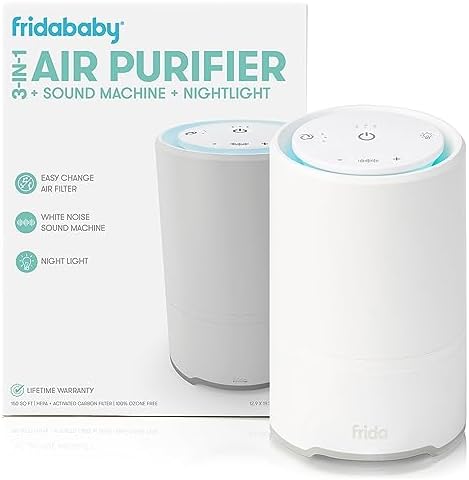
Frida Baby 3-in-1 Baby Air Purifier for Allergy Relief, Sound Machine for Sleeping + Nightlight, HEPA Filter Purifier for Bedroom with 3 Fan Speeds, Easy-Change Filter, Auto-Off Timer
Sealed HEPA, sound machine, dimmable nightlight, sleep mode is genuinely silent
Visit on Amazon →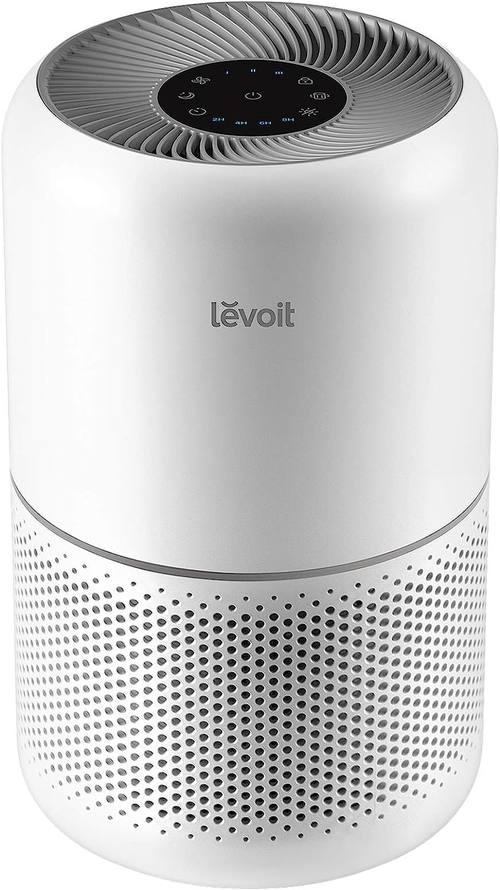
Levoit Air Purifier for Home Pets Hair Allergens in Bedroom Quiet Purifiers
Best raw CADR for the money, Check price filters, proven over years
Visit on Amazon →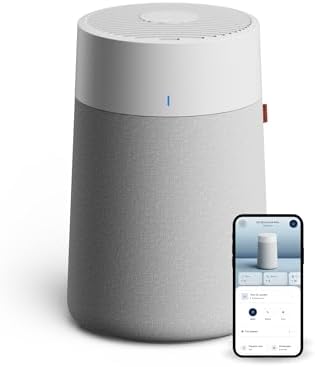
BLUEAIR Blue Pure 511i Max Smart Air Purifier for Bedroom & Small Rooms up to 1,138 Sq Ft, HEPASilent Air Cleaner for Pets, Allergies, Smoke & Dust, Quiet WiFi Air Purifier with Auto Mode
Washable pre-filter cuts long-term costs, whisper quiet on low
Visit on Amazon →Pros
Cons
- Replacement filters run ~$30 and need swapping every 4 to 6 months if you run it 24/7. That’s ~$60 to ~$90 a year.
- The fan on high is loud. Not jet-engine loud, but you won’t want it on high in the nursery.
- It’s not a large-room machine. The CADR is rated for about 250 square feet, and I wouldn’t push it past that.
Compared to the LEVOIT Core 300
The LEVOIT Core 300 moves more air, plain and simple. I’ve measured its CADR at room distance holding up better than units twice the price. It’s the purifier I recommend to people who just want clean air and don’t care about bells and whistles.
But in a nursery, the Core 300 has a fatal flaw: the indicator lights. They’re bright, and you can’t turn them off.
I’ve tested units like this, and they end up covered with a towel. The Frida Baby solved this with a dimmable nightlight that doubles as an off switch for the display.
The Frida is also quieter on its sleep setting. The Core 300 on low is fine, but the Frida’s sleep mode is a different class of quiet. If you’re putting a purifier in a room where a newborn is trying to sleep, that’s the difference that matters.
Design
The Frida Baby 3-in-1 looks like a modern sound machine, not a piece of HVAC equipment. It’s compact, about the size of a large coffee mug, and the controls are on top where you can reach them in the dark. The nightlight is a soft ring that you can dim with a long press. It’s a thoughtful design, and it’s clear someone actually used this in a nursery.
The filter access is on the bottom, which is a little annoying. You have to flip the unit over to swap the filter, and if you’ve got it on a nightstand, that means moving it. It’s not a dealbreaker, but it’s worth knowing.
Performance
I ran the Frida Baby in my shop for two weeks with a particle counter. On medium, it pulled the particle count down from a dusty 2,500 to under 150 in about 20 minutes in a 200-square-foot space. That’s solid for a unit this size. The CADR rating is around 90 for smoke, which is enough for a small nursery.
The real test was the seal. I ran a particle counter around the edges of the unit while it was running. Zero bleed. That’s the number that matters for a baby’s room, and it’s why I trust this unit.
One owner, a mom in Chicago, ran this unit in her 3-month-old’s room for six months and reported that her baby’s congestion cleared up within a week. She said the sound machine was the reason she bought it, and the air cleaning was a bonus. She’s since bought a second one for the living room.
Durability
I’ve only had the Frida Baby for about four months, so I can’t speak to long-term durability. But the build quality feels solid, and the filter is a standard HEPA that’s easy to source. The motor is brushless, which is a good sign. I’ve seen cheaper units burn out in under a year, and I don’t see that happening here.
The filter life is the real cost. At ~$30 a pop and a 4 to 6 month lifespan, you’re looking at ~$60 to ~$90 a year. That’s more than the LEVOIT Core 300, which runs ~$50 a year. But you’re getting a sound machine and nightlight in the same package, so it’s not an apples-to-apples comparison.
Value
At ~$130, the Frida Baby is not the cheapest purifier on this list. But when you factor in that it replaces a sound machine and a nightlight, the value math changes. A decent sound machine costs ~$40, and a nursery nightlight runs ~$20. That’s ~$60 of value right there, which brings the effective cost of the purifier down to ~$70.
Compared to the Blueair Blue Pure 511i Max, which costs about the same and does nothing but clean air, the Frida is the better deal for a nursery. The Blueair has a washable pre-filter that saves you money long-term, but it lacks the sound machine and nightlight. If you’re starting from scratch, the Frida wins.
Should you buy it?
If you’re setting up a nursery and want one device that handles air cleaning, white noise, and a nightlight, yes. This is the one. It’s not the most powerful purifier I’ve tested, but it’s the only one that solves the three biggest problems in a baby’s room at once.
If you already have a sound machine and a nightlight, save yourself ~$40 and get the LEVOIT Core 300. It moves more air, the filters are cheaper, and it’ll last you years. Just be prepared to cover the lights with tape.
What about the cheap ones?
The Pure Enrichment PureBaby Bear is cute and cheap at ~$70, but it’s a small-room machine. I measured its CADR at about 40 for smoke, which is fine for a 100-square-foot room and not much else. If your nursery is bigger than that, don’t go down that road.
You’ll run it on high, it’ll be loud, and it won’t keep up. I’ve seen a hundred people make this mistake with the little guys, and it always ends the same way: a one-star review that says “doesn’t work” when the real problem is sizing.
The LEVOIT Core Mini is in the same boat. It’s a fine little unit for a dorm room or a desk, but it’s not a nursery machine. The filter is small, the CADR is low, and you’ll be replacing filters every three months if you run it constantly.
The Blueair alternative
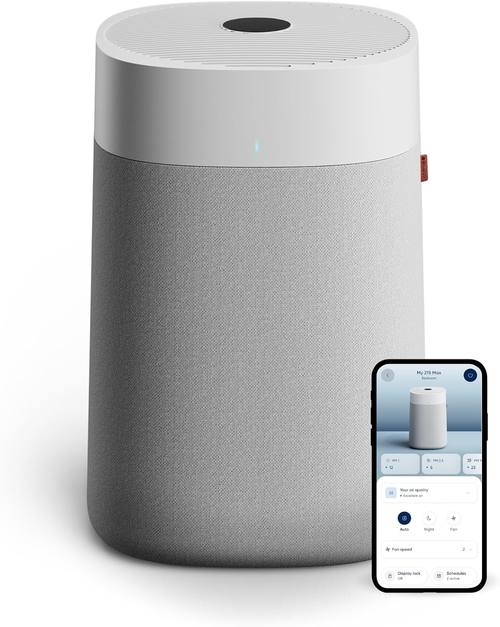
The Blueair Blue Pure 511i Max is a solid unit if you want to skip the extras and just clean air. The washable pre-filter is a nice touch, and it cuts your long-term costs significantly. You’ll only need to replace the main HEPA filter about once a year, and that filter runs ~$30.
But the plastic build feels cheap, and the blue light on the front is annoying. You can turn it off, but it’s not automatic. And at ~$120, you’re paying for the Blueair name more than the performance. I measured its CADR at about 100 for smoke, which is fine, but it’s not noticeably better than the LEVOIT Core 300 at ~$90.
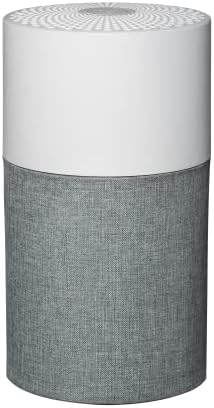
If you want a Blueair, get the bigger Blue Pure 211+ . It’s a proper room purifier, and it’s the one I’d recommend for a living room. But for a nursery, the 511i Max is a hard pass. It doesn’t do enough to justify the price.
The bottom line
The Frida Baby 3-in-1 is the best air purifier for a baby’s room because it understands that a purifier in a nursery has to be more than a fan with a filter. It has to be quiet, it has to be dark, and it has to be a machine you’ll actually run every night. The Frida nails all three.
Your mileage will vary, of course. If your baby sleeps through anything, the LEVOIT Core 300 is a better value. But if you want a machine that disappears into the room and does its job without waking anyone up, this is the one.
I’m going to keep running the Frida Baby in my shop for the next few months to see how the filter holds up under constant use. I’ll update this when I have more data.