Fourteen years as an HVAC tech, eight of them testing indoor air in homes with asthmatic kids, wildfire smoke rolling in from the west, and mold hiding behind baseboards, taught me one thing: the box matters far less than what the box does in your room. This air purifier comparison started as a page in my logbook, because the same four products kept landing in my inbox with the same request, rank them. The problem is that they are not the same kind of product, and ranking a consumable against a machine is how people end up spending money twice.
So here is the honest version. Two of these are room air purifiers. One is a replacement filter. One is a source-capture unit built for a laser engraver and a soldering iron. They belong in one conversation anyway, because the question I actually get is not "which purifier is best." It is "why is my air still bad after I bought a purifier." That question usually has a filter answer, a placement answer, or a wrong-tool answer.
I do not trust percentages on a box. I trust CADR, seal quality, and what a machine does at the speed you will actually run it, which is rarely the speed the marketing sheet brags about. If a manufacturer will not give you a clean air delivery rate, that is not an oversight. That is a decision.
For most homes, start with the Coway unit in this comparison, because it pairs a real particulate filter stack with a monitor, auto mode, and the longest warranty in the group. The Winix 5300-2 is the value alternative when you want a simple True HEPA machine. The GermGuardian Filter B is the right purchase only if you already own one of the units it fits. The ATOMSTACK D5 is not a room purifier at all: it captures solder fumes and laser smoke at the source.
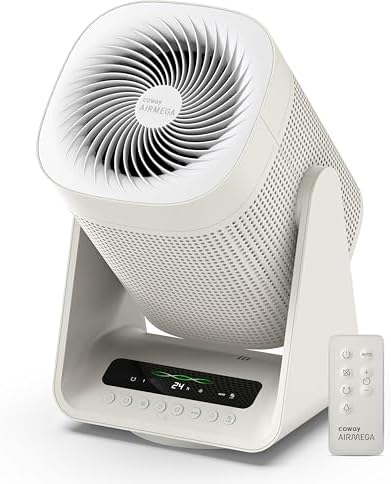
COWAY Air Purifier for Home Bedroom
Air quality monitor, auto mode, remote, timer, 3-year warranty, and a particulate filter aimed at smoke, allergies, pet dander, and odor
Auto mode is only as smart as its particle sensor, and this is the most electronics-dependent pick in the group
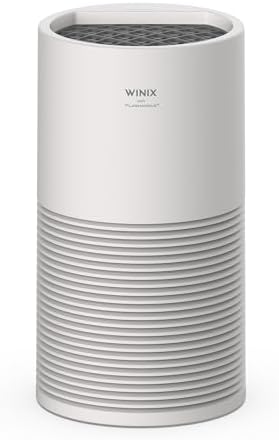
Winix 5300-2 Air Purifier with True HEPA, PlasmaWave and Odor Reducing Carbon Filter
True HEPA plus a carbon stage for odor, in a machine built around a value price point
No air quality monitor, and you should confirm the PlasmaWave ionizer can be switched off before you buy

GermGuardian Filter B HEPA Pure Genuine Air Purifier Filter
The honest fix for an existing Ac4825, Ac4300, Ac4850, Ac4880, Ac4900, Cdap4500, or Ap2200 unit that has been running on a tired filter
It is a consumable, not a machine. Buy it expecting a purifier and you will be disappointed
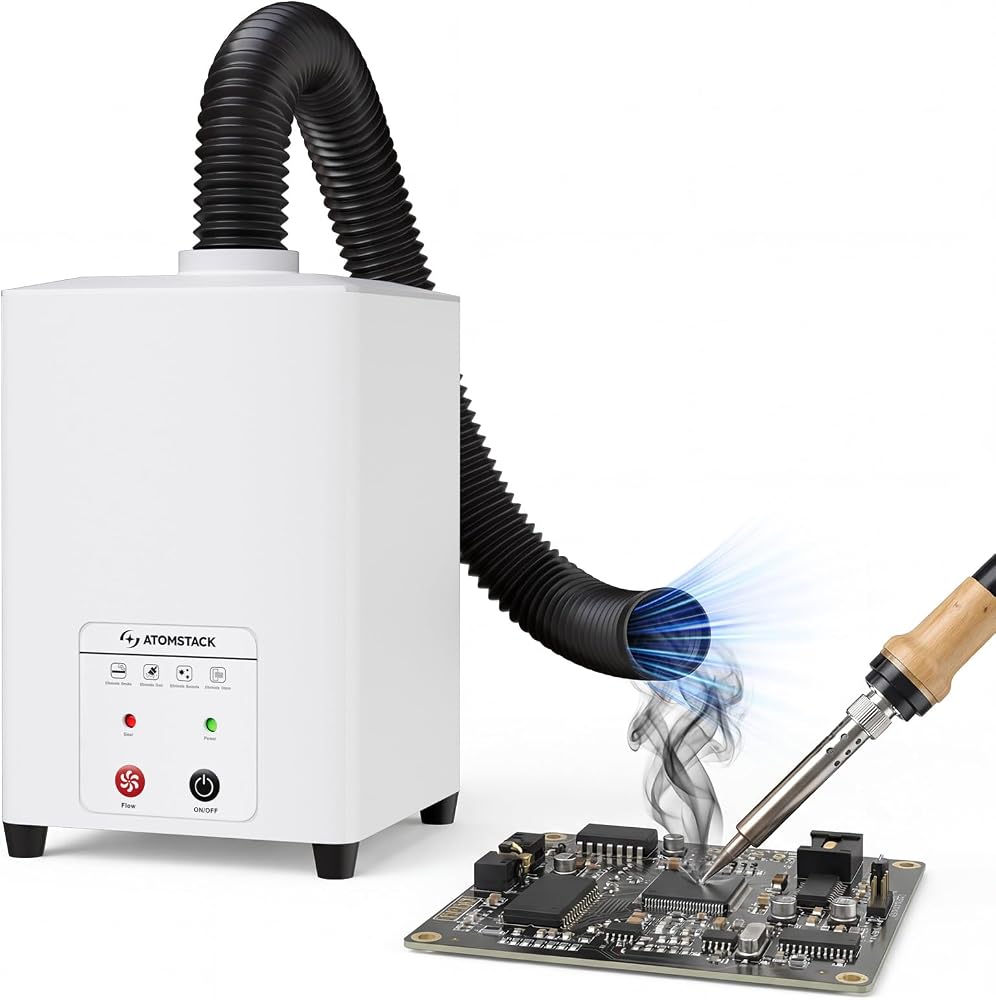
ATOMSTACK D5 Smoke Purifier, 1400Pa High Suction Air Filter
1400Pa suction with 3-layer HEPA and carbon filtration, 3-speed control, designed for laser engraving, soldering, and desktop DIY projects
It will not clean a room. Source capture only works when the intake sits close to the fume
Prices and availability were captured from Amazon Creators API and may change.
What is actually in this comparison
Four products, three jobs, and one shared mistake. People treat every air product as interchangeable, then wonder why a $90 bench tool did nothing for a 400 square foot living room, or why a room purifier did nothing for the smell coming off a laser cutter in the garage.
Sort them by job before you sort them by price:
- Room air purifier: moves and filters the air in a whole room. The Coway unit and the Winix 5300-2 are in this category.
- Consumable: keeps an existing machine working. The GermGuardian Filter B is in this category.
- Source capture: grabs fumes at the point where they are created. The ATOMSTACK D5 is in this category.
If you are shopping for the first category and end up buying from the third, nothing you read in the reviews will save you. That is the whole reason I write these out.
CADR is the only number that decides performance
Clean air delivery rate is cubic feet per minute of clean air, and it is the single number that predicts whether a machine will change the air in your room. Everything else on a product page, including the removal percentages, is a claim about a filter, not about a machine in a room.
The rule of thumb I use with clients: for smoke, you want a CADR of roughly two thirds of your room's square footage, assuming an eight foot ceiling. A 300 square foot bedroom wants something in the neighborhood of 200 CFM on the setting you will actually leave it on. That is the calculation. It is not glamorous and it does not fit on a box.
Here is what you will notice about this group. The Coway and Winix listings are built on True HEPA and carbon, which is the right architecture, but neither name hands you a CADR number you can compare at a glance. That means you have to size by the manufacturer's stated room rating and by the filter stack, and you should be skeptical of any purifier listing that leads with a removal percentage and hides the airflow number. My rule has not changed in fourteen years: if the airflow number is missing, the machine is probably too small for the room you have in mind.
Coway: the bedroom machine
The COWAY Air Purifier is the most complete package here. The listing gives you a 2-in-1 design with a fan function, a particulate filter aimed at smoke, allergies, pet dander, and odor, an air quality monitor, auto mode, a remote, a timer, and a 3-year warranty. For a bedroom, that combination is close to ideal. You set it, it ramps up when the sensor sees particles, and it drops back down when the room clears.
The trade-off is the same one I point out on every smart purifier. The monitor reads particles, not smells. If your complaint is cat litter or last night's cooking, the sensor may barely react while your nose is begging for help. Auto mode also means you have handed control to a sensor you cannot calibrate, and the machine is only as good as the day that sensor was built. I still recommend it for most homes, because the filter stack and the warranty are the parts that stay true after the novelty wears off.
One more thing, and it is the thing nobody budgets for. The filter is the real price of this machine. Before you buy any purifier, look up what the replacement filter costs and how often the maker says to change it. Multiply that out three years and add it to the purchase. If that number makes you flinch, buy a smaller machine, not a cheaper filter.
Winix 5300-2: the value machine
The Winix 5300-2 does the core job with less to go wrong. True HEPA for particles, an odor reducing carbon filter for the smells the HEPA cannot touch, and PlasmaWave as an added stage. No monitor, no auto mode choreography, no app between you and a working purifier.
That simplicity is a feature. A purifier that turns on with a physical control and runs at a fixed speed is a purifier that still works when your Wi-Fi does not, and it is a purifier whose behavior you can predict. I have lost count of the calls I have taken from people whose "smart" purifier was stuck in a schedule they set two years ago and forgot.
Two honest caveats. First, confirm before you buy whether the PlasmaWave ionizer can be disabled. Some people do not want an ionizer running in a bedroom, and that preference should be a switch, not a debate. Second, with no air quality monitor you get no feedback loop, which means you have to size it correctly up front and change the filter on a calendar instead of on a light. If you do those two things, this is the best dollars-to-clean-air ratio in the group.
GermGuardian Filter B: the consumable, not the cure
Here is where I earn my keep. The GermGuardian Filter B HEPA Pure Genuine Air Purifier Filter is a filter. It fits the Ac4825, Ac4300, Ac4850, Ac4880, Ac4900, Cdap4500, and Ap2200 series, along with the Flt4825 part reference in its own name. If you own one of those towers, this is the single most effective thing you can do for your indoor air, and it will outperform buying a new machine you cannot afford to keep filtered.
If you do not own one of those towers, this product is not for you, no matter how good the price looks.
The name carries the familiar 99.97% removal claim, and I will say plainly what I say to clients: a percentage on a filter box tells you about the media, not about the machine. What determines your real air quality is whether the air goes through the media or around it. That is bypass, and it is the number one failure I find in cheap units. When you install a replacement filter, seat it properly, check the gasket line, and make sure the housing closes flush. A genuine filter that is installed crooked performs worse than a cheap filter that is installed right.
Then there is the calendar problem. A loaded filter does not announce itself. The airflow drops, the noise stays the same, and people keep running a clogged filter for months while wondering why the allergies came back. Change it on schedule. If you have pets, change it sooner than the schedule.
ATOMSTACK D5: a different tool for a different problem
The ATOMSTACK D5 Smoke Purifier is not competing with the other three, and I would rather say that clearly than pretend otherwise. It is a 1400Pa suction unit with 3-layer HEPA and carbon filtration, 3-speed control, and a claimed 99.5% purification rate, built for laser engraving, soldering, and desktop DIY work.
The physics of source capture are simple and unforgiving. A fume extractor works when its intake is close to the fume. Six inches away, you are capturing most of it. Six feet away, you are capturing the smell of it while the particles land on your shelves. So the honest use case is a bench, a garage, a spare room where the laser lives, with the intake positioned at the cut and the exhaust handled.
What it will not do is clean a bedroom. It does not move the volume of air a room purifier moves, and it is not designed to. If you are running a laser cutter in an attached garage and your house still smells like burnt plywood, this tool fixes the source. A room purifier in the hallway fixes the symptom. Buy both if you have both problems, but do not ask one to do the other's job.
The trade-offs the table cannot show
Filter cost per year. The purchase price is the down payment. Every machine here has a consumable behind it, and the total cost of ownership is what separates a good deal from a trap. Look up replacement filters and the recommended interval before you commit.
Seals and bypass. A perfect HEPA filter in a housing with a bad gasket is a leaky bucket. On the filter you install yourself, this is on you. Seat it, check it, close the housing flush.
Noise versus airflow. A purifier that is quiet on its highest setting is not moving enough air. That is not a preference, it is physics. The setting that actually cleans your room will be audible, and you should plan for that before you decide where the machine lives.
Sensors read particles, not smells. If your complaint is odor or VOCs, you need carbon, and carbon is the stage almost everyone undersizes. The monitor on a smart purifier will often read green while your nose disagrees.
Room size. The most common mistake I see is a small purifier in a large room. It runs constantly, it never catches up, and the owner concludes that purifiers do not work. Size the machine to the room, then decide on features.
Which one should you buy
- Bedroom or main living space, and you want to set it and forget it: the Coway unit. The monitor, auto mode, timer, and 3-year warranty make it the most complete room purifier in this group.
- Same job, tighter budget, no interest in apps: the Winix 5300-2. True HEPA and carbon, fewer electronics, easier to live with long term.
- You already own an Ac4825, Ac4300, Ac4850, Ac4880, Ac4900, Cdap4500, or Ap2200 tower: the GermGuardian Filter B, and buy two so you are not caught waiting on shipping when the airflow drops.
- You engrave, solder, or build at a bench: the ATOMSTACK D5, positioned at the source, not across the room.
Every one of these is a defensible purchase in the right context. The expensive mistake is buying the right product for someone else's problem. Match the tool to the job, size it to the room, and budget for the filter, and your air will change in ways you can actually measure.