Most people shopping for an air purifier in 2026 are drowning in the same three claims: 99.97 percent removal, whisper quiet, and coverage up to some enormous square footage. I have spent 14 years as an HVAC technician, eight of them doing indoor air quality testing in homes with asthmatic kids, wildfire smoke, and mold problems, and none of those three claims tells you whether a machine will clean the room you actually sleep in. That is why this air purifier comparison ignores the badge on the front and looks at the four things that decide whether you breathe easier: how much clean air the unit delivers, how well the filter is sealed, what the filters cost you over a year, and how loud the machine is at the speed you will really run it.
The four units here cover the entire spread of the market. The Winix 5500-2 is a long-running workhorse with a washable AOC carbon filter and PlasmaWave. The Levoit unit is the smart one, with app and voice control, marketed for pets, bedrooms, and dorm rooms. The VOOPNU is the budget play, claiming coverage up to 1,076 square feet. And the FreAire HAP605 is the big-room claim, up to 2,600 square feet, with a real-time PM2.5 display, a washable filter, a 20 dB sleep mode, and a turbo mode aimed at pet hair, dust, and smoke.
The Winix 5500-2 is the one I would put in most homes, because that washable AOC carbon filter means you stay on schedule with the HEPA instead of watching it clog. But "most homes" is doing a lot of work in that sentence, so let me show you exactly where the other three win.
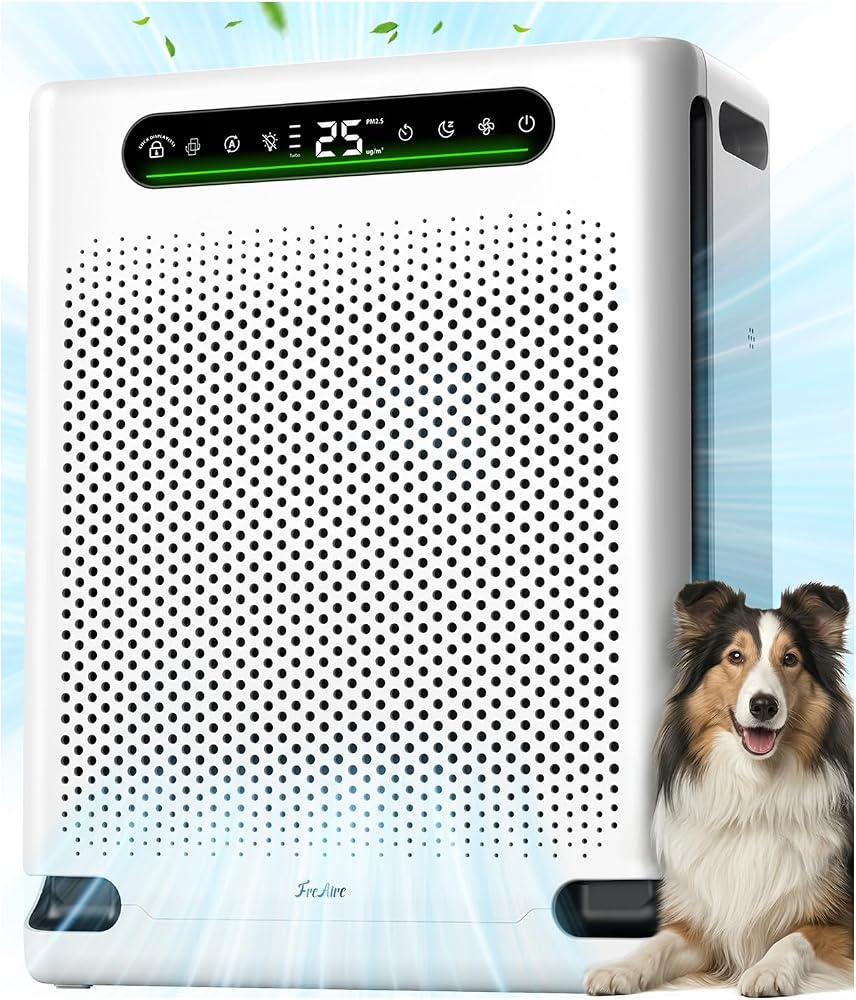
FreAire HAP605 Air Purifier
Biggest coverage claim of the four, real-time PM2.5 display, washable filter, 20 dB sleep mode, turbo mode for smoke and pet hair
Coverage numbers like this assume open floor plans and one air change per hour, not a closed bedroom
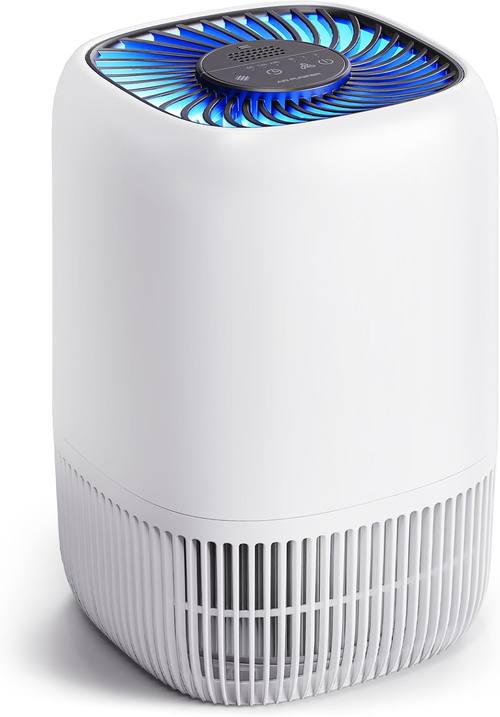
VOOPNU Air Purifier
Cheapest way into a sealed HEPA unit, simple controls, easy to move room to room
No washable prefilter stage, so the main filter takes all the pet hair and dust
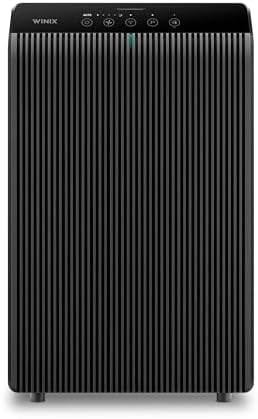
Winix 5500-2 Air Purifier
True HEPA plus washable AOC carbon filter, PlasmaWave, the best long-term value of the group
Bulkier than the others, and the carbon stage needs washing on a schedule or it stops doing anything
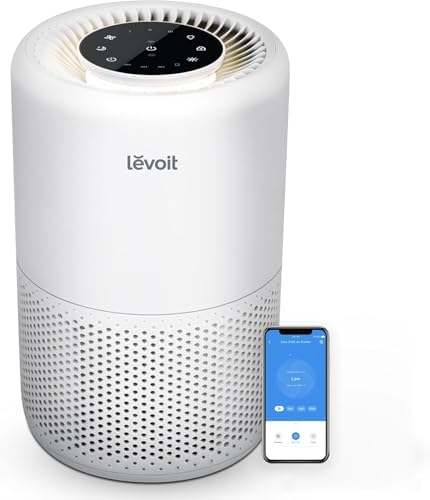
Levoit Smart Air Purifier
Smart and voice control that actually works, sized for bedrooms, dorms, and pet rooms
Not built for a large living room, and the app is the only way to get the most out of it
Prices and availability were captured from Amazon Creators API and may change.
How I sort purifiers, in order
CADR first. Clean Air Delivery Rate is cubic feet per minute of clean air, and it is the only number on a box that predicts real performance. A purifier with a high CADR in a small room will clear smoke and pollen fast. A purifier with a low CADR in a big room is a fan with a filter and a lie, no matter what the coverage claim says.
Seal quality second. Air that sneaks around the filter instead of through it is called bypass, and it is the number one failure I find on cheap units. You can have a genuine HEPA filter inside and still get dirty air out the front if the housing does not clamp down tight. When I test a unit, I look at the gasket, the latch pressure, and whether the filter rattles when the fan spools up.
Filter cost third. The purchase price is the down payment. The real price of a purifier is the machine plus every filter you feed it. A washable prefilter or a washable carbon stage changes that math more than any sale price does, because it keeps the expensive HEPA layer from loading up with hair and lint in the first month.
Noise last, but it decides whether you use the thing. A purifier that is loud at the speed that cleans gets turned down to the speed that does nothing. That is the single most common mistake I see in homes: a good machine running on low because nobody can stand it on high.
Coverage claims versus your actual room
The FreAire HAP605 claims up to 2,600 square feet. The VOOPNU claims up to 1,076. The Winix is sold as a medium-room unit. The Levoit is aimed at pets, bedrooms, and dorm rooms. Those numbers are not lies exactly, but they are measured under conditions that do not exist in your house.
Coverage claims usually assume an open floor plan, a ceiling height around eight feet, and one air change per hour. One air change per hour is not cleaning. It is barely refreshing. In a bedroom where a kid with asthma sleeps, I want four to five air changes per hour, which means the honest room size for any purifier is roughly a quarter of what the box says. A 2,600 square foot claim becomes a very good large bedroom or a solid open living area. A 1,076 square foot claim becomes a strong small bedroom or office.
This is where the FreAire's turbo mode earns its place. Turbo exists for the twenty minutes after you burn toast or the two days the wildfire smoke rolls in, when you want maximum air movement and you do not care about the noise. The rest of the time you live on medium, and medium is where you should compare these machines.
The Levoit is the honest one about its limits. It is not pretending to be a whole-house solution, and if you put it in a dorm room or a pet corner, it will do real work. Put it in a 500 square foot living room and you will wonder why the air still smells like the dog.
Filters, prefilters, and the cost that keeps coming
The Winix 5500-2 gets my vote on filter economics for one reason: the odor-reducing AOC carbon filter is washable, and so is the prefilter ahead of it. That means the HEPA layer is doing the fine work it was designed for, not acting as a giant hair trap. Every purifier I have opened after six months in a pet home tells the same story. The prefilter is disgusting, the HEPA is fine, and the machine that had no prefilter has a HEPA that is already grey.
The FreAire HAP605 also lists a washable filter, which is a genuine advantage for pet hair and dust, provided you actually wash it. A washable stage that never gets rinsed is worse than a disposable one, because it chokes airflow and drives up noise while the motor works harder.
The VOOPNU and the Levoit lean on replaceable filtration. That is not a dealbreaker, it just means you should price the replacement filters before you buy the machine, not after. My rule of thumb: if a year of filters costs more than the purifier did, you bought a subscription, not an appliance. Look up the replacement part for whichever unit you are considering and do that math yourself, because I have watched people spend more on filters in eighteen months than they spent on the purifier.
One more note on HEPA. HEPA is HEPA. The brand name printed on the filter housing matters far less than whether the filter seats properly and whether the housing seals around it. I have seen expensive machines with sloppy gaskets and cheap machines with tight ones.
Smart features, sensors, and the app question
The Levoit's headline feature is smart and voice control, and for a bedroom or dorm setup that is genuinely useful. You can schedule it, ramp it up before you walk in, and check it without crawling behind a dresser. I make fun of app-connected purifiers and then check my own unit's app twice a day, so take my grumbling with salt.
The FreAire's real-time PM2.5 display is the feature I would actually pay for, because it turns an invisible problem into a number on the front of the machine. Here is the catch that nobody tells you: PM2.5 sensors read particles, not smells. A purifier can show a clean number while your kitchen still smells like last night's salmon. Particle count and odor are two different problems, and only one of them shows up on that display.
My pet peeve stands: a purifier that needs an app to turn on is a purifier that stops working when the Wi-Fi drops or the company loses interest in the firmware. Both the Levoit and the FreAire keep physical controls, which is the right call. Buy for the button, enjoy the app.
Noise: sleep mode versus the speed that cleans
The FreAire lists a 20 dB sleep mode, and 20 dB is roughly a whisper at three feet. That is a real number for a bedroom, and it matters if you are the kind of person who wakes up when the refrigerator kicks on.
What I want you to understand is that sleep mode and cleaning speed are two different machines in one box. At sleep speed, almost every purifier on this list is quiet and almost none of them are moving meaningful air. At turbo, they all move air and they all make noise. The trick is finding a unit whose medium setting is quiet enough to live with, because medium is the setting that does the daily work. A 20 dB sleep mode is a nice feature. It is not a substitute for a medium speed you can tolerate.
Ignore "whisper quiet" on any listing that does not tell you which speed it refers to. That phrase without a speed and a distance is marketing, not a measurement.
The four units, by the room they belong in
The Winix 5500-2 belongs in a main bedroom, a living room, or any home where someone actually replaces filters on time. It is the most appliance-like of the four and the one I trust for years of service. Its weakness is size and the fact that the washable carbon stage only works if you wash it.
The FreAire HAP605 belongs in a large room that occasionally gets smoked out or filled with pet hair. The turbo mode, the PM2.5 display, and the washable filter all point at that use case. Just size your expectations to the room, not the box.
The Levoit smart unit belongs in a bedroom, dorm room, or pet corner where the smart controls and the compact size are the point. It is the friendliest of the four to live with and the least suited to carrying a large space.
The VOOPNU belongs in a small room on a tight budget. It is the cheapest entry into sealed filtration here, and it does not pretend otherwise. Plan on replacing its filter more often if you have shedding animals, because nothing upstream is catching that hair.
Trade-offs worth knowing before you buy
Every one of these four is a compromise. The Winix trades floor space and filter maintenance chores for the best long-term economics. The FreAire trades honest coverage math for a big headline number. The Levoit trades raw capacity for convenience and control. The VOOPNU trades filter longevity for a low entry price.
None of them is a bad machine. A bad machine is one running on low in a room it cannot clean, with a filter that was supposed to be replaced eight months ago. Whichever you pick, buy for the room size, keep a spare filter on the shelf, and check the seal with your hand once a month. If you feel air escaping around the filter frame instead of coming out the front grille, you have a bypass problem, and no coverage claim on the box will save you.
If you want the short version: the Winix 5500-2 for most homes, the FreAire HAP605 for a large room with smoke or pet hair, the Levoit smart unit for a bedroom or dorm, and the VOOPNU when the budget is the deciding factor.
Questions I get asked
Is a bigger coverage claim always better? No. A bigger claim with a small fan is just a bigger number. Match the machine to the room, then run it on a speed that actually moves air.
Do I need the smart features? Only if you will use them. Scheduling and voice control are nice in a bedroom. In a living room, a physical knob and a washable prefilter will do more for your air.
How often should I wash a washable filter? More often than you think, and more often in a pet home. A clogged washable filter is a loud, ineffective filter. Rinse it, let it dry completely, and put it back.
What matters most if I only remember one thing? CADR, seal, filter cost, noise, in that order. Everything else on the box is decoration.