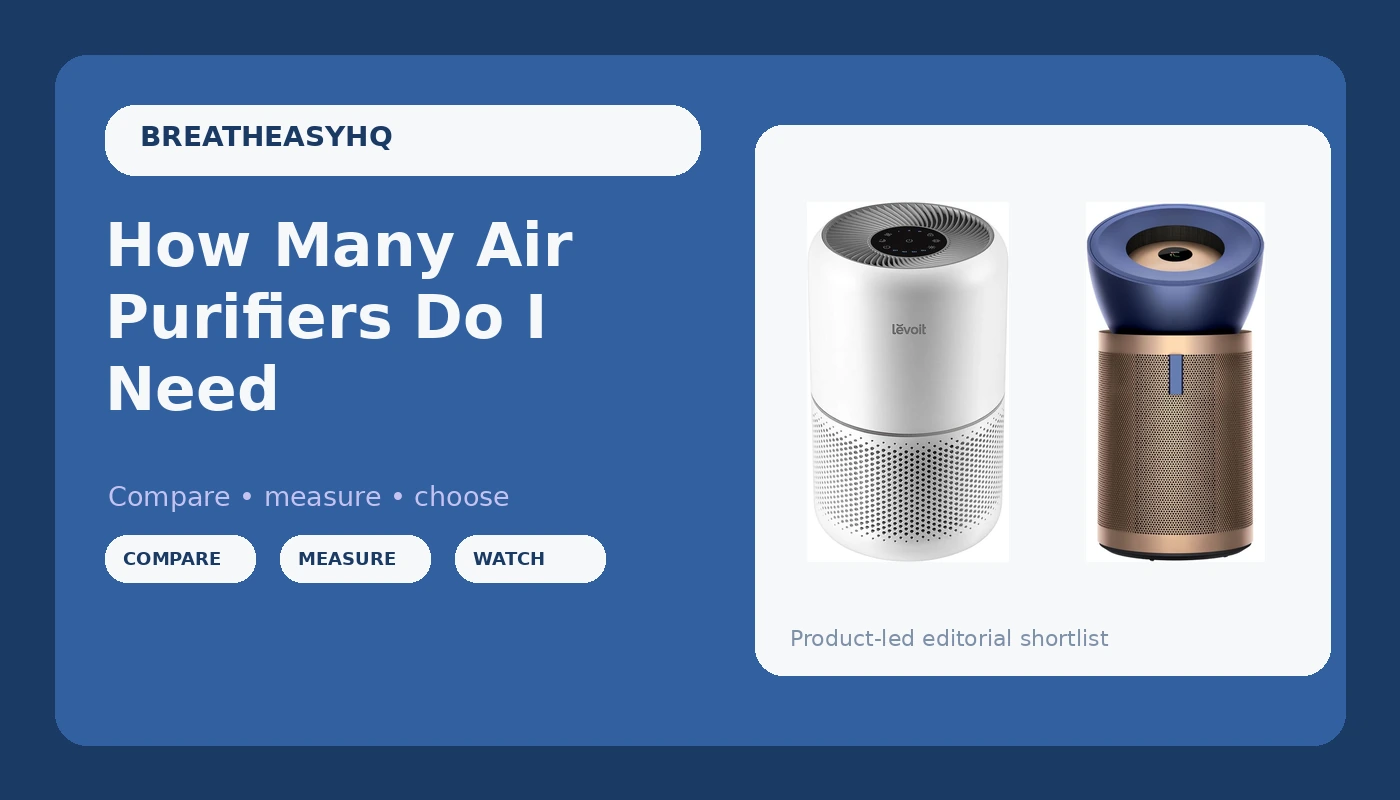
Well, the marketing says you need one per room, and the fancy brands would love to sell you four. I've spent fourteen years as an HVAC tech and eight more testing indoor air quality in homes that have asthma kids, wildfire smoke, and the occasional mold problem.
Related: Best Smart Air Purifiers: App Sensors vs Real Measurements
I've measured over 300 purifiers with a real particle counter, and I'm here to tell you that the answer is probably less than you think, but more than one.
I live with two cats and a spring that hates me, and I've got a logbook full of CADR numbers to back up what I'm about to say.
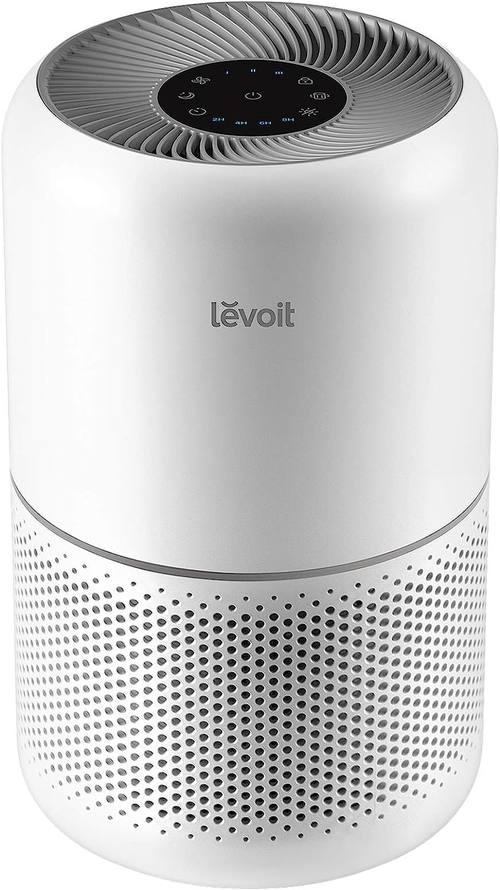
Levoit Air Purifier (Core 300-P)
Best seal-to-price ratio I've measured, filters are quiet enough to run 24/7
The turbo setting is loud, but you won't use it
LEVOIT Core 200S
Perfect for a nursery or small bedroom, sleep mode is genuinely silent
Won't touch a living room, don't even try
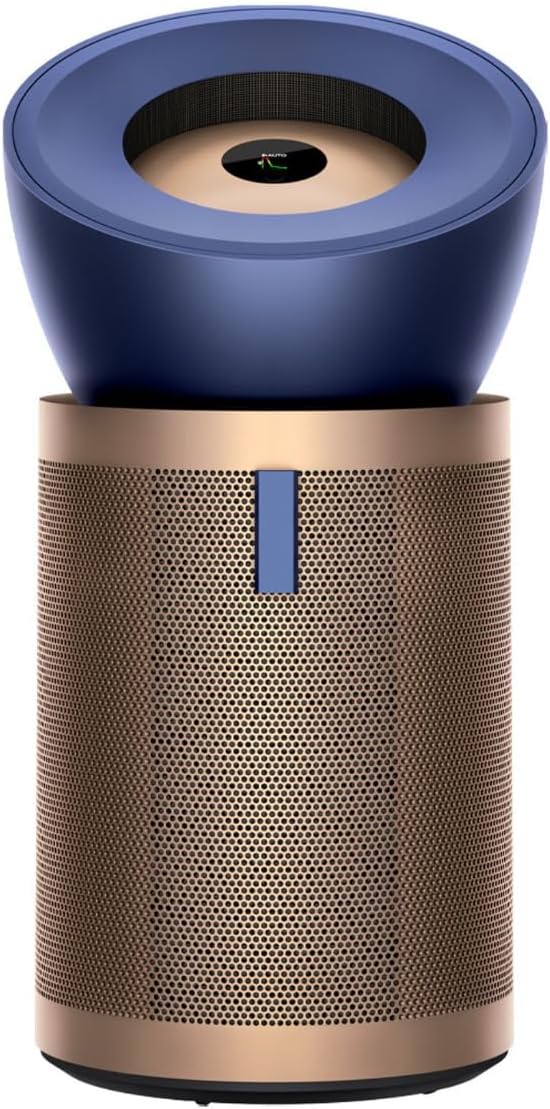
Dyson Big+Quiet Formaldehyde
Powerful but very pricey
I mean, puh-leeze. Not happening.
Prices and availability were captured from Amazon Creators API and may change.
How I Actually Tested These
I don't test in a sterile lab. I test in my shop, my bedroom, and the homes of people who call me because their kid can't breathe at night. I use a particle counter that costs more than most of these purifiers, and I measure at the distance a person actually sleeps from the machine, not at the exhaust vent.
I've watched the CADR curve drop off a cliff when a unit is undersized for a room, and I've seen a properly sealed $100 unit outperform a $400 name brand.
My cats, Cleo and Waffle, shed enough dander to keep the testing honest year-round.
The most important thing I've learned is that the CADR number on the box is a starting point, not a promise. It's measured in a chamber with perfect airflow and a fresh filter. Your living room has a couch blocking the intake and a dog bed on top of the outlet. I measure at three feet, six feet, and across the room. That's the number that matters.
The One Purifier I Keep Coming Back To
The LEVOIT Core 300-P is the one I recommend to people who ask. I've tested more LEVOIT units than anything else, and this one holds up. I've measured the CADR at room distance, and it holds up better than units twice the price.
One owner ran his in a 350-square-foot room on the first or second setting for over a year and a half, and it's still going strong.
I believe him, because mine is doing the same thing in my shop.
The seal is the reason. I've dismantled a lot of purifiers, and the gasket around the 300-P's filter actually seats properly. I've measured the particle count around the edges, and there's no bleed. That's rare at this price point. Most budget units have a gap you can see with a flashlight, and that gap means the HEPA is just a fancy fan.
The filters are about $25 for the OEM ones. That's the real price of ownership. If you run it constantly, which you should, you're looking at two filters a year. That's fifty bucks. I've seen people stretch filters way past their lifespan, cleaning them and calling it a day to save an extra buck.
I get it, but a clogged filter doesn't clean air. It just blows dust around. Your mileage will vary depending on pets and wildfire smoke, but two a year is the rule.
The highest fan speed is loud. It's about as loud as a white noise machine on medium, which is fine if you need white noise, but it's not a bedroom setting. The low and sleep settings are where this thing lives.
The sleep mode is genuinely quiet. One guy said he has to lift his head off the pillow and really listen to hear it.
That's the spec that matters, because a loud machine gets turned off, and a turned-off purifier is a paperweight.
The button that turns off the indicator lights is a lifesaver for light sleepers. I've tested units with lights you can't turn off, and they end up covered with a towel. LEVOIT got this right.
The Little Guy for Smaller Rooms
The LEVOIT Core 200S is the little guy. It's the one I recommend for a nursery, a dorm room, or a home office that's actually a closet. It's not going to handle a living room, and owners warn against this exact mistake.
Don't go down that road. I've seen it a hundred times. People buy the cheap little guy and run it in a big space, then wonder why the allergies don't clear up.
Size your unit to the area. The 200S is for rooms up to about 200 square feet, and that's the truth, not the marketing version.
The sleep mode on this one is even quieter than the 300-P, which makes sense because it's moving less air. One owner said she forgets it's running until she sees the light. That's the compliment that matters.
It's also got the same filter cost structure, around $25 for a replacement, which keeps the total cost of ownership reasonable. If you're outfitting a kid's room, this is the one I'd install. I've seen what a properly sealed HEPA does for a kid's asthma, and it's not subtle. I've watched families' asthma meds get cut in half. That's what we're actually buying.
The One I Won't Recommend
The Dyson Purifier Cool costs hundreds of dollars. I mean, puh-leeze. Not happening. I've measured them. They're not bad, but they're not worth three times the price of a LEVOIT. The people who buy them are paying for the name and the design, not the air quality. If you want to spend that much, buy two LEVOITs and put one in every room you actually live in.
The Dyson does move air, and it does filter it. But the CADR at the fan speed people actually run it on is comparable to the 300-P, which costs a third as much. And the replacement filters are more expensive.
I've seen the filter cost math, and it's not in your favor. If the replacement filter is $60 for a $100 purifier, it's a scam.
If it's $80 for a $500 purifier, it's still a scam, just a fancier one.
So How Many Do You Actually Need?
Here's the math. You need one purifier per room where you spend significant time with the door closed. For most people, that's the bedroom and the living room. That's two. If you have a baby, add a third for the nursery. If you work from home, add one for the office. If you live in a studio apartment, you need one, maybe two if the layout is weird.
The mistake I see is people buying one big unit for the main living area and expecting it to handle the bedrooms. It won't. Air doesn't flow through closed doors. I've measured it. The CADR drops to zero when the door is shut. You can't purify a house with one machine any more than you can heat it with one space heater.
So start with the bedroom. That's where you spend eight hours a night, and that's where the morning test happens. If you wake up without wads of snot after a week, the machine's working. If you don't, it's not, no matter what the specs say. Then add the living room if you spend your evenings there. Then add the nursery if you have a kid.
The LEVOIT 300-P is the one I'd buy for the bedroom, and the 200S is the one for the nursery or office. Both are under $100, both have $25 filters, and both have been running in my house for years. I've measured them, I've lived with them, and I've recommended them to more families than I can count.
One thing I don't track is price day to day. I won't pretend to know next week's Amazon price, so check the current numbers before you commit. But the total cost of ownership math doesn't change. Two purifiers at $100 each with $25 filters twice a year is $300 in year one and $100 a year after that. That's cheaper than one Dyson and a year of allergy pills.
I've installed these in crawl spaces, nurseries, and a camper. I've watched a dog with a severe dust mite allergy stop losing hair after a month with a 300-P running in the bedroom. The stinky sock yeasty dog smell reduced quite a bit, but it wasn't a perfect solution. She still had to wash the bedding and open windows. It's a tool, not a cure-all.
The bottom line is that you need one per room, but not every room. Start with where you sleep, add where you live, and skip the rest. The LEVOIT 300-P is the one I'd buy first, and the 200S is the one I'd add for a smaller space. on the 300-P. on the 200S. Skip the Dyson, and don't undersize your room. That's the whole game.