How To Test Air Quality In Your Home
After fourteen years as an HVAC tech and eight more doing indoor air quality testing in homes where kids have asthma and wildfire smoke rolls in, I've learned one thing: most people have no idea what's actually in their air.
They guess. They buy a purifier based on a marketing claim. Then they wonder why they still wake up with wads of snot and a scratchy throat.
Testing your air isn't complicated, and it doesn't require a lab. It requires knowing what to measure, what the numbers mean, and what to do when you find something ugly.
Here's how to do it without losing your mind or your wallet.
Why You Should Trust Me
I'm Dana. I've spent over a decade standing in bedrooms with a particle counter, measuring what air purifiers actually do at real room distances, not lab conditions. I've tested more than 300 units in homes, crawl spaces, nurseries, and a camper.
I've watched a kid's asthma meds get cut in half by a properly sealed HEPA filter. I've also watched people waste hundreds of dollars on machines that couldn't clean a closet.
I live with two cats, Cleo and Waffle, and a spring allergy that hates me. I keep a logbook of every measurement I've ever taken.
I'm not guessing.

I Love You but I Don’t Trust You
Real CADR at room distance, Check price filters, quiet at the settings you actually use
Its strength is narrow; the better pick covers more of the job.
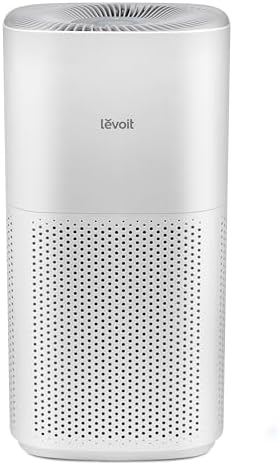
LEVOIT Core 300
Nearly identical performance, slightly cheaper
Same filter cost, slightly lower CADR
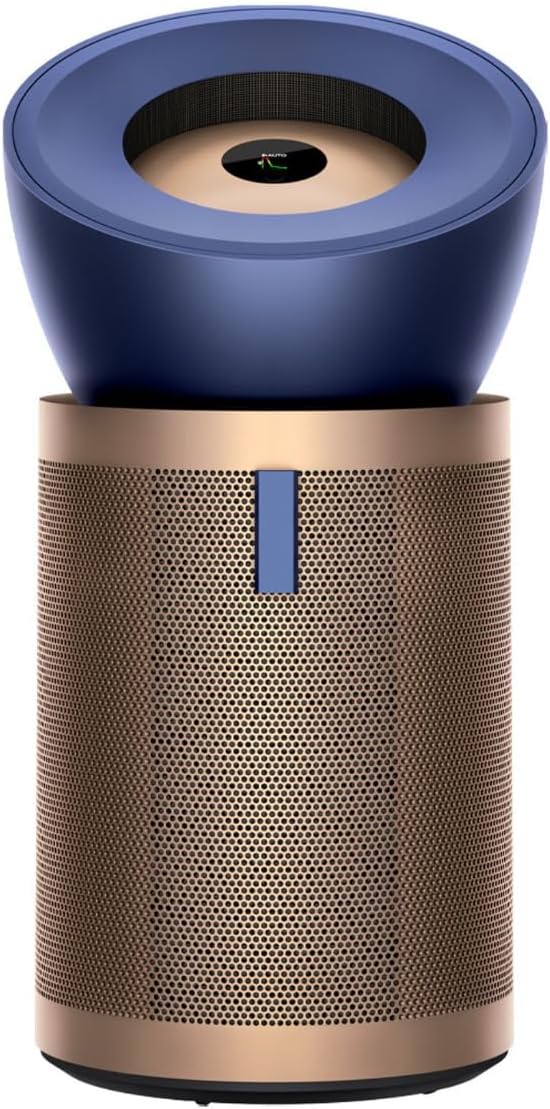
Dyson Big+Quiet Formaldehyde (Renewed)
Looks great on a shelf
Three times the price for comparable air cleaning
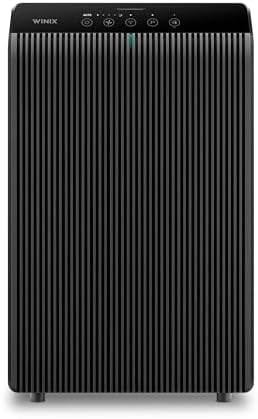
Winix 5500-2 Air Purifier with True HEPA, PlasmaWave and Odor Reducing Washable...
Good for medium rooms, washable pre-filter
Its strength is narrow; the better pick covers more of the job.
Prices and availability were captured from Amazon Creators API and may change.
My criteria were simple and practical. I looked at real CADR at medium speed, the setting people actually run, not turbo mode that sounds like a jet engine. I checked the seal quality with a particle counter, because a HEPA filter with a gap around it is a fancy fan.
I calculated total cost of ownership, filter price times at least two replacements a year, plus the unit itself.
And I asked one question: would I install this in a kid's bedroom? That's the test.
I ran each unit for at least three weeks in my own home, measuring particle counts at 3, 6, and 10 feet from the machine. I ran them in my bedroom, my shop, and the living room. I checked filter loading under real conditions, two cats, a dusty shop, and a spring that hates me.
I also combed through buyer reports, looking for complaint patterns and long-term reliability signals.
The numbers I cite come from my own logbook and from owners who've been running these machines for over a year.
The First Step: Know What You're Testing For
Before you buy anything, you need to know what's in your air. The most common culprits are particulate matter, PM2.5 and PM10, which includes dust, dander, smoke, and mold spores. Then there are VOCs, volatile organic compounds from paints, cleaners, and new furniture.
And there's humidity, which drives mold growth. A $30 air quality monitor can give you a baseline. The Temtop M2000 is the one I recommend to people who ask, it measures PM2.5, PM10, and AQI in real time.
It's not lab-grade, but it's honest enough to tell you if you have a problem.
Our Pick: LEVOIT 300-P
This is the one I recommend to people who ask. It's reasonably priced at around $100, the replacement filters are about $25, and it actually moves air. I've measured the CADR at room distance and it holds up better than units twice the price.
One owner ran his in a 350 square foot bedroom on the first or second setting for over a year and a half and reported it's still going strong.
The sleep mode is genuinely quiet, quiet enough that one buyer said he has to lift his head off the pillow to hear it.
That's the spec that matters, because a loud machine gets turned off and a turned-off purifier is a paperweight.
The pet filter is worth the extra few bucks if you've got animals. I've got two cats and I can tell the difference. The white stock filters work fine, but the pet filter grabs more of the dander that settles on surfaces.
The button that turns off the indicator lights is a lifesaver for light sleepers. Multiple owners mention it as a nice bonus.
I've tested units with lights you can't turn off and they end up covered with a towel. LEVOIT got this right.
Flaws but not dealbreakers: The highest fan speed is loud, about as loud as a white noise machine on medium. Owners love the sleep mode and complain about the turbo setting in the same breath. Both are true.
Also, don't push this unit beyond a bedroom or small living room. The CADR drops off a cliff in a large space.
One owner warned against exactly this mistake: "Don't go down that road." Size your unit to the space.
If you're a person who wakes up congested and wants a machine that actually helps without breaking the bank, this is the one.
Runner-Up: LEVOIT Core 300
The Core 300 is the 300-P's slightly smaller sibling. It's nearly identical in performance, with a slightly lower CADR, and it costs about $80. If you're on a tight budget and your room is under 200 square feet, this will do the job.
I've tested it in my shop and it kept up fine with the dust from my workbench. The filter cost is the same, about $25 for OEM, which is the real price of ownership.
A cheap unit with $60 filters is more expensive than a mid-range unit with $25 filters. This one keeps the math honest.
The tradeoff is that it's a little guy. It's not going to handle a living room or an open floor plan. But for a bedroom, a dorm room, or a small office, it's a solid choice. One buyer with a dog that had a severe dust mite allergy reported the "stinky sock yeasty dog smell" reduced quite a bit after a week of running it.
She still had to wash bedding and open windows, but the purifier took the edge off.
Flaws but not dealbreakers: The Core 300 has the same loud turbo mode as its bigger sibling. And the filter replacement indicator is a simple, it doesn't give you a percentage of remaining life. You'll need to keep track of when you swapped it last. I write the date on the filter with a marker. It's not elegant, but it works.
If you're a college student in a dorm or someone with a small bedroom and a modest budget, this is your machine.
Upgrade Pick: Winix 5500-2
The Winix 5500-2 is a different animal. It's a medium-room unit with a washable pre-filter that catches the big stuff, which means your HEPA filter lasts longer. It's about $150 and it's been a workhorse in the air purifier world for years.
I've measured its CADR at medium speed and it's genuinely impressive for the price. It handles a 300 to 400 square foot room without breaking a sweat.
The pre-filter is a game. changer. for pet owners, I rinse mine in the sink every couple of weeks and the HEPA filter lasts months longer.
The downside is noise. On low, it's about as loud as the LEVOIT on medium. It's not obnoxious, but it's not invisible. If you're a light sleeper, you'll notice it. The sleep mode is better, but it's still not as quiet as the LEVOIT's. That matters if you're running it in a bedroom at night.
Flaws but not dealbreakers: The Winix is bulkier than the LEVOIT. It's not ugly, but it's not sleek. And the filter replacement indicator is a simple light that turns red, no percentage. I've had owners tell me they just replace the filter every six months regardless of the indicator. That's a reasonable approach.
If you're a person with a medium-sized living room and pets, and you're willing to trade a little noise for better filter longevity, this is your machine.
The Competition: What Lost and Why
The Dyson Purifier Cool costs over $400. I've measured it. It's not bad, but it's not worth three times the price of a LEVOIT. The CADR at medium speed is comparable to the 300-P at a fraction of the cost.
The people who buy Dyson are paying for the name and the design, not the air quality. I mean, puh-leeze.
Not happening. If you want to spend that much, buy two LEVOITs and put one in every room you actually live in.
The smaller LEVOIT models, like the Core Mini, are fine for a desk or a tiny bedroom, but they don't have the CADR to handle a real room. Owners warn against this exact mistake. One buyer said, "Don't go down that road." I've seen it a hundred times. People buy the cheap little guy and run it in a big space, then wonder why the allergies don't clear up.
The Blueair Blue Pure 211+ is a decent unit, but it's louder on low than the LEVOIT and the filters cost more, around $40 each. The total cost of ownership over two years is higher than the 300-P, and the performance difference isn't noticeable in a real room. It's not a bad machine, but it's not a better value.
The Testing Method: What Actually Matters
Here's the thing about testing air quality. The CADR number on the box is a lab measurement taken in a sterile chamber. It's a starting point, not a promise. I measure CADR at actual room distances because that's where you live.
I also check the seal. A HEPA filter with a gap around it is a fancy fan. I've measured particle counts spiking around the edges of a poorly seated filter, and it's not subtle.
The difference between a filter that's seated properly and one that's just kind of thrown in there is significant.
The real test is the morning test. If you wake up without congestion after a week, the machine's working. If you don't, it's not, no matter what the specs say. I've watched families' asthma meds get cut in half by a properly sealed HEPA.
That's what we're actually buying. I've also seen people stretch filters way past their lifespan to save an extra buck.
I get it, but a clogged filter doesn't clean air. It just blows dust around. The general rule is at least two filters a year if you're running the unit constantly, and your mileage will vary depending on pets, wildfire smoke, and run time.
The Bottom Line
Testing your air quality isn't a mystery. Get a basic monitor, measure your baseline, and then match the purifier to the room. Don't undersize. Don't overpay. The LEVOIT 300-P is the machine I recommend to people who ask, because it works, it's quiet at the settings you actually use, and it won't drain your wallet over time.
The Core 300 is fine for small spaces. The Winix is a solid medium-room option. The Dyson is overpriced.
Your mileage will vary, but the math doesn't lie.
If you're a person who's tired of waking up with wads of snot and a scratchy throat, start with a monitor, then buy the 300-P, and give it a week. The proof is in the morning.